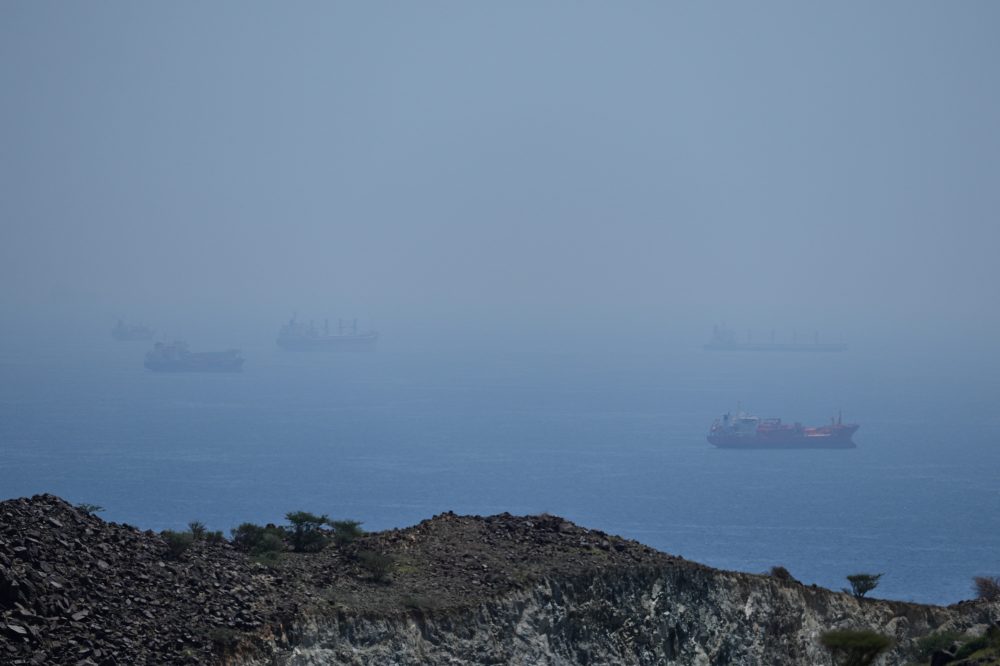

Energy markets experienced sharp increases during Sunday morning trading as ongoing tensions between Iran and the United States blocked access to the Strait of Hormuz, a vital shipping channel for global oil supplies.
U.S. crude futures jumped 6.4% to reach $87.88 per barrel when trading reopened on the Chicago Mercantile Exchange. Meanwhile, Brent crude, which serves as the international benchmark, surged 6.5% to $96.25 per barrel.
The market volatility stems from more than two days of uncertainty surrounding the strategic waterway. On Friday, Iran announced it would completely reopen the passage along its coastline for commercial shipping, causing crude prices to drop over 9%. However, Tehran changed course on Saturday after President Donald Trump announced that U.S. Navy restrictions on Iranian ports would continue. During the weekend, Iran’s Revolutionary Guard opened fire on multiple ships, while Trump confirmed the forced capture of an Iranian cargo vessel attempting to bypass the naval blockade.
The military conflict between the U.S. and Israel against Iran has now entered its eighth week, triggering one of the most severe global energy emergencies in recent decades. Nations across Asia and Europe that depend heavily on Middle Eastern oil imports have experienced the greatest disruption from supply interruptions and production reductions, though surging costs for gasoline, diesel, and aviation fuel are impacting consumers and businesses globally.
When questioned about when American drivers might see average gas prices drop below $3 per gallon again, Energy Secretary Chris Wright indicated relief may not come until next year. “But prices have likely peaked, and they’ll start going down,” Wright told CNN’s “State of the Union” on Sunday.
Crude oil costs — the primary component in gasoline pricing — have experienced dramatic swings since the U.S. and Israel launched their attack on Iran on Feb. 28, followed by Iranian retaliatory strikes against other Gulf nations. Before the conflict began, crude was trading around $70 per barrel, then spiked above $119 at various points, before closing Friday at $82.59 for U.S. oil and $90.38 for Brent.
Energy experts have consistently cautioned that extended closure of the strait could lead to significantly worse price increases.
A delicate two-week ceasefire agreement between the U.S. and Iran is scheduled to end Wednesday, while rising tensions in the Strait of Hormuz cast doubt on future negotiations to resolve the conflict.
Even if a permanent agreement to reopen the Strait of Hormuz is reached, industry analysts predict it could require months for oil shipments to normalize and fuel costs to decline. Contributing factors include backed-up tanker traffic, shipping companies worried about renewed escalation, and energy infrastructure damaged during the war, all of which could prevent production and shipping volumes from returning to pre-conflict levels.
According to AAA motor club data, regular gasoline averaged nearly $4.05 per gallon across the U.S. on Sunday. While this represents a decrease of about 8 cents from the previous week, it remains significantly higher than the $2.98 average before the war began.