
A federal judge issued a decision Thursday determining that executions using nitrogen gas do not breach the Constitution’s prohibition against cruel and unusual punishment, dismissing claims from an Alabama death row prisoner that the method inflicts excessive pain.
The decision followed the nation’s first comprehensive court trial examining whether this execution technique violates constitutional protections. Eight individuals have been put to death using this method – seven in Alabama and one in Louisiana. The court’s finding allows Alabama and additional states to proceed with nitrogen gas executions and represents a defeat for opponents who anticipated a thorough review of Alabama’s procedures would end its implementation.
This execution technique, initially implemented in 2024, requires securing a breathing apparatus over the condemned person’s face and substituting regular air with pure nitrogen gas, resulting in death through oxygen deprivation. Death row prisoner Jeffery Lee filed the legal challenge last year. The 58-year-old Lee faces execution by nitrogen gas on June 11 at a prison in southern Alabama.
“While Lee establishes that death by nitrogen hypoxia involves some suffering, he fails to show that the protocol is cruel and unusual in violation of the Eighth Amendment,” U.S. District Judge Emily C. Marks wrote.
Legal representatives for both the state and Lee disagreed about the duration inmates remain conscious during nitrogen gas executions. Judge Marks determined the evidence demonstrates Alabama’s procedure “likely causes severe air hunger —the most severe form of breathing discomfort — for one to three minutes” but concluded this did not constitute a constitutional breach.
Lee’s legal team has indicated through court documents they plan to appeal the ruling.
The Alabama attorney general commended the judge’s ruling.
“After the first full trial on nitrogen hypoxia in the entire country, the district court found it to be constitutional. The district court considered all the evidence and concluded that nitrogen hypoxia is not cruel and unusual, affirming that the question of capital punishment belongs to the people and their representatives, not the courts, to resolve,” Alabama Attorney General Steve Marshall said.
Condemned individuals executed through nitrogen gas have exhibited varying degrees of trembling during the procedures, with state and defense attorneys disagreeing whether these movements are involuntary responses or indicators of distress. Alabama’s most recent nitrogen gas execution required more than 30 minutes to finish.
Judge Marks observed that Lee confronted a difficult legal standard since the U.S. Supreme Court has not determined any state’s execution method constitutes cruel and unusual punishment.
According to the Death Penalty Information Center, five states have approved nitrogen gas for executions, though only two have actually implemented it.
Lee received a capital murder conviction for the deaths of Ellis and Thompson on Dec. 12, 1998, close to the small community of Orrville, Alabama. Prosecutors stated Lee entered a pawn shop carrying a sawed-off shotgun and fatally shot Jimmy Ellis, the shop’s owner, and Elaine Thompson, an employee.
A jury decided 7-5 that Lee should receive life imprisonment. Nevertheless, a judge overturned that recommendation and imposed a death sentence. Alabama eliminated the judicial override practice in 2017 and no longer permits judges to reject jury sentencing decisions in capital cases.
Lee’s attorneys did not provide an immediate response to the decision.
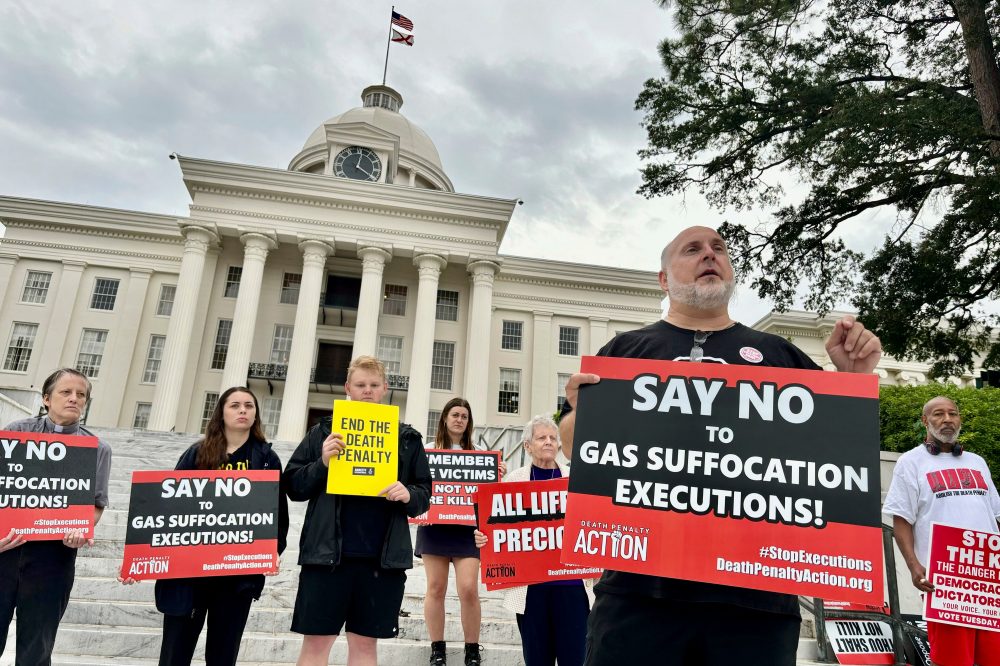
“The real torture of the death penalty is in the decades of waiting. With what we know about each of the available methods of being killed in Alabama or in the U.S., I can’t imagine anyone choosing conscious suffocation,” said Abraham Bonowitz, executive director of Death Penalty Action, a group that opposes the death penalty.
He noted that Lee would not receive the death penalty if sentenced under current law since judicial override has been eliminated.