
Colombian citizens will cast their ballots Sunday in a presidential election that reflects sharp divisions over the country’s direction on peace negotiations and economic policies.
The election pits those who want to continue the current leftist administration’s approach against voters seeking change focused on security improvements and economic expansion.
Ivan Cepeda, representing the leftist Historic Pact coalition, has maintained a polling advantage based on his promises to expand President Gustavo Petro’s social programs and continue peace negotiations with illegal armed groups to resolve the nation’s six-decade internal conflict. However, political observers expect he will face significant challenges in any potential runoff election.
The 63-year-old philosopher, who has served as a congressman since 2010, wants to implement tax reforms that would expand the tax base, impose wealth taxes and eliminate exemptions for large companies to pay for social spending. He has indicated willingness to consider constitutional rewrites proposed by the left.
Cepeda’s father, a communist leader, was murdered in a 1994 paramilitary attack. He now faces opposition from a fractured right wing led by independent businessman Abelardo De La Espriella and Senator Paloma Valencia, who has backing from former President Alvaro Uribe.
De La Espriella, a 47-year-old political newcomer whose followers refer to him as “The Tiger,” has built his campaign around security issues, reducing government size and economic revival. His platform calls for aggressive action against crime, drug trafficking and illegal armed groups, along with military strengthening and construction of mega-prisons. He wants to reduce taxes and revitalize the mining and oil industries.
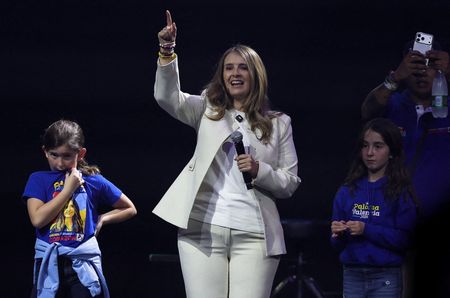
Valencia, 48, works as a lawyer and represents the right-wing Democratic Center party. She has similarly focused on security and economic recovery themes. She promises to fight illegal armed groups, halt Petro’s peace negotiation efforts, reduce corporate taxes to increase employment and pursue healthcare, justice and pension reforms.
Centrist contenders, including former Antioquia Governor Sergio Fajardo and former Bogota Mayor Claudia Lopez, have performed poorly in polling compared to past elections.
Polling data indicates no candidate will likely receive more than 50% of Sunday’s vote, which would send the top two vote-getters to a runoff election on June 21.
The eventual winner will confront significant obstacles, including stabilizing government finances in Latin America’s fourth-largest economy, reducing poverty levels, controlling violence related to the internal conflict, and meeting social needs.
Over 41 million Colombians can participate in voting that begins at 8 a.m. local time (1300 GMT) and ends eight hours later.