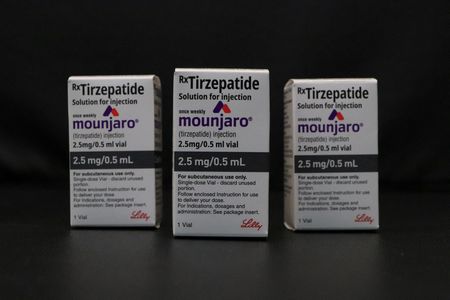

A recent clinical trial has demonstrated that Eli Lilly’s diabetes medication tirzepatide delivers superior results compared to other drugs in its class for certain type 2 diabetes patients.
The research focused on individuals who had received their type 2 diabetes diagnosis within the previous four years and were not achieving adequate control through metformin, dietary changes, and physical activity. Tirzepatide is marketed as Mounjaro for diabetes treatment in the United States and for both diabetes and weight management in international markets.
The SURPASS-EARLY clinical trial enrolled nearly 800 adult participants who were randomly assigned to receive either tirzepatide or alternative medications. The majority of control group participants were given other GLP-1 medications including semaglutide, marketed by Novo Nordisk as Ozempic or Rybelsus, or Lilly’s Trulicity (dulaglutide).
After 24 months of treatment, participants who received weekly tirzepatide injections demonstrated superior improvements in blood sugar management as measured by hemoglobin A1c levels, along with better outcomes for body weight and waist measurements compared to the control group.
The results, published in Annals of Internal Medicine, revealed that approximately 60% of tirzepatide recipients achieved normal blood glucose levels after two years, while only 24% of control group patients reached this milestone.
According to researchers’ statements, the data indicates that initiating tirzepatide treatment earlier when conventional care proves insufficient may deliver more robust and lasting metabolic improvements than other standard treatment options.
In separate research developments, scientists have made significant discoveries about long COVID’s neurological effects. Two studies suggest that the condition’s debilitating brain-related symptoms may result from the immune system mistakenly attacking the body itself, findings that could pave the way for new treatments and influence blood donation guidelines.
Researchers in both investigations gathered autoantibodies from the blood of long COVID volunteers. While normal antibodies protect against threats, autoantibodies – frequently observed following acute viral infections and continuing during long COVID – erroneously target the body’s own tissues.
When scientists introduced these human autoantibodies into healthy laboratory mice, the animals developed neurological characteristics similar to patient symptoms, including exhaustion, coordination problems, heightened pain sensitivity, and nerve damage.
One experiment demonstrated that these effects persisted even when autoantibodies were obtained from patients two years following their original infection, according to findings published in Cell Reports Medicine.
“This new awareness of the physiology of long COVID will enable us to identify a number of effective treatments for autoimmunity that could significantly improve the symptoms of millions of people with this chronic condition,” stated Dr. David Putrino from the Icahn School of Medicine at Mount Sinai, New York, who co-authored a related study in Cell.
“Before we had no way of predicting who would benefit from (existing) therapies,” he explained. “Our study now shows that if you are in a subgroup of long COVID patients who have autoantibodies circulating in your body… you may be a good candidate for these drugs.”
A Cell commentary noted that both studies “provide compelling evidence that autoantibodies directly contribute to symptom generation in a subset of people with long COVID,” while acknowledging that neither investigation establishes definitive proof of one central mechanism driving the condition.
Beyond their medical implications, Putrino emphasized that these findings raise important public health concerns regarding blood donation practices.
“In the UK, having long COVID is an exclusion for donating blood, while in the United States these individuals are still allowed to donate,” he noted.
“Given the dangers that (autoantibodies in) plasma from people with long COVID can pose for others, this country should be considering fundamental changes to its donation policies.”