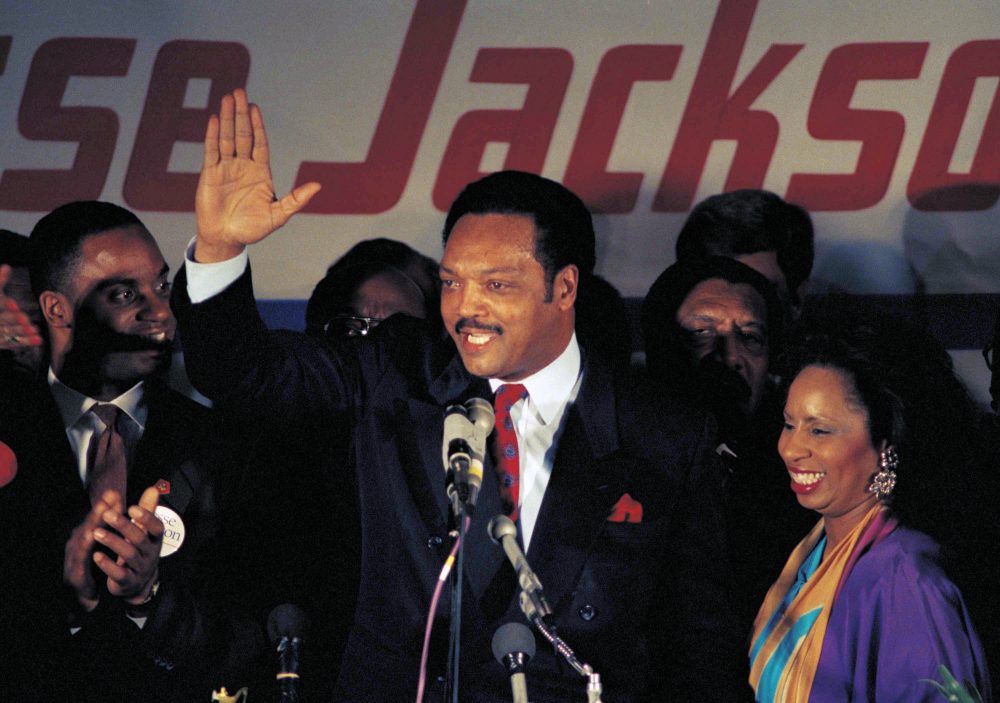

Rev. Jesse Jackson’s historic 1988 presidential campaign launch in Pittsburgh represented more than political ambition—it embodied his vision for America to achieve its greatest potential.
“If I can become president,” Jackson declared, reflecting on his upbringing in poverty as a Black child in segregated South Carolina, “every woman can. Every man can. I’m giving America a chance to make a choice to fulfill the highest and best of an authentic and honest democracy.”
Though Jackson’s presidential bid didn’t succeed, it sparked inspiration across America among those who believed in his vision. Jackson passed away Tuesday at age 84, leaving behind a transformative legacy.
Today, numerous activists, religious leaders, civic organizers, and elected officials trace their motivation back to Jackson’s groundbreaking campaigns and his unwavering commitment to equality and justice.
“Here I was, a kid growing up in public housing, and I got to witness this Black man running for president. He gave me a glimpse of what is possible, and he taught me how to say, ‘I am somebody’,” explained Democratic Sen. Raphael Warnock of Georgia, referencing Jackson’s famous slogan taken from poetry.
Warnock, who leads Ebenezer Baptist Church in Atlanta—the same congregation once pastored by Rev. Martin Luther King Jr.—believes Jackson’s influence remains crucial today amid current political challenges regarding elections, international relations, and immigration policy.
“His voice is now silent, but his example is eternal, and that work is left to us,” Warnock stated.
Jackson’s remarkable career encompassed international humanitarian efforts, advocacy for progressive economic policies, and leadership within the Civil Rights Movement that King had previously guided. Jackson witnessed King’s assassination at the Memphis hotel where it occurred.
Jackson’s 1988 White House pursuit forced Americans to consider whether King’s protégé could reach the presidency twenty years after the civil rights leader’s death. His equality-focused message during the Democratic primary attracted diverse voter support and surprised party establishment figures, who subsequently restructured the primary process due to increased participation.
Political experts believe these changes later enabled another Black Illinois politician to win the presidency twenty years afterward.
Barack Obama acknowledged this connection in his tribute to Jackson’s life.
Obama noted that former first lady Michelle Obama “got her first glimpse of political organizing at the Jacksons’ kitchen table when she was a teenager.” He added, “And in his two historic runs for president, he laid the foundation for my own campaign to the highest office in the land.”
This relationship didn’t prevent Jackson from critiquing Obama or supporting activists who challenged America’s first Black president’s policies.
“He continued to reach out to young Black activists throughout the protests that started in 2014,” explained DeRay McKesson, a racial justice organizer active in Ferguson, Missouri, during Black Lives Matter demonstrations. “As an activist and organizer, I appreciate that Jesse, just like the generation of people he came up with, had a deep understanding of structural change.”
Following his presidential campaigns, Jackson maintained significant political influence. Operating from his Rainbow PUSH Coalition headquarters in Chicago, he guided emerging leaders for decades. Following his death, numerous activists, political strategists, and congressional members attributed their success to Jackson’s mentorship.
Democratic Rep. Troy Carter of Louisiana first encountered Jackson while working as a young aide to New Orleans Mayor Sidney Barthelemy.
“Over the years, since our first meeting, he encouraged me in every step of my political career. His legacy will endure in every life he inspired,” Carter reflected.
Former Vice President Kamala Harris honored Jackson by recalling how his 1988 campaign created unity among supporters. As a San Francisco law student, she remembered strangers “from every walk of life would give me a thumbs-up or honk of support” when they spotted her “Jesse Jackson for President” bumper sticker.
“They were small interactions, but they exemplified Reverend Jackson’s life work — lifting up the dignity of working people, building community and coalitions, and strengthening our democracy and nation,” Harris wrote. She later became the first Black woman nominated for president by a major party.
Even political opponents recognized Jackson’s significance as a civil rights pioneer and champion of progressive humanitarian principles.
“I don’t have to agree with someone politically to deeply respect the role Jesse Jackson, a South Carolina native, played in uplifting Black voices and inspiring young folks to believe their voices mattered,” wrote Sen. Tim Scott of South Carolina, the Senate’s only Black Republican. “Those that empower people to stand taller always leave a lasting mark.”
Tennessee state Rep. Justin Pearson discovered Jackson at age 8 through a Black history picture book his mother provided, with Jackson’s image on the cover.
Pearson, now 31, expressed gratitude to Jackson for “creating space for people like me to be where I am.” He met Jackson after Republican legislators expelled him and another Black Democratic colleague for participating in a gun control demonstration at the Tennessee Statehouse.
The Memphis representative later accompanied Jackson to place a wreath where King was murdered. Pearson has joined Jackson at various civil rights commemorations across the South, noting Jackson’s distinctive presence even among other prominent figures.
“You have a lot of civil rights elders who you read about, but it means something different when you have somebody who you can talk to, who can be present, who is there physically,” said Tennessee state Rep. Justin Jones, the other expelled legislator who met Jackson. Both representatives won reelection to their positions.
Jackson “was committed to raising the rising generation of civil rights voices and leaders and legislators, and somebody who has a whole movement that is standing on his shoulders,” Jones, 30, observed.
Stacey Abrams was 10 years old in Gulfport, Mississippi, during Jackson’s initial presidential campaign. The ministers’ daughter recalls being “transfixed” by this “larger than life figure who did not look like everyone else.”
As former Georgia House minority leader, Abrams launched two unsuccessful gubernatorial campaigns. Both times, she worked to mobilize diverse constituencies, including communities of color and lower-income voters, using strategies that reflected Jackson’s political approach. Jackson provided guidance throughout both campaigns.
“I’ve been one of, I would say, thousands of people who received counsel and support from Jackson, but also got a phone call that said, ‘I’m thinking about you,’ or an offer to come and be a part of something he was doing,” Abrams shared.
“I think that’s the legacy that’s most important, that he didn’t stand as a single figure who wanted to be alone. He built community.”