
BEIJING, March 22 – China’s top leadership announced Sunday it will work to create more equitable international trade relationships and welcome greater foreign business participation following a year of escalating trade disputes with the United States and European Union.
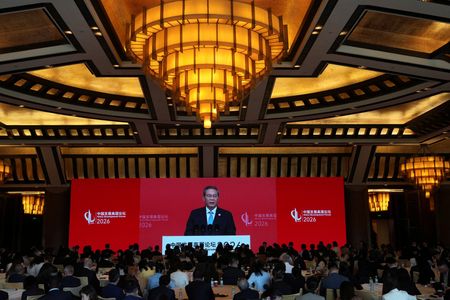
Speaking at the China Development Forum in Beijing, Premier Li Qiang committed to increasing purchases of quality international products while collaborating with worldwide partners to enhance balanced trade growth and expand global commerce opportunities, state media reported.
The two-day conference, wrapping up Monday, serves as Beijing’s platform to present economic strategies and investment prospects to international business executives, government officials, economists and scholars.
Li’s remarks follow China’s announcement of an unprecedented $1.2 trillion trade surplus for 2025, marking the world’s second-largest economy’s record performance.
Beijing faces mounting pressure to address growing international concerns about Chinese trade policies and industrial overcapacity, along with global dependencies on critical Chinese exports.
Though Li avoided directly addressing the massive surplus in his remarks, his commitments suggest recognition that the trade imbalance could strain diplomatic relationships during China’s current trade ceasefire with America.
President Donald Trump recently delayed his planned Beijing visit to meet Chinese President Xi Jinping due to the Iran conflict, postponing efforts to reduce tensions between the world’s largest economies.
Central bank chief Pan Gongsheng also addressed trade surplus concerns during a separate forum presentation.
“Analysing global economic imbalances requires looking not only at trade in goods but also services, and not only at the current account but also the financial account,” Pan stated in remarks published by the People’s Bank of China, noting China maintains the world’s biggest goods surplus alongside its largest services deficit.
Pan emphasized that China has no plans or desire to achieve trade advantages through currency devaluation.
The nation is attempting to reverse declining foreign investment, which dropped 5.7% annually to approximately 92 billion yuan ($13.36 billion) in January, following 2025’s 9.5% yearly decrease.
Last December, China expanded foreign investment incentives to 200 additional sectors, offering tax reductions and favorable land agreements focused on cutting-edge manufacturing, contemporary services, and environmental technology industries.
Li promised equal treatment for international and domestic companies, enabling businesses from all nations to operate confidently and achieve their objectives in China.
Commerce Minister Wang Wentao separately assured U.S. pharmaceutical industry representatives and executives from five major international drug manufacturers that China would enhance intellectual property safeguards and increase policy clarity.
Apple CEO Tim Cook delivered a keynote address stating the company would maintain partnerships with Chinese suppliers to advance industry development, according to state media coverage.
High-ranking officials from Samsung Electronics, Volkswagen, Broadcom Inc, Siemens, BASF and Novartis participated in the forum.
Major financial institutions including HSBC Holdings, UBS Group and Standard Chartered also sent delegation members.