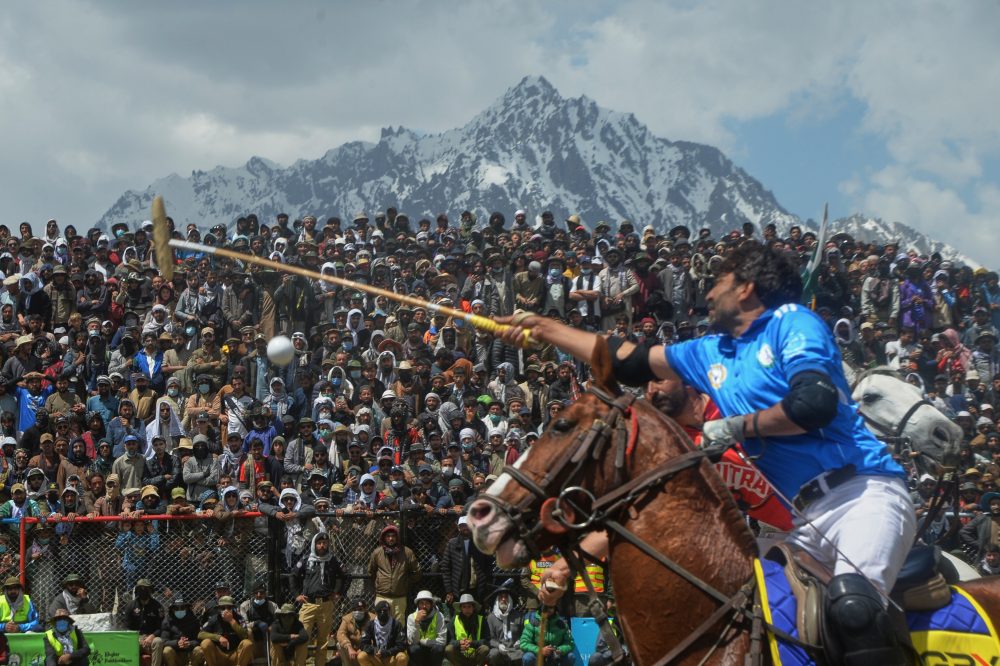

SHANDUR, Pakistan — The mountains of northern Pakistan’s Shandur Pass came alive with cheers and celebration as horses raced across the world’s highest polo ground this past weekend. The Shandur Polo Field, sitting at roughly 3,700 meters — about 12,000 feet — above sea level, hosted thousands of fans who watched wooden mallets swing through the thin mountain air.
Set against a backdrop of snow-covered peaks and bright blue skies, the Shandur Polo Festival returned once again to what many call the “roof of the world,” bringing together sport, culture and tradition in one of the most remote venues on earth.
Along the sidelines, spectators took in freestyle mountain polo — a form of the game that dates back centuries and remains a living tradition in Pakistan’s northern communities. Makeshift stands along the rugged mountainside were packed with families, tourists and local residents sitting side by side. Children waved flags, elderly spectators bundled in warm shawls, and groups of friends erupted in cheers as the high-energy matches unfolded.
The festival’s climax came when Gilgit-Baltistan’s polo team captured the Shandur Polo Festival trophy for the first time in more than ten years, edging out longtime rivals Chitral in a nail-biting final that ended 6-5. The match stretched nearly an hour before players and supporters poured onto the field, waving flags and embracing in celebration.
While polo is often referred to as the “game of kings” and carries associations with royalty and elite society around the world, the version played at Shandur carries a different meaning — one rooted in mountain community pride and cultural identity. The freestyle format on display here is considered among the oldest surviving forms of the sport.
The three-day event was organized with support from the Pakistan Army, the Khyber Pakhtunkhwa provincial government and the Gilgit-Baltistan regional government. Peshawar Corps Commander Lt. Gen. Omar Ahmed Bokhari attended the closing ceremony, underscoring official support for preserving cultural heritage while promoting sports and tourism in the region.
Beyond the polo matches, the high-altitude plateau transformed into a full cultural celebration, with music performances, traditional folk dances and local food drawing crowds throughout the festival.