
TORONTO (AP) — Following Alberta’s announcement of a planned independence vote, Prime Minister Mark Carney declared Friday his commitment to strengthening Canada for all provinces.
The leader of Alberta, Premier Danielle Smith, revealed Thursday that citizens will vote October 19th on whether the province should remain part of Canada or pursue constitutional measures leading to a binding separation referendum. This approach disappointed independence advocates who had demanded an immediate referendum on leaving Canada entirely.
Speaking for the first time since Smith’s declaration, Carney acknowledged Alberta’s significant contributions to the nation.
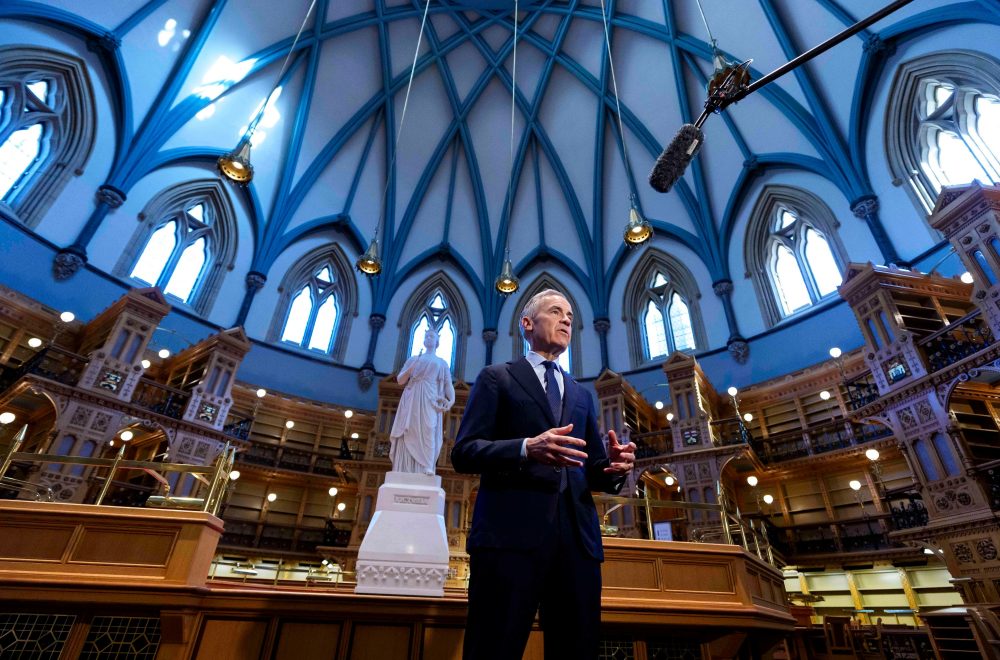
“Canada is the greatest country in the world, but it can be better and we are working on making it better. We’re working with Alberta on making it better,” Carney stated during a tour of Parliament buildings currently undergoing renovations.
The Prime Minister highlighted his administration’s efforts to construct a new oil pipeline connecting Alberta to Canada’s Pacific coastline. Albertans have historically criticized Ottawa for insufficient action in bringing the province’s extensive oil resources to global markets.
Smith emphasized Thursday her preference for Alberta to stay within Canada. Political observers have drawn parallels between her position and former British Prime Minister David Cameron’s approach before the Brexit vote, where he supported the referendum to manage party factions while opposing actual departure from the European Union.
Even if voters approve a referendum, independence would not automatically follow. Federal government negotiations would be required.
Ian Brodie, who previously served as chief of staff to former Conservative Prime Minister Stephen Harper and currently teaches political science at the University of Calgary, believes Smith is taking a cautious approach.
“A vote to see if people even want a vote. It’s a good way to let the swing voters swing against separation,” Brodie explained.
Jeff Rath, representing Stay Free Alberta, the organization that gathered petition signatures demanding a separation referendum, condemned the decision as disrespectful to independence supporters. Cam Davies, who leads the pro-independence Republican Party of Alberta, shared this criticism and labeled Smith’s referendum proposal “spineless.”
Daniel Béland, a political science professor at McGill University in Montreal, suggested Smith aims to satisfy pro-referendum members within her party. Béland predicted a future referendum would likely fail since separation support remains below 30%, though he acknowledged campaigns can influence outcomes.
Candace Laing, who serves as president and CEO of the Canadian Chamber of Commerce, condemned Smith’s choice, emphasizing that businesses throughout Canada, including Alberta, require stability for investment, job creation, talent recruitment, and major project development.
“Prolonged uncertainty around constitutional or political separation brings real risks for investor confidence, economic growth, and Canada’s global competitiveness at exactly the wrong time,” Laing stated.
James Moore, a former federal Conservative Cabinet minister, also expressed opposition.
“A referendum that will divide your party and make the province look unstable for investment, all to ultimately affirm the constitutional status quo, is an odd choice,” Moore wrote on social media.