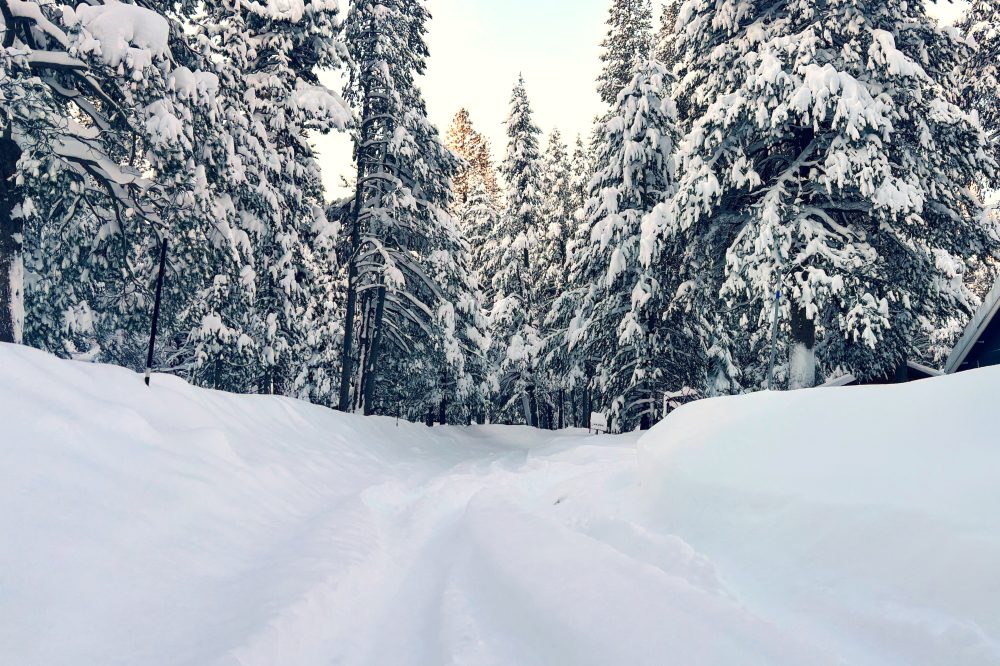

A devastating avalanche struck a group of 15 skiers during a guided backcountry expedition in California’s Sierra Nevada mountains on Tuesday, leaving nine people still unaccounted for as rescue operations continue.
The skiing party was participating in a three-day wilderness adventure organized by Blackbird Mountain Guides in the remote backcountry near Frog Lake, close to Lake Tahoe. Participants had been staying overnight in mountain huts positioned at an elevation of 7,600 feet, bringing their own provisions for the multi-day journey.
According to the tour company’s promotional materials, they promised clients an elevated experience: “If you’ve booked the Frog Lake Huts in Truckee, trust our guides to elevate your trip to the next level. We’ll navigate in and out of the huts, manage the risks, and find the best terrain and snow quality for you and your group!”
When disaster struck Tuesday, six members of the skiing group managed to find safety and were successfully rescued after spending hours taking shelter while rescue teams worked through blizzard conditions. However, nine individuals remain missing.
In an official statement, Blackbird Mountain Guides confirmed they are working closely with rescue authorities. The company explained that the avalanche occurred as the group, which included four professional guides, was making their way back to the starting point of their trek.
The guide service operates from locations in both California and Washington, providing mountaineering and backcountry skiing experiences throughout the western United States, as well as international destinations in Europe and Japan. Additionally, they provide educational programs focusing on wilderness survival skills and emergency medical training.
The remote area where the skiers went missing had remained inaccessible to the general public for 100 years until the Truckee Donner Land Trust purchased the property and established the mountain huts, which feature basic amenities including sleeping pads, cooking stoves, and restroom facilities.
This particular expedition was designed for skiers with intermediate to advanced abilities, requiring participants to be capable of ascending up to 2,500 vertical feet during a single day’s journey. While guides provide first aid supplies and waste disposal equipment, skiers must supply their own gear and avalanche safety equipment, including locator beacons, shovels, and probes.
The company’s website acknowledged the challenging nature of these excursions: “Generally our guides are able to find excellent backcountry snow conditions, but often we need to travel through difficult conditions to access the goods. This requires riders to be adept with their backcountry touring skills and have a solid foundation of touring before the trip.”
Weather conditions had been deteriorating throughout the week, with avalanche warnings issued as early as Sunday when a major winter storm system began affecting the region. The Sierra Avalanche Center escalated their alert to a more serious avalanche warning for the Central Sierra Nevada and Greater Lake Tahoe area, beginning Tuesday morning at 5 a.m., with predictions of significant slides continuing through Wednesday.
The dangerous conditions resulted from rapidly accumulating snowfall on unstable underlying snow layers, combined with powerful wind conditions that created extremely hazardous avalanche potential.
Snow measurements from Soda Springs, located near the avalanche site, showed at least 30 inches of new snowfall accumulated within a 24-hour timeframe, according to data from the Soda Springs Mountain Resort.