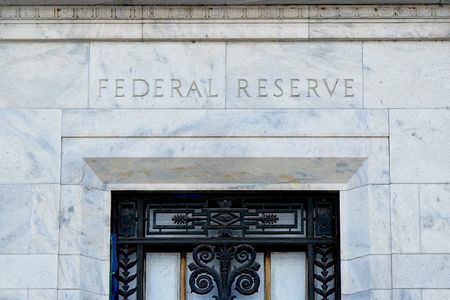

NEW YORK, May 19 – Financial markets appear to be wagering that the Federal Reserve might raise interest rates soon, but central bank officials and economic experts largely disagree with that assessment.
Futures contracts that track Fed policy expectations are showing approximately 50% probability that the central bank will increase rates by December. This follows significant turmoil in bond markets that pushed the 30-year Treasury yield beyond 5%, drove the benchmark 10-year yield to its highest point in 15 months, and sent the two-year yield to levels not seen since March 2025.
However, numerous economists think the futures market may be responding too strongly to rising oil costs and increasing overall inflation, particularly since Fed officials have not indicated that rate increases are imminent. Some market watchers warn that these signals might be unreliable due to reduced trading activity in longer-term contracts.
“There’s really low trading volumes in the contracts for the middle of next year,” said Will Compernolle, macro strategist at FHN Financial. “I consider it a pretty low conviction signal from the market. The market might just be really hedging for the risk that a hike does eventually come.”
The futures contracts indicate increasing likelihood of rate rises throughout the first half of next year, climbing to approximately 73% by July.
Trading activity fluctuates significantly and typically decreases over longer time periods. The May 2026 contract has seen roughly 646,000 trades this month, while the January 2027 contract has traded only one-third as frequently, and the July contract for next year has been exchanged merely 6,400 times.
Ryan Swift, chief U.S. bond strategist at BCA Research, believes markets are moving more rapidly than economic data supports. “The financial markets move very quickly to incorporate new information faster than the actual data,” he said. “Sometimes the market’s picking up something right, and economists will eventually follow. But often, it’s just overreacting.”
At its April meeting, the Fed maintained interest rates within the 3.50% to 3.75% range, with only one member dissenting in favor of a quarter-point reduction. Three monetary policy committee members notably opposed statement language suggesting the Fed would eventually continue rate cuts.
The central bank’s twin goals of maximum employment and price stability create a challenging situation. Inflation continues significantly above the Fed’s 2% objective and is trending upward, while the job market shows no substantial weakening that would justify rate reductions.
“The Fed can’t really point to that like they could last year when we got a couple of cuts,” said John Luke Tyner, portfolio manager at Aptus Capital Advisors.
Recent bond market turbulence may also reflect traders evaluating how new Federal Reserve Chair Kevin Warsh will handle rising inflation, which conflicts with Trump’s preference for lower rates, according to Lou Brien, market strategist at DRW Trading.
“Especially if the crude oil stays high, they’re going to want to see that Warsh is his own man rather than the president’s man at the Fed,” Brien said.
Warsh previously served on the Fed’s board from 2006 to 2011 and earned recognition as someone focused on fighting inflation during his tenure. He has indicated the central bank has space to reduce interest rates but has not made public statements since April’s economic data became available.