
SpaceX stands ready to launch its 12th unmanned test flight of the next-generation Starship rocket this week, marking the maiden voyage of a newly enhanced vehicle that company officials view as essential to Elon Musk’s plans to attract investors and advance deeper space exploration.
The inaugural flight of the Starship V3, equipped with fresh capabilities engineered to enable future lunar and Martian missions, represents a crucial evaluation for both the spacecraft and investor trust before SpaceX’s anticipated initial public offering scheduled for next month.
The completely reusable rocket system plays a vital role in Musk’s objectives to significantly reduce launch expenses, grow his Starlink satellite enterprise, and pursue ambitions spanning from orbital data facilities to human missions between planets — all elements factored into the company’s target $1.75 trillion IPO valuation.
“For an IPO that is leaning so heavily into narrative and symbolism, we believe this flight is the single most important pre-IPO catalyst remaining on SpaceX’s calendar,” PitchBook senior research analyst Franco Granda said.
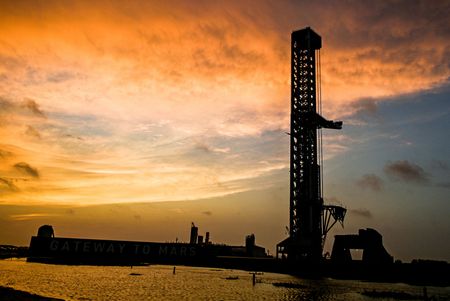
The massive spacecraft, featuring the upper-stage Starship crew vehicle mounted on top of its Super Heavy booster rocket, was scheduled for launch no earlier than 5:30 p.m. CDT on Wednesday (2230 GMT) from the SpaceX operations in Starbase, Texas, located on the Gulf of Mexico.
Beyond serving as the maiden flight for both the V3 Starship and Super Heavy, test flight 12 will also represent the first launch from a newly constructed launch platform built for the more robust rocket.
Among the primary enhancements to the booster rocket is an overhaul of its 33 Raptor engines to generate increased thrust from a configuration that weighs considerably less.
The propulsion system of the upper-stage Starship has similarly been improved for extended-duration missions, incorporating mechanisms to enable ship-to-ship docking, orbital refueling and enhanced maneuverability.
A crucial indicator of success for upcoming test missions will be post-flight recovery of Starship and the Super Heavy booster, which are under development as reusable vehicles.
SpaceX announced it would not attempt to safely land or recover either section of the spacecraft from this launch. However, test goals include performing several return-flight procedures by the booster and Starship, including controlled landing burns before each vehicle touches down in the ocean.
The Super Heavy is projected to descend in the Gulf of Mexico approximately seven minutes after launch. Starship’s “exciting landing,” as SpaceX describes it, is expected roughly an hour afterward in the Indian Ocean.
Prior to that landing, mission plans require Starship’s payload to deploy a collection of 20 Starlink simulators, along with two real satellites adapted to monitor the spacecraft’s heat shield and relay information to ground operators during re-entry.
SpaceX’s engineering approach, viewed as more risk-accepting than many established aerospace industry companies, relies on a flight-testing methodology that drives newly created spacecraft to their breaking point, then refines improvements through regular repetition.
It remains uncertain how investors evaluating SpaceX’s upcoming IPO will balance Musk’s tolerance for near-term risk-taking with his long-range goals for lunar and interplanetary space travel.
Musk, who established his California-based rocket company in 2002, stated one year ago that he anticipated Starship making its first unmanned journey to Mars at the end of 2026.
A successful test flight would help strengthen SpaceX’s argument that Starship, the world’s largest and most powerful rocket ever launched, is approaching commercial readiness following years of explosive failures and development setbacks.
Multiple Starship tankers would be required to fill one Starship with sufficient fuel for a moon landing under SpaceX’s proposed lunar mission plan.
That forms part of a $3 billion-plus contract SpaceX secured in 2021 under NASA’s Artemis program, the U.S. initiative to return astronauts to the lunar surface later this decade for the first time since 1972 at the conclusion of the Apollo era. Those plans position Starship at the heart of a new space race with China, which targets a crewed lunar landing of its own in 2030.