
A group of nine U.S. senators — crossing party lines — gathered at the Farnborough airshow in England on Monday to send a message to defense contractors from allied nations: American demand for their products is not going away, and tariffs on aerospace goods should be avoided.
Republican Senator Jerry Moran delivered a direct message to foreign manufacturers. “Our message is encouragement to them to increase their capabilities to send the message that the demand signal is for real,” Moran said. “We are doing the things in Congress that suggest that the demand is only going to grow.”
Moran went further, adding, “We need more demand to meet the demand for protecting our country.” He described the airshow as an opportunity for lawmakers to engage directly with European partners “to reiterate and recommit ourselves that the United States wants to participate in a global economy and global national security.”
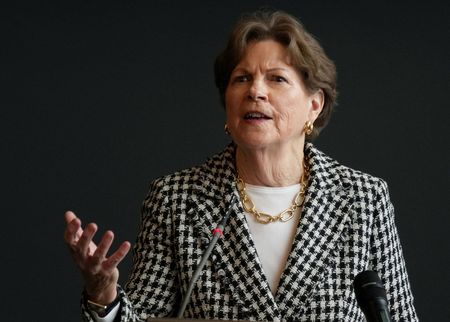
Democratic Senator Jeanne Shaheen pointed out that the senators in attendance represent a wide range of states where the aerospace industry plays a major role in the economy. She also highlighted that the United States had its largest-ever presence at Farnborough this year.
Shaheen drew attention to China’s growing footprint at last year’s Paris air show as context for why American visibility matters. “The fact that we have such a large presence is important not just to America’s industry but also to the partnerships that we need to have around the world to not only improve our economic security but our national security,” she said.
She also emphasized that the U.S. and the European Union have critical areas where cooperation is needed to address defense requirements and existing production backlogs.
Earlier this month, the U.S. Commerce Department announced it had finished an investigation into imported commercial aircraft, jet engines, and parts. While the probe found that foreign goods raise national security concerns, the Trump administration indicated it is not immediately pursuing new tariffs on those products.
Following significant lobbying from the U.S. aviation sector, the Trump administration agreed to exempt airplanes and parts from tariffs as part of trade agreements, after briefly imposing such tariffs last year.
Both Moran and Shaheen, along with their fellow senators at the event, have voiced opposition to tariffs on aerospace products.
Eric Fanning, CEO of the Aerospace Industries Association, highlighted the strength of the American aerospace and defense sector. He noted the industry has seen a 25% jump in exports over the past year and employs more than 2 million people in the U.S. “We are by far the global leaders,” Fanning said.
Commercial aircraft and parts have operated under a tariff-free framework established by the 1979 Civil Aircraft Agreement, an arrangement under which the U.S. aerospace sector enjoys a $75 billion annual trade surplus.