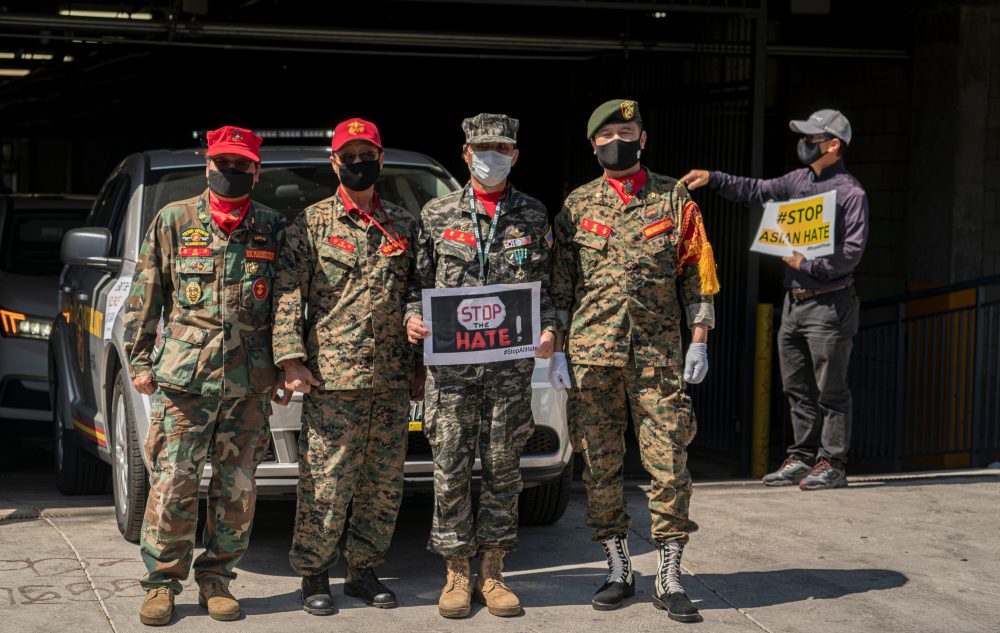

Reports of hate incidents targeting Asian American and Pacific Islander communities have declined from pandemic-era peaks, though discrimination remains a significant concern, according to new polling data released as Asian American and Pacific Islander Heritage Month begins.
The survey from AAPI Data and The Associated Press-NORC Center for Public Affairs Research reveals that approximately 25% of AAPI adults experienced hate crimes or incidents within the past year, including verbal harassment or physical attacks. While this figure matches results from last summer’s polling, it represents a notable decrease from October 2023, when 36% reported experiencing racially motivated abuse during the previous year.
Federal crime statistics support this downward trend. Preliminary FBI data shows anti-Asian hate crimes and bias incidents declined between 2024 and 2025 as the pandemic’s influence waned.
Despite these improvements, roughly 30% of AAPI adults believe they will “extremely” or “very” likely face racial or ethnic discrimination over the next five years.
“The key is there’s been a decline but a stabilization. So, it hasn’t declined since last year,” explained Karthick Ramakrishnan, founder and executive director of AAPI Data. “Both hate crimes and hate incidents are still an issue in our community.”
The survey shows significant reductions in verbal attacks compared to two years ago. About 10% report being targeted with racial or ethnic slurs in the past year, down from roughly 20% in October 2023. Additionally, 15% experienced verbal harassment or abuse due to their race or ethnicity, compared to 23% in 2023.
Community advocates note that hostile rhetoric has evolved from COVID-19-related blame to anti-immigrant messaging.
“We’re seeing things like ‘Go back to China’ still. But, it’s more like ‘ICE is going to deport you,’” said Stephanie Chan, data and research director at Stop AAPI Hate. “The rhetoric that’s being used to justify very harsh and aggressive immigration enforcement, all of this is also feeding into anti-AAPI hate persisting.”
Ambar Capoor, a 52-year-old India-born resident of Los Angeles, experienced this hostility firsthand last year while waiting at a restaurant. A white man pushed him aside and declared: “You don’t belong here. You should go back to your country.”
Capoor, a naturalized citizen who has called America home for 26 years, typically brushes off such encounters. “None of this stuff normally bothers me,” he said. “If somebody starts an altercation, that I’ll walk away from.”
However, Capoor, who identifies as a Democrat, believes the current political environment has encouraged people to express racist views more openly.
Nosheen Hamid, 36, has faced similar treatment in Salt Lake City, where she has lived since 2009. The stay-at-home mother, originally from Pakistan where her Catholic family was a religious minority, encounters racial profiling in her predominantly white Utah community.
Recently, a door-to-door salesman seemed shocked that she owned her home. “He was like, ‘Are you renting here?’ He asked me a few times and it got to me for just a second,” Hamid recalled. “People didn’t expect me to be in the space that I was, work-wise, school-wise.”
Economic pressures currently outweigh discrimination concerns for many AAPI adults. About 40% identify personal finances as a “major source” of stress, while roughly 20% cite health issues and family relationships. In contrast, only about 10% consider discrimination a major stressor, with approximately half reporting it causes no stress at all.
John Magner, 58, of West Jordan, Utah, faces a different challenge. The mixed-race man of Hawaiian, Chinese, and white heritage encounters discrimination primarily from Native Hawaiians and Pacific Islanders who question his Hawaiian ancestry. Utah is home to approximately 60,000 Native Hawaiians and Pacific Islanders, according to census data.
Last year, a Pacific Islander customer at Magner’s hardware store workplace called him “cracker and a little wannabe Pacific Islander.”
Rather than dwelling on such incidents, Magner focuses on managing family expenses while working and pursuing a master’s degree in counseling. “I work full-time but we’re struggling,” Magner said. “Inflation and then also some family stuff that’s gone on, having to pay medical bills. It’s just bills.”
Ramakrishnan suggests reduced scapegoating of immigrants of color may reflect public understanding that such groups don’t influence current economic conditions. “The likely reasons for those economic struggles have nothing to do with race or immigration,” he said. “They have to do with other factors, like tariffs, war on foreign policy, AI data centers. Those are all the things that people see that are driving up costs.”
Experts acknowledge that hate crimes and incidents often go unreported, and some AAPI subgroups may experience higher rates than others.
“If you look at it in the longer term, (hate incidents) are still really high compared to what it was like pre-pandemic,” Chan noted, referencing FBI statistics.
Recent data shows increasing incidents targeting South Asian communities, with spikes typically occurring “in moments of South Asian visibility,” such as New York City Mayor Zohran Mamdani’s election, according to Chan.
Given the political climate and his Indian heritage, Capoor has carried his U.S. passport card on a lanyard for six months. “After seeing all the reports of actual white folk getting arrested and thrown into camps and taking them like three days to get out of it,” Capoor explained. “I don’t have friends in high places. I don’t have the correct skin color.”
The poll surveyed 1,228 U.S. adults who are Asian American, Native Hawaiian and Pacific Islander between March 23-30, using NORC’s probability-based Amplify AAPI Panel. The margin of error is plus or minus 4.5 percentage points. This research is part of an ongoing project examining views within Asian American, Native Hawaiian and Pacific Islander communities, which are typically underrepresented in surveys due to small sample sizes and language barriers.