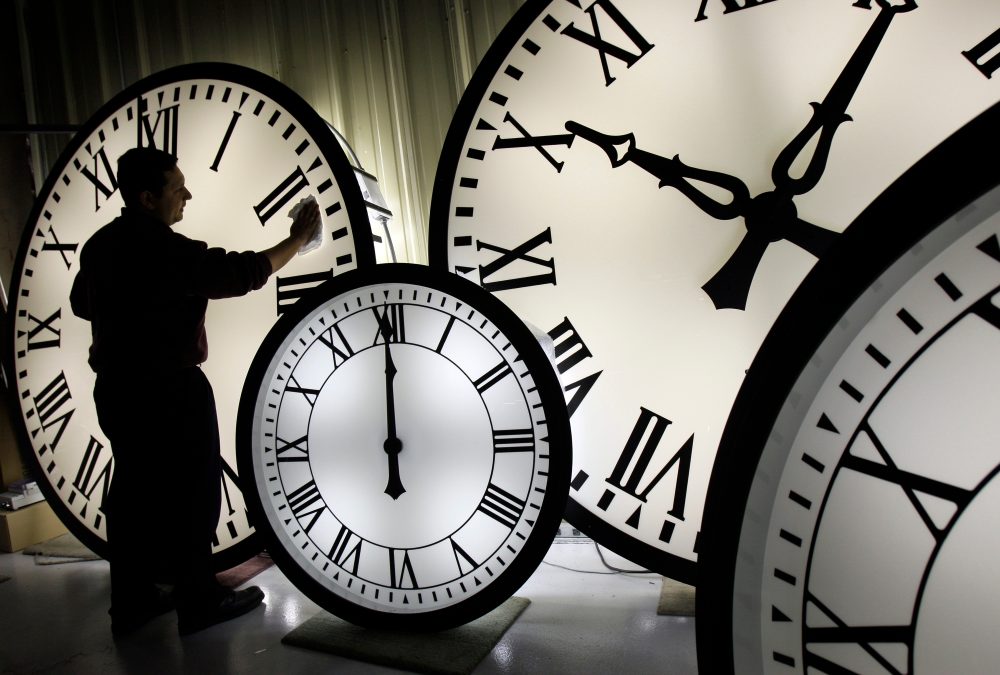

Americans will lose an hour of sleep this Sunday when clocks spring forward at 2 a.m. for daylight saving time, creating the familiar 23-hour day that disrupts sleep patterns, makes morning activities darker, and generates widespread frustration.
Despite polling data showing most Americans dislike switching clocks twice yearly, legislative efforts to eliminate the practice have stalled due to deep disagreements about the best alternative and concerns about potential consequences.
Making daylight saving time permanent would mean Detroit residents wouldn’t see sunrise until around 9 a.m. during winter months. Conversely, adopting year-round standard time would bring 4:11 a.m. sunrises to Seattle in June.
“There’s no law we can pass to move the sun to our will,” said Jay Pea, the president of Save Standard Time, an organization devoted to switching to standard time for good.
Genie Lauren, a 41-year-old healthcare worker from New York City, monitors sunrise and sunset times during winter months, describing herself as “white-knuckling it” until evening daylight returns enough for her to feel motivated to leave her apartment after work.
“The majority of the year we’re in daylight savings time,” said Lauren. “What are we doing this for?”
The United States has adjusted timekeeping practices periodically since railroads established standardized time zones in 1883. Globally, approximately 140 nations have implemented daylight saving time at various points, though only about half that number continue the practice today.
According to an AP-NORC survey from last year, roughly one in ten American adults supports the current clock-changing system. About half oppose it, while four in ten expressed no opinion. When forced to choose, most Americans indicate they would prefer permanent daylight saving time over permanent standard time.
Beginning in 2018, nineteen states—primarily across the South and Pacific Northwest—have enacted legislation calling for permanent daylight saving time adoption.
However, federal law requires Congressional approval for states to implement year-round daylight saving time, a system that was previously used nationwide during World War II and briefly in 1974 to mixed reception.
The Senate approved legislation in 2022 to establish permanent daylight saving time nationally. A corresponding House measure has not received a floor vote.
Representative Mike Rogers, an Alabama Republican who reintroduces such legislation each term, indicated that airline industry opposition—citing scheduling complications—has influenced lawmakers’ reluctance to advance the measure.
Florida Republican Representative Greg Steube has proposed an alternative solution.
“Why not just split the baby?” he asked. “Move it 30 minutes so it would be halfway between the two.”
Steube believes his proposal could attract bipartisan backing. The change would put America out of step with most global timekeeping, though India uses a similar approach and Nepal sets its clocks 15 minutes ahead of India.
Karin Johnson, vice president of advocacy group Save Standard Time and a University of Massachusetts Chan Medical School neurology professor, argues that permanent standard time—with the sun directly overhead near noon—would improve functioning for students, drivers, and virtually everyone else throughout the year.
“Morning light is what’s really critical for setting our circadian rhythms each day,” she said.
Kenneth Wright, who directs the Sleep and Chronobiology Laboratory at the University of Colorado, notes that fatal car accidents, heart attacks, and strokes increase in the days following the spring time change.
“Based on the evidence for our health and well-being and safety, the best option for us as a country now is to choose to go to permanent standard time,” he said.
Currently, only Arizona—excluding the Navajo Nation—and Hawaii avoid daylight saving time changes.
Over the past two years, six states have passed legislation in at least one chamber supporting permanent standard time, including Virginia in February. A Virginia House committee this week recommended postponing the issue until 2027.
Most proposals include conditions requiring neighboring states to make similar changes. Virginia’s measure, for example, would only activate if Maryland and Washington, D.C., also adopt standard time. This approach could address concerns from broadcasters worried about scheduling confusion, though it wouldn’t satisfy golf industry objections to permanent standard time reducing evening playing opportunities.
Many permanent daylight saving time proposals contain similar regional coordination requirements.
Scott Yates, a Colorado resident who operates the Lock the Clock website, advocates for federal legislation ending biannual clock changes within two years.
His proposal would require states to choose either permanent daylight saving or standard time.
Until clock changes end, Yates offers practical advice.
“If you’re the boss, tell all your employees on Monday that they can come in an hour later,” he said. “And if you aren’t the boss, tell your boss that you think you should come in an hour later on Monday. Sleep in for safety.”