
When the overwhelming volume of Jeffrey Epstein-related documents becomes too much to handle, Ellie Leonard steps away from her computer for a brief walk outdoors. But she always returns to continue her work.
This New Jersey mother of four has joined hundreds of amateur investigators and citizen journalists who have become captivated by the materials tied to the deceased Jeffrey Epstein. Leonard is committed to uncovering the truth about his criminal sex trafficking operation and his connections to influential figures worldwide, sharing her findings through her Substack publication.
“I like a good puzzle,” Leonard said. “I like an investigation. I like things that we have to solve and looking for clues.”
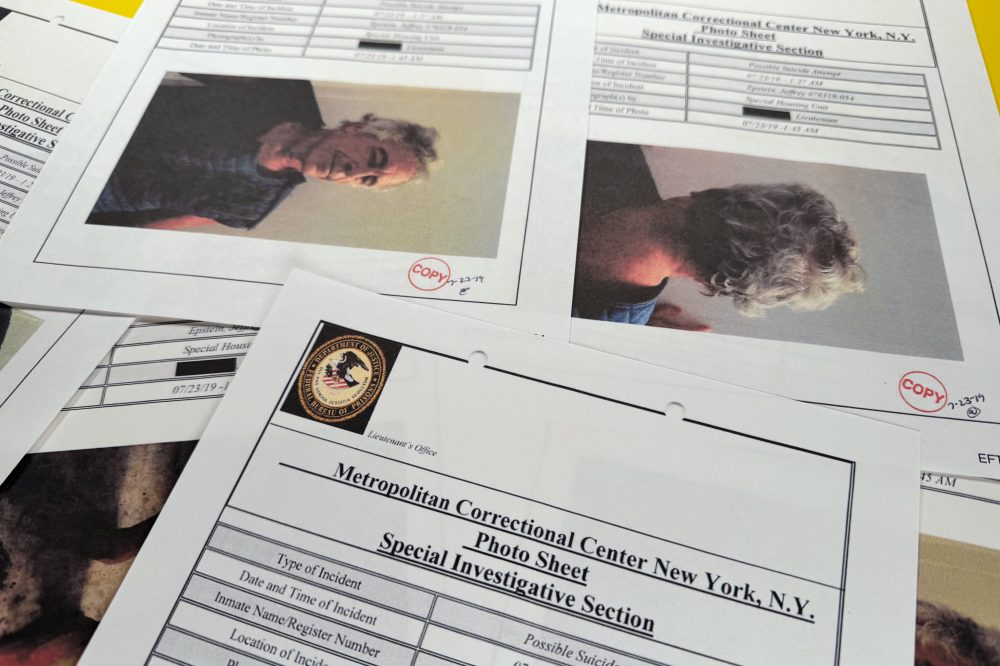
Major news organizations jumped into action immediately after the Justice Department made public more than three million document pages and thousands of visual materials on January 30th. Hundreds of reporters from The Associated Press, CBS, NBC, MS NOW and CNBC are working together to analyze these files and distribute their discoveries.
The New York Times alone has assigned dozens of reporters to review the documents, employing artificial intelligence technology to accelerate their analysis. Despite these efforts, the publication acknowledged last week that they have only scratched the surface of the available material.
This is precisely where individuals like Ellie Leonard become valuable contributors.
A continuous flow of news reports has emerged as investigators uncover more information and various people and organizations respond. Some discoveries have resulted in high-profile departures – including the chief legal officer at Goldman Sachs, executive chairman at Hyatt Hotel, chairman of the law firm Paul, Weiss, Rifkind, Wharton & Garrison, and government officials in Slovakia and Norway.
SmartNews has positioned itself as one independent platform claiming to provide trustworthy summaries of the coverage. “CNN is focused on one angle, Fox is pushing another, Twitter is a mess,” a narrator stated in one of their social media advertisements. “I’m seeing the same story with completely different narratives … Who do I trust?”
Given this landscape, there’s significant opportunity for people like Leonard. Her career has largely revolved around journalism-related work, operating a transcription services company until artificial intelligence made it mostly unnecessary. She briefly worked in education and contributed political and social commentary to her Substack publication, The Panicked Writer.
However, after witnessing the response generated when she began examining Epstein documents several months ago, she decided to dedicate her entire professional focus to this work.
Leonard describes her excitement at discovering, at 1 a.m. during a late-night research session, a document involving attorney Alan Dershowitz and Virginia Giuffre, who has accused multiple men in Epstein’s circle of sexual abuse. Her recent Substack articles have covered contents from a young victim’s diary and email exchanges between Epstein and Sarah Ferguson.
Leonard explained that she searches for details that others might overlook and enjoys demonstrating connections within Epstein’s extensive network. “I’m putting four kids into the world,” she said, “and I don’t want to see something like this happen again.”
Journalist Wajahat Ali, who operates the Left Hook Substack, expressed admiration for Leonard’s efforts and frequently highlights her work on his platform. Some citizen journalists investigating Epstein gather on livestreams to discuss their findings.
Throughout the past ten years, Ali has observed the emergence of a community fascinated by true crime stories who enjoy analyzing evidence and developing their own theories. Law enforcement officials involved in the Arizona search for the missing mother of NBC’s Savannah Guthrie have expressed frustration about interference from amateur investigators.
Ali described the Epstein files as “the mother lode.” “If you love conspiracy theories, if you love true crime, this is the ‘Citizen Kane’ of true crime. It is the unfortunately sordid gift that will keep on giving.”
Similar to Leonard, Anne P. Mitchell and Kassandra Mable Costa bring professional experience that aids their work with the Epstein documents. Costa, based in North Carolina, applies research skills from her marketing career. Mitchell, a former Colorado law professor, specializes in locating legal documents and translating their meaning into understandable language.
Both fascinated and disturbed by the story, Costa was attracted to the original source materials. Rather than publishing her discoveries, she uses her abilities to assist others, gathering evidence for a friend attempting to have former Maine Sen. George Mitchell’s name removed from an elementary school. The former senator has denied any wrongdoing, but the documents reveal he maintained contact with the sex offender.
“I am not really politically active,” Costa said. “There are ways that I try to help and ways that I try to create a better world. But I’m not overly political. I’m not looking for conflict, I’m not looking for controversy.”
Anne P. Mitchell’s “Notes From the Front” Substack functions as a hub for Epstein researchers; she organizes discussion groups and provides access to numerous documents for her few thousand paid subscribers. “We may have just found a smoking gun,” she writes about a file containing images that appear to show men with victims. Both Mitchell and Leonard provide some content free to followers while charging for premium material.
Mitchell praises people working through the Epstein files. “The more people who are doing it, the more that is going to come to light,” she said. “But I’m guessing that the more people who are doing it, the more it’s not going to be good for their mental health.”
Matthew LaPlante, a journalism professor at Utah State University, believes having more citizens applying reporting techniques – whether they realize it or not – can benefit society. He referenced Minneapolis residents who used cell phones to document immigration enforcement activities.
The drawback, he explains, is that few of these individuals have training in the meticulous process of fact verification – or understand the legal consequences of publishing unconfirmed information. The New York Times, in an article explaining their examination process to readers, emphasized this need for caution. “We don’t publish anonymous information that we can’t verify ourselves,” the newspaper stated.
LaPlante highlighted one Substack post from last week containing more than a dozen videos from the files, most heavily redacted and confusing without proper context – including footage of two unidentified men interacting with a sex doll.
The Epstein files contain numerous unverified allegations, some quite extreme. How much of this unvetted material will enter public discussion – not to mention false or manipulated information created by bad actors?
“What is in the files is damaging enough,” Ali said. “You don’t need to indulge in conspiracy theories. It would be a disservice to the survivors and would hurt the credibility of what is already there.”
There’s sufficient material to occupy the curious – both professionals and amateurs. Potentially, additional new or less-redacted documents may be released.
“I hope I’m around for 15 or 20 years,” said Mitchell, who is mostly homebound due to health concerns. “Because I really think it’s going to take that long for the full extent of this to be exposed.”