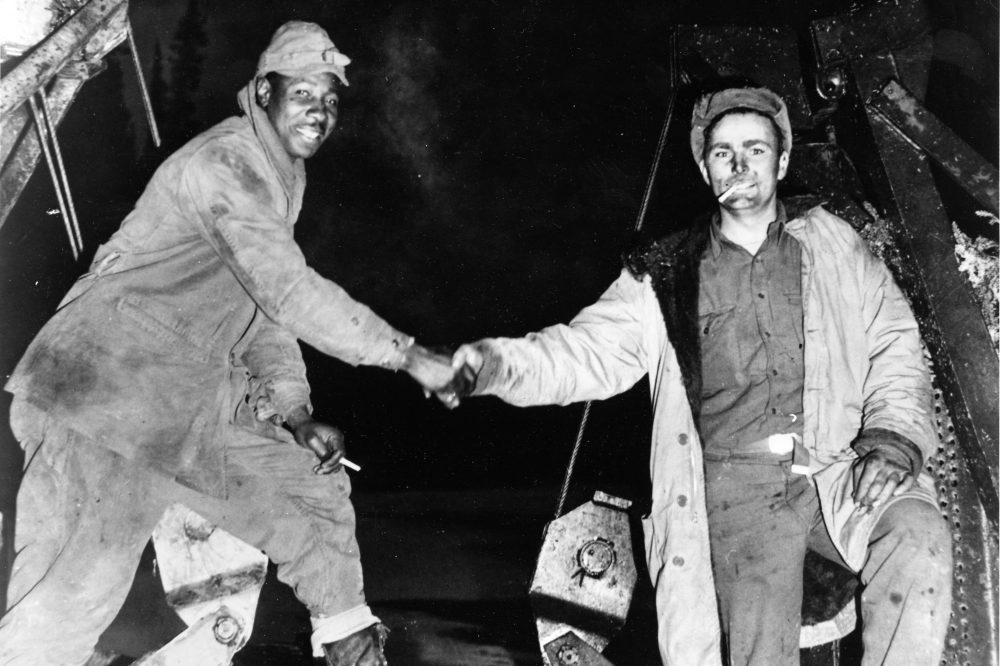

During World War II, approximately 4,000 Black soldiers endured brutal conditions to carve the first roadway connecting Alaska to the continental United States through unforgiving wilderness terrain.
These segregated troops faced discrimination while their efforts ultimately contributed to changes in military policies regarding racial integration. Alaska recognized their service by dedicating a bridge in their honor along the famous Alaska Highway’s terminus.
Eight decades have passed, and the deteriorating structure requires replacement. Rather than demolishing the entire bridge, Alaska officials plan to preserve two of its nine sections as a redesigned monument while offering the remaining portions to interested parties.
The 1,885-foot structure crossing the Gerstle River near Delta Junction, positioned roughly 100 miles south of Fairbanks at the Alaska Highway’s endpoint, will undergo complete replacement by the state.
Alaska is offering seven bridge sections at no cost to government entities or private organizations willing to preserve their historical significance and maintain public access.
Two end sections of the original structure, which received the Black Veterans Memorial Bridge designation in 1993, will remain as a permanent tribute to the approximately 4,000 Black servicemen who constructed the initial wooden crossing during the Alaska Highway’s completion.
These preserved segments will keep the memorial bridge name, while the replacement Gerstle River Bridge may unofficially adopt the memorial designation pending legislative approval. The existing bridge will stay operational until the new structure opens in 2031.
Former Delta Junction mayor and historical society member Mary Leith expressed satisfaction that historical elements will survive, though she advocates for proper signage and a roadside viewing area where visitors can access the preserved structure.
“I would hope that if they’re going to save it, then they save it properly,” she said.
According to state transportation department spokesperson Angelica Stabs, the memorial bridge signage will remain and both preserved sections will be viewable from the replacement bridge, but barriers will prevent climbing or vandalism. No viewing area is currently planned.
The replacement bridge will run parallel to the existing structure on its eastern side, maintaining approximately 50 feet of separation, Stabs explained.
The original supply route construction involved 11,000 U.S. Army Corps of Engineers troops working under racial segregation policies. Beyond conquering challenging landscape, soldiers battled mosquito swarms, swampy ground, frozen earth, and temperature extremes from 90 degrees Fahrenheit to negative 70 degrees.
“Though conditions were harsh for all, they were nearly unbearable for black soldiers. From the Deep South, most of these soldiers had never encountered anything approaching the severe conditions of the far north. Moreover, since black troops were not typically permitted to use heavy machinery, they made do with picks, shovels, and axes. In addition, they were prohibited from entering towns and were confined to wilderness assignments,” according to a historical account by the National Park Service.
Black soldiers working southward completed their section in just over eight months, connecting with white troops advancing northward to finish the 1,500-mile gravel roadway, originally named the Alcan Highway, stretching from Dawson Creek, British Columbia, to Delta Junction on October 25, 1942.
“In light of their impressive performance, many of the black soldiers who worked on the Alcan were subsequently decorated and sometimes deployed in combat. Indeed, the U.S. Army eventually became the first government agency to integrate in 1948, a move that is largely credited in part to the laudable work of the soldiers who built the Alcan,” the National Park Service says.
Alaska remained a territory at the time, with officials long seeking such a connection to the continental United States. Disputes over routing and necessity caused construction delays.
Pearl Harbor attacks in Hawaii and Dutch Harbor in Alaska, combined with Japanese occupation of Alaska’s Kiska and Attu islands, created urgent need for the roadway since ocean shipping routes to the West Coast faced potential threats.
Black servicemen near Delta Junction completed a temporary river crossing in 1942, with contractors finishing the steel structure two years afterward.
Alaska’s transportation department will accept proposals through March 6 for the seven available sections, with applicants not required to take all pieces. Officials will review all submissions, including requests for individual sections intended for uses like public park creek crossings.
Selected recipients must follow specific guidelines including prohibiting vehicle access, covering removal and transportation costs plus lead remediation, and preserving historically significant characteristics.