
JUNEAU, Alaska — Federal officials are celebrating what they describe as the most successful oil and gas lease auction ever conducted in Alaska’s National Petroleum Reserve, with major energy companies submitting hundreds of bids despite ongoing court battles from environmental advocates and certain Native groups.
Wednesday’s auction marked the reserve’s first lease offering since 2019 and the initial sale required under legislation Congress enacted last year mandating a minimum of five lease auctions across the next decade. The Trump administration has prioritized expanding Alaska’s oil and gas operations. Interior Department records show 11 energy companies placed bids on 187 parcels spanning 1.3 million acres, selected from 625 available tracts covering approximately 5.5 million acres.
Alaska’s political establishment celebrated the outcome, with Republican Governor Mike Dunleavy describing it as a “major win for our state and our country.” A coalition of business, energy sector, and resource development organizations released a joint declaration stating the “strong participation and unprecedented results underscore renewed investor confidence in Alaska’s North Slope and the state’s long-term resource potential.” Voice of the Arctic Iñupiat, representing North Slope community leaders, characterized the auction as a significant achievement.
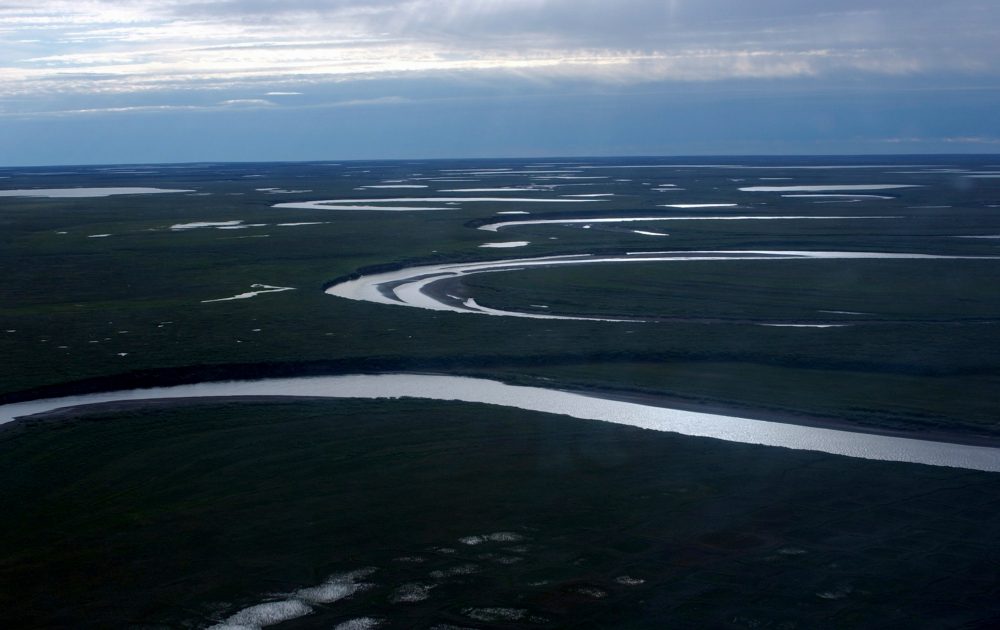
The petroleum reserve houses the substantial Willow oil development, which received Biden administration approval in 2023 and is currently being constructed by ConocoPhillips Alaska. This reserve, comparable in size to Indiana and located on Alaska’s North Slope, serves as habitat for diverse wildlife populations including caribou, bears, wolves, and millions of migrating birds.
Opponents of expanded drilling have expressed alarm about potential damage to reserve areas previously identified as environmentally significant for wildlife, subsistence activities, or other important uses, particularly surrounding Teshekpuk Lake, Alaska’s largest arctic lake.
Alaska Wilderness League Executive Director Kristen Miller described the area as “one of the last truly wild places on Earth, home to millions of migrating birds, vast caribou herds and Indigenous communities whose lives are woven into this land.”
“We will spend every ounce of our energy making sure those leases never become drill pads,” she stated.
Multiple legal challenges targeting the lease auction, its underlying management framework, and associated government actions remain active in federal courts.
Earthjustice attorney Jeremy Lieb, representing conservation organizations in one lawsuit, argued that given climate change concerns and elevated energy costs, “it’s clear that the best way forward is switching to low-cost, clean energy sources – not attempting to produce more expensive, ecologically destructive Arctic oil.”
In separate litigation, U.S. District Judge Sharon Gleason issued a temporary order this week blocking the Trump administration’s revocation of access rights granted to Nuiqsut Trilateral, Inc., an entity established by the Native Village of Nuiqsut, Kuukpik Corporation, and the City of Nuiqsut, pending resolution of their legal challenge.
These access rights, granted during the final days of the Biden administration, permitted restrictions on oil and gas activities to safeguard the Teshekpuk caribou population and their habitat across roughly 1 million acres.
When canceling these rights, a deputy Interior secretary referenced “serious and fundamental legal deficiencies” in how the access rights were originally granted.
Bureau of Land Management Alaska Director Kevin Pendergast made no reference to Gleason’s ruling during the public bid announcement ceremony. When questioned by The Associated Press, the agency acknowledged that lease offerings within the disputed access area were part of the auction.
“Any lease issuance for tracts within the right of way will be consistent with the court’s order,” agency officials stated.
Nuiqsut Trilateral attorney Travis Annatoyn reported that Interior Department officials assured the organization they “will not authorize activities prohibited by the Right-of-Way, absent Nuiqsut Trilateral’s waiver,” while the court stay remains effective.
“The issuance of leases in the subject acreage is prohibited by the Right-of-Way, so we expect that leases will not be awarded in that acreage absent further action from NTI and appropriate discussions between NTI and Interior,” the statement indicated.