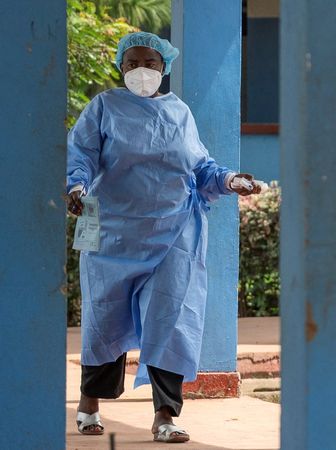

Relief workers are conducting house-to-house campaigns to fight false information about Ebola in the Democratic Republic of Congo, where a deadly outbreak continues to spread, according to the International Federation of Red Cross and Red Crescent Societies (IFRC).
The organization announced Friday that the current outbreak involves the Bundibugyo strain of Ebola, which has no approved vaccine or treatment available. The World Health Organization classified this outbreak as an emergency of international concern on Sunday.
Relief efforts are concentrated in Mongbwalu, the epicenter of the outbreak, where the IFRC is collaborating with local residents to educate them about prevention methods and appropriate medical care.
Gabriela Arenas, the Regional Operations Coordinator for the IFRC Africa Region, spoke to reporters from Nairobi via video link about the varying community responses.
“Community reactions remain mixed, for some people the outbreak is very real and they are taking information on how to protect themselves,” Arenas explained. “For others, there’s still suspicion and misinformation claiming that Ebola is fabricated.”
Local conflicts have emerged over outbreak response measures. Community members burned down patient treatment tents after Congolese officials denied their request to receive the remains of a popular local footballer who allegedly died from the disease. The deceased’s family challenged the Ebola diagnosis and wanted to conduct their own burial ceremony.
Arenas noted that this incident highlights the critical importance of establishing community trust during outbreak response efforts.
The remains of Ebola patients pose extreme infection risks after death, and improper burial practices where relatives handle bodies without adequate protection equipment represent a major source of disease spread.
“Ebola outbreaks start and end between communities, and this is why the local engagement remains so central to the response,” Arenas stated, explaining that false information develops from community fears and insufficient access to reliable sources.