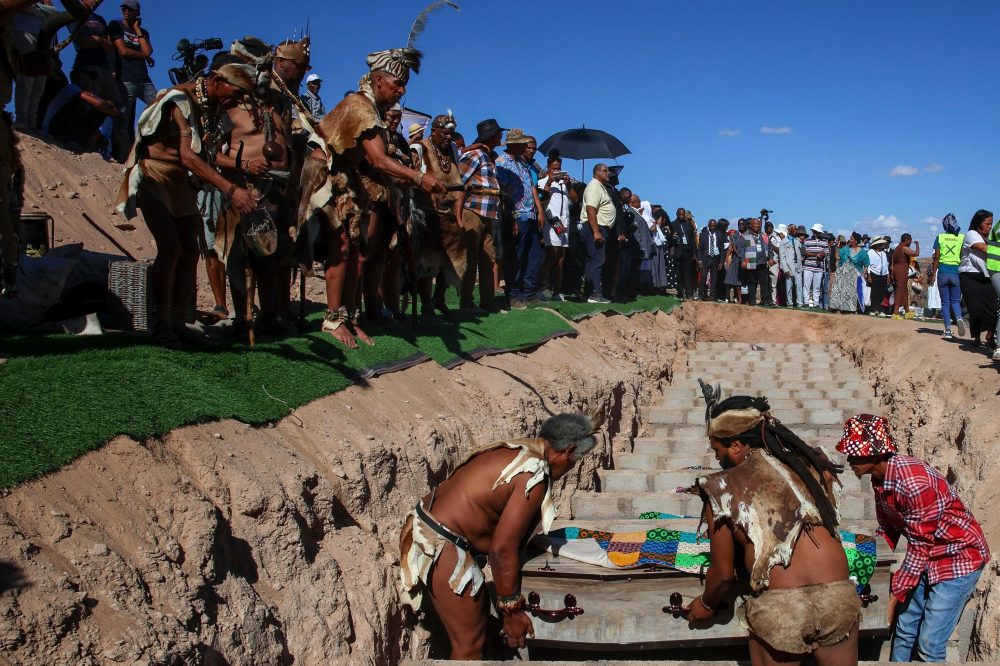

JOHANNESBURG — In a solemn ceremony on Monday, South Africa laid to rest the remains of dozens of indigenous Africans whose bodies had been excavated and transported to European institutions for scientific study more than a century ago.
At least 63 individuals from the Khoi and San peoples were finally given proper burials after their remains were returned from European museums. This repatriation represents part of a broader continental effort to reclaim human remains and cultural artifacts that were taken from Africa.
The Khoi and San peoples are recognized as southern Africa’s original inhabitants, who fought against colonial forces before many were killed by European colonizers.
These particular remains had been excavated between 1868 and 1924, then given to The Hunterian Museum at Scotland’s University of Glasgow. Additional remains had been stored at South Africa’s Iziko Museums since the 1920s.
President Cyril Ramaphosa participated in the reburial ceremony alongside museum officials and traditional community leaders. He explained that the return of these remains resulted from discussions between the Scottish university and South African officials that began in 2022.
The president described the ceremony as an effort to restore human dignity to these individuals.
“The sale of human remains of Indigenous peoples for study in Europe was rooted in racism and used to advance theories of European racial superiority,” Ramaphosa stated. “They were dug up and turned into commodities and specimens, displayed under the cold gaze of pseudoscience.”
Ramaphosa also emphasized that most European nations should take greater steps to recognize the harm inflicted on Africans during the colonial era and should explore providing reparations to their former colonies.