
ISLAMABAD (AP) — Pakistan’s Defense Minister Khawaja Mohammad Asif declared Friday that his nation is engaged in an “open war” with Afghanistan, as military clashes have intensified into the most severe armed conflict between these neighboring countries since a Qatar-brokered ceasefire collapsed in October.
The two nations share a complex relationship dating back to Pakistan’s establishment in 1947. Despite traditional social, ethnic and economic connections, their relationship has remained unstable and frequently erupted into military confrontations.
Recent months have seen sporadic clashes along their winding, permeable border as tensions have mounted. The current conflict represents the most dangerous escalation yet.
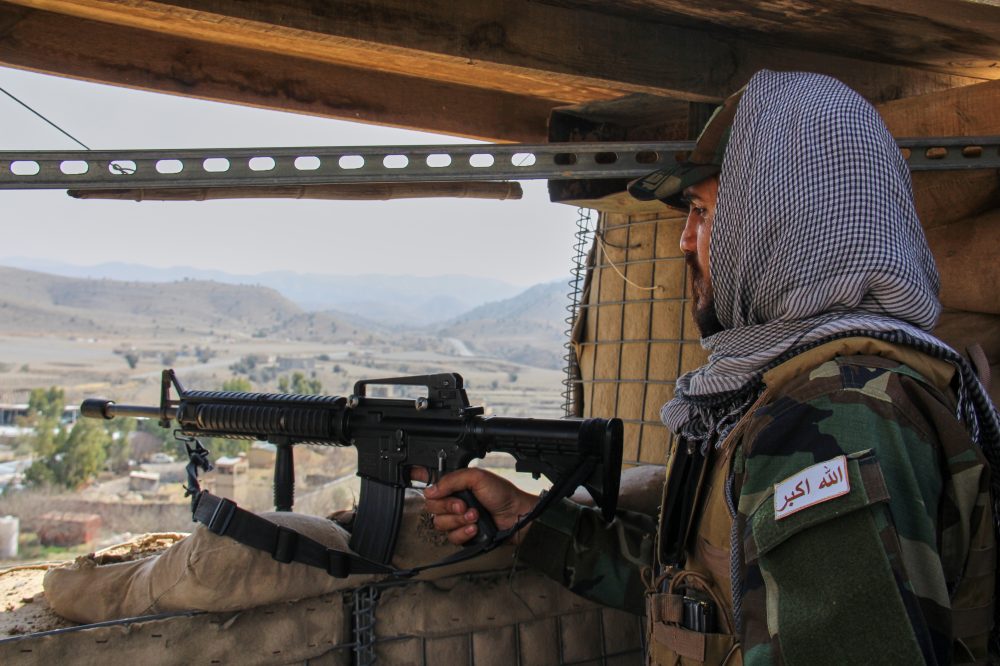
Thursday evening saw Afghanistan launch a major cross-border offensive targeting six Pakistani provinces, which Afghan officials described as retaliation for Pakistani air attacks on Afghanistan the previous Sunday. While Pakistan claimed those Sunday strikes eliminated dozens of militants in Afghanistan, Kabul maintained that only innocent civilians, including women and children, were killed.
Pakistan responded with early Friday morning airstrikes targeting Afghanistan’s capital along with Kandahar and Paktia regions. Border combat, which had temporarily stopped, resumed and continued throughout Friday.
Pakistani officials point to a dramatic increase in domestic militant violence over recent years, including suicide attacks and coordinated strikes against security personnel. Pakistan blames the Pakistani Taliban, called Tehrik-e-Taliban Pakistan or TTP, for many incidents and claims Afghanistan provides sanctuary for the organization within its borders.
Afghan leadership denies these accusations, stating it prohibits anyone from using Afghan territory for attacks against any nation, including Pakistan.
Formed in 2007, the TTP united various banned organizations that agreed to collaborate against Pakistan while supporting the Afghan Taliban, who were then battling U.S. and NATO troops. Both the United Nations and United States classify it as a terrorist organization.
The organization demands stricter implementation of Islamic law, freedom for imprisoned members in Pakistan, and reduced Pakistani military presence in Khyber Pakhtunkhwa province, the border region it has historically used as its operational base.
While distinct from the Afghan Taliban now governing Afghanistan, the TTP maintains close ties with them. Many TTP leaders and fighters are believed to have found refuge in Afghanistan following the Taliban’s 2021 return to power, further deteriorating relations.
Afghanistan facilitated a brief ceasefire between the TTP and Pakistan in 2022. The agreement collapsed when the TTP claimed Pakistan’s military violated the terms.
Pakistan was among just three nations — alongside Saudi Arabia and the United Arab Emirates — that recognized the Taliban’s initial government after they first took control in 1996. Following the September 11, 2001, attacks on the United States, Islamabad shifted to support Washington in the U.S.-led Afghan war, a change that infuriated domestic Islamist militant organizations.
Most tension centers on the countries’ 2,611-kilometer (1,622-mile) border called the Durand Line. Named for British diplomat Mortimer Durand and established in 1893, this boundary divides the traditional homeland of the Pashtun people, Afghanistan’s largest ethnic group and the source of Afghan Taliban leadership.
While internationally recognized as Pakistan’s western border, Afghanistan refuses to acknowledge it as legitimate.
Each country regularly accuses the other of ignoring Islamic militants operating along this frontier.
Afghanistan-Pakistan tensions have remained elevated for months. They peaked last year when dozens of civilians, security forces and militants died in the deadliest confrontations between the countries in years.
On October 8, militants attacked an army convoy in Pakistan’s Orakzai district, killing 11 soldiers. This assault was part of ongoing violence that has claimed hundreds of civilian and security personnel lives in recent years.
Prime Minister Shehbaz Sharif declared Pakistan could no longer accept continued casualties and authorized the military to respond with full authority. The next day, Pakistan’s military conducted strikes inside Afghanistan, triggering cross-border battles.
A Qatar-mediated ceasefire in mid-October stopped the fighting, though repeated strikes and skirmishes in the border region have since occurred, resulting in dozens of deaths. The two sides report vastly different casualty numbers.
Istanbul peace negotiations in November failed to produce a lasting solution.
Tensions have also increased over Pakistan’s mass deportation of Afghan refugees.
In 2023, Pakistan initiated a nationwide campaign against foreigners living without legal status. While officials claimed the effort wasn’t targeting any specific nationality, it has predominantly affected Afghans.
Over four decades, millions of Afghans have sought refuge in Pakistan, escaping war, political turmoil and economic difficulties in their homeland. The crackdown impacts more than two million Afghans in Pakistan, including some born there.
Iran, Afghanistan’s western neighbor, has also conducted deportations, further straining resources in impoverished Afghanistan. The U.N. refugee agency reports 5.4 million people have returned to the country since October 2023, mostly from Pakistan and Iran.
The conflict has concerned the international community, particularly since the region hosts other militant groups, including al-Qaeda and the Islamic State group, which maintain a presence and seek to re-emerge.
In October, Turkey, Qatar and Saudi Arabia had facilitated discussions between the parties. At that time, U.S. President Donald Trump had also commented, saying he planned to resolve the conflict “very quickly.” Whether he will intervene again remains uncertain.
Turkish Foreign Minister Hakan Fidan contacted his Pakistani, Afghan, Qatari and Saudi counterparts, a Turkish official said Friday, speaking anonymously according to government policy.
Russia has urged an immediate end to hostilities and a diplomatic solution to the conflict, while Iran expressed readiness to help facilitate dialogue.