
Want to launch your own business, master artificial intelligence, or dive into a fascinating new pastime? Educational institutions across the country are seeing record numbers of adults signing up for both credit-bearing and non-credit courses.
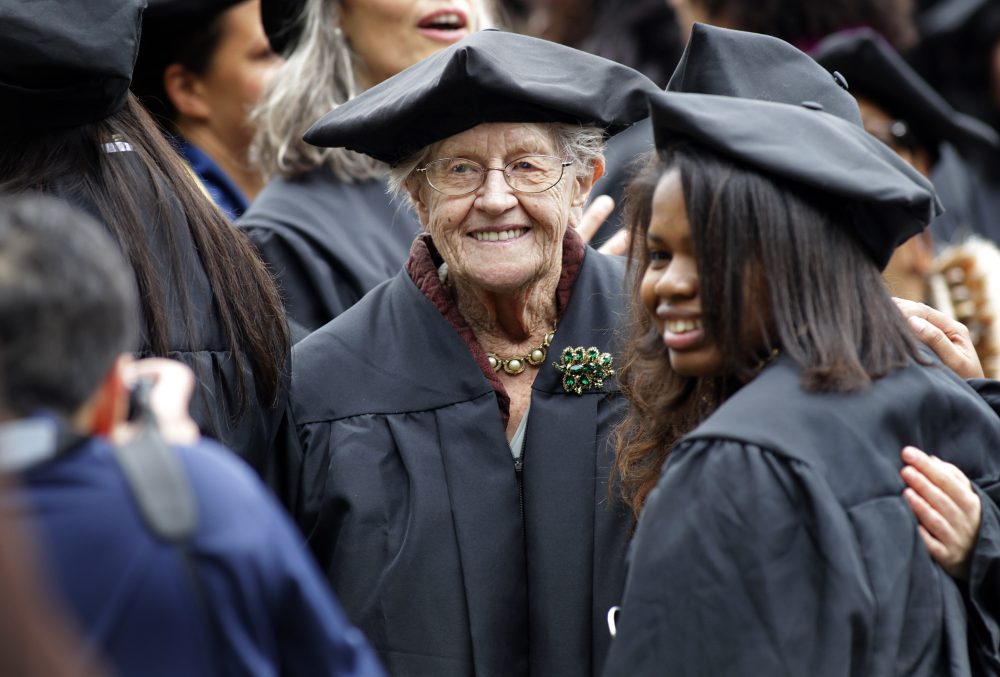
Countless American adults are enrolling in college programs to obtain professional certifications, develop new capabilities, or work toward academic credentials. Many of these returning students seek career progression, better compensation, and employment stability, while others are driven by curiosity and personal enrichment.
Eric Deschamps, who oversees continuing education at Northern Arizona University in Flagstaff, Arizona, explains the diverse backgrounds of these learners. “They might have kids, they might be working full-time, they might be older non-traditional students,” Deschamps noted. However, returning to the classroom “opens doors to education for students that might not have those doors open to them otherwise.”
These mature students frequently bring valuable professional and life experiences to their academic pursuits, though they must navigate the complex challenge of balancing coursework with employment, family care, and other obligations. While demanding, this juggling act often helps clarify goals and delivers deep personal satisfaction.
Educational specialists share insights about re-entering academia, important considerations before enrolling, and strategies for managing studies alongside professional and personal duties.
The continuing education arm of the University of California, Los Angeles, UCLA Extension, provides over 90 certificate and specialty programs spanning interior design, early childhood education, accounting, photography, paralegal training, and music production. Individual classes address diverse subjects including retirement planning, novel writing, business management for athletes and artists, and ikebana, the traditional Japanese practice of flower arrangement.
Approximately 33,500 students participated in the most recent academic year, with nearly half being over age 35. During the same timeframe, UCLA recorded full-time enrollment of roughly 32,600 undergraduate degree candidates.
Traci Fordham, UCLA’s interim associate dean for academic programs and learning innovation, offers a fresh perspective on these students. “I prefer calling our (adult) learners not only continuous, but the new majority student. These are learners who tend to already be employed, often supporting a family, looking for up-skilling or sometimes a career change,” Fordham explained.
Higher education specialists observe that many adults pursue classes for career development as economic uncertainties, technological progress, and evolving workplace demands create feelings of professional vulnerability.
Deschamps provided a current example: “A great example of that is artificial intelligence. These new technologies are coming out pretty quickly and for folks that got a degree, even just 5 or 10 years ago, their knowledge might be a little bit outdated.”
Academic counselors recommend that adults considering a return to education should evaluate their available time and financial resources, carefully weighing potential advantages and drawbacks, including monetary costs, risk of exhaustion, and educational benefits that may take time to realize.
Deschamps recommends considering your five or ten-year aspirations and determining how additional coursework or certification might help achieve those objectives. For instance, someone hoping to open a microbrewery would benefit from learning brewing techniques or business management. Those seeking promotions or career transitions might pursue job training, skill updates, or industry knowledge to demonstrate their qualifications.
Universities like UCLA and Northern Arizona University strive to make continuing education accessible through affordable pricing compared to degree programs and various financial aid options. Multiple learning formats are typically available, including face-to-face and online classes, intensive and flexible scheduling, helping adults blend academic work with personal and professional responsibilities.
Katie Swavely, assistant director for academic advising and student success at UCLA, began her educational journey at community college before transferring to UCLA for anthropology studies. She waited a decade after graduation before pursuing her master’s degree in counseling with an academic advising concentration. Swavely finished that program in 2020, made possible through employer-provided tuition benefits from her workplace at the time.
Swavely, who is married with two children, reflected on her journey: “I felt like in so many ways I didn’t really know who I was or what I wanted to do other than just pay the bills and survive. It was hard. And I thought about quitting many times. We had to budget to the extreme and find additional ways to make it work.”
She continued: “There are questions of how are we going to make it work and do we have the money. As a parent, sacrifices are there all the time. You make those judgment calls every day. But making sure that you’re investing in yourself. There’s always gonna be reasons why it’s not today, not this month, not this year, but it’s also OK to just jump in and go for it and see how it works out.”
As someone passionate about literature, Swavely now hopes to enroll in a book editing course and continue her educational pursuits through the university.
Some specialists identify psychological obstacles as a primary challenge for returning students. Concerns about outdated writing abilities, insufficient mathematical or technological knowledge can trigger feelings of doubt or inadequacy.
Fordham addressed this barrier: “I think this is tied to access. Many of our learners, not all of them, haven’t imagined themselves in any kind of higher education, post-secondary education environment.”
Swavely emphasized the importance of establishing a support system and utilizing available counseling and advising resources during her student experience.
She urges adults advancing their education to focus on “finding your community.” Having supportive people at home and in classes who boosted her confidence helped her complete graduate school, Swavely explained. She also recommends establishing limits and showing yourself compassion when assistance is needed.
Swavely concluded with encouragement: “The biggest piece of advice is for people to realize you’re never too old to learn.”