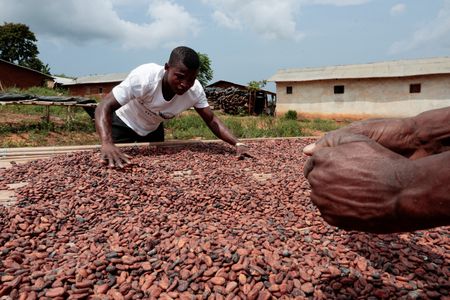

The world’s largest cocoa-producing nation is taking unprecedented steps to address a mounting crisis of unsold cocoa beans, according to government and regulatory officials.
Ivory Coast will implement its first-ever adjustment to harvest timing while dramatically slashing the price paid to farmers, four sources familiar with the matter revealed. The West African country is grappling with warehouses full of unsold cocoa as global price drops have made their beans too costly for international buyers.
Starting next month, cocoa harvested in March will be reclassified under different seasonal pricing, allowing officials to pay farmers between 800 and 1,000 CFA francs per kilogram—roughly $1.45 to $1.81. This represents a steep decline from the current main harvest rate of 2,800 CFA francs.
The nation’s mid-harvest period, traditionally running from April through September, will now begin in March and conclude at August’s end, sources indicated.
This strategy mirrors recent actions by Ghana, the second-largest cocoa producer globally, which reduced farmer payments earlier this month to better match international market conditions.
The policy changes received approval following last week’s interministerial committee meeting on raw materials, according to the sources.
“We are going to change the opening dates of our cocoa seasons because we need to adapt and be realistic,” one government official stated.
A second government source confirmed the timeline, saying: “The interministerial committee has already approved these changes, which will take effect on March 1, 2026, with the official launch of the mid-crop campaign.”
The current farmer payment structure was established at the beginning of the 2025/26 growing season. Officials expect to announce the revised rates by month’s end, the agriculture minister confirmed Monday.
Ivory Coast’s Coffee and Cocoa Council committed in late January to purchase 100,000 tons of unsold cocoa inventory, requiring approximately $500 million to provide cash to farmers who hadn’t received payment for their main harvest beans.
The pricing crisis has created an unsustainable financial burden for the government, which must cover the gap between guaranteed farmer payments and actual export prices.
“Every day, prices continue to fall despite our efforts… We must be realistic and adapt like our neighbours in Ghana,” the second government source explained.
Officials revealed the government currently subsidizes between 1,900 and 2,200 CFA francs per kilogram to maintain guaranteed pricing while enabling bean exports.
“This is completely unsustainable in the long term and for the country,” one source emphasized.
The West African nation continues exploring additional measures to help the struggling agricultural sector navigate current market challenges, the four sources told Reuters.