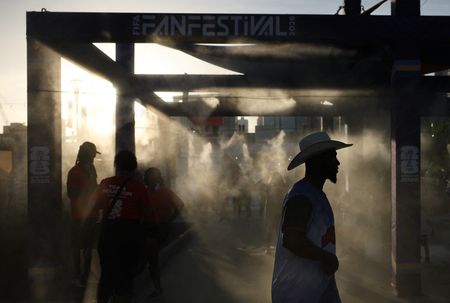

Extreme heat couldn’t stop World Cup enthusiasts from flocking to Houston’s fan festival on Saturday, where they armed themselves with portable fans, shade umbrellas and plenty of icy beverages to combat the blistering Texas temperatures.
As mercury climbed toward 100 degrees Fahrenheit before Sunday’s opening Houston match featuring Germany versus Curacao, event coordinators implemented numerous cooling strategies, from complimentary sunscreen distribution to climate-controlled refuge areas.
“We know it’s the summer and there is nothing we can do about the heat but we want to make it as comfortable as possible,” Houston fan festival organiser Patti Smith told Reuters.
Approximately 30,000 soccer supporters flooded Houston’s downtown area for the tournament’s opening contest between Mexico and South Africa, though the sweltering conditions resulted in over 100 documented heat-related medical incidents.
Medical staff handled most cases at the venue, where authorities established water refill stations and constructed open-air cooling zones equipped with misting fountains to provide relief for overheated attendees.
Assistant principal Jessica Garza came dressed in lightweight clothing with her hair pulled back, keeping hydration and a personal fan close at hand throughout the day.
“It’s worth it, it’s the World Cup. They only come here once in a lifetime so I am going to be hot for today, I am going to enjoy it,” Garza said.
While intense temperatures challenge multiple tournament locations across the U.S., Canada and Mexico, Houston’s combination of extreme heat and oppressive humidity creates outdoor conditions resembling a furnace blast.
Tournament officials anticipate additional challenges when supporters from temperate nations like Germany and Sweden, unaccustomed to such severe heat, arrive for their teams’ Houston matches.
Saturday’s festival-goers demonstrated creative heat management, with many carrying umbrellas for sun protection, gripping handheld fans, or draping shirts over their heads for makeshift cooling. Some chose simpler approaches.
“I’m trying to stay in the cooler areas, the shadier areas,” geophysicist John Banwagoner told Reuters.