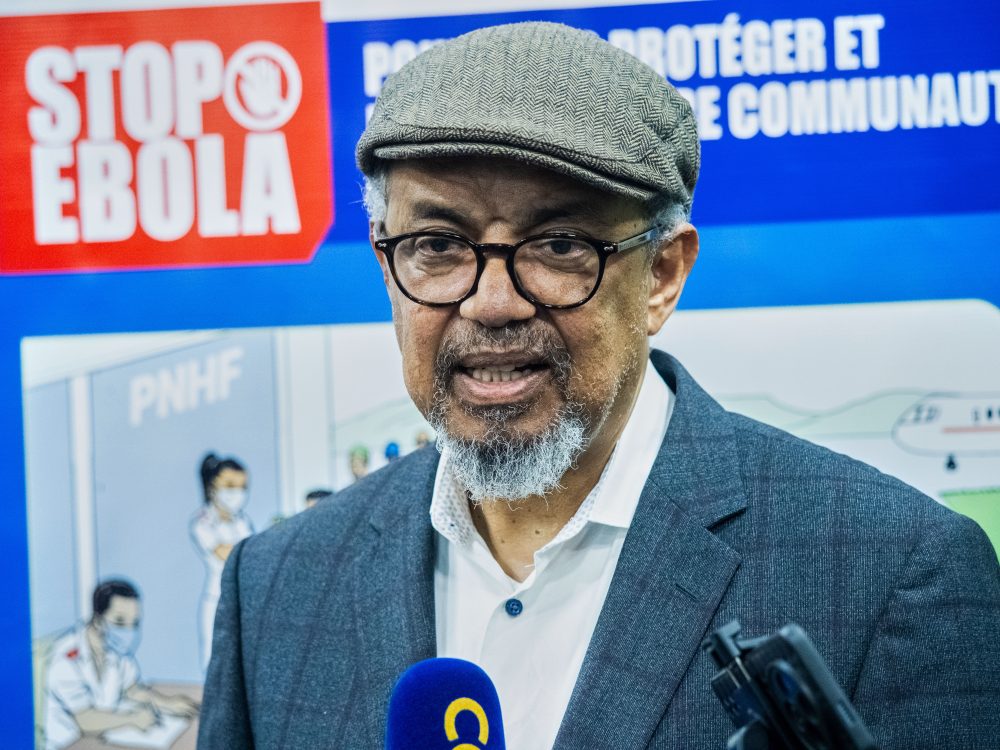

BUNIA, Congo (AP) — The World Health Organization’s top official touched down Saturday in Bunia, located in eastern Congo, where a dangerous strain of Ebola continues to spread more rapidly than containment efforts can manage, even with improved medical facilities and increased international assistance.
WHO Director-General Tedros Adhanom Ghebreyesus plans to tour a medical treatment facility and hold meetings with regional officials, healthcare personnel and families impacted by the disease outbreak in Bunia.
“The best way to address this is to provide all the necessary support to fight the disease at its epicenter and to continue offering every assistance needed,” Tedros stated to media representatives on Friday evening.
Health officials reported Friday that 906 potential cases and 223 suspected fatalities have been documented, according to WHO data. In neighboring Uganda, nine confirmed cases and one death have been recorded, the Ugandan health ministry announced Friday.
The current outbreak involves the Bundibugyo virus strain of Ebola, which lacks any authorized treatment options or preventive vaccines.
“This is a difficult situation, and we recognize that. But the Democratic Republic of Congo has faced the Ebola virus many times before. We are confident that it can once again bring this outbreak under control,” Tedros informed reporters Friday following discussions with Congo’s Prime Minister Judith Suminwa Tuluka.
European Union medical supplies reached Ituri province, the center of Congo’s Ebola crisis, on Thursday, with additional deliveries scheduled over the coming eight days. The United States pledged an extra $80 million in assistance the same day, raising its overall financial commitment beyond $112 million.
Medical response activities at Bunia’s Rwampara and General hospitals show improved coordination, featuring additional personnel, safety equipment and medical resources, although new patients arrive continuously throughout each day, an AP journalist noted Friday.
However, containment measures have failed to match the pace of what ranks among the most rapidly expanding outbreaks in recorded history, Doctors Without Borders, known as MSF, cautioned Saturday.
“Never before has an Ebola outbreak recorded so many cases so soon after its declaration,” Dr. Alan Gonzalez, MSF’s deputy director of operations, stated in a released announcement.
“Nobody knows the true scale and severity of this outbreak,” Gonzalez added, demanding urgent expansion of diagnostic testing, accelerated deployment of medical personnel and reliable access for essential supplies.
Healthcare workers face increased risks due to community frustration over strict medical procedures for managing deceased victims’ remains, which conflict with traditional funeral customs. Community members have conducted at least three assaults on medical facilities.
Violence in Ituri by the Allied Democratic Force, a militant organization connected to the Islamic State group, and a coalition of ethnic militias have further complicated response activities.
The disease has also appeared in the Congolese regions of North Kivu and South Kivu, located south of Ituri, where the Rwanda-supported M23 rebel faction controls numerous important cities, including Goma and Bukavu. The militants have documented two infections.
Uganda and Rwanda have sealed their frontiers, while the Trump administration implemented restrictions last week prohibiting entry of non-U.S. passport holders who recently traveled to Congo, Uganda or South Sudan.
Tedros criticized border shutdowns and travel restrictions Friday as “not effective at all” for preventing the outbreak’s expansion.
“Closing borders, as some countries have done, only discourages transparency. The Democratic Republic of Congo is reporting the situation openly and transparently,” he stated, encouraging nations to reconsider these policies.