
ROME — The leader of a Rome-based international agricultural development fund is sounding the alarm that ongoing conflicts and disruptions to global energy markets could push millions more people into hunger by driving up the costs of fuel, fertilizer, and food.
A new United Nations food security report, released Tuesday, found that while global hunger has declined slightly in recent years, more than 500 million people are still projected to face chronic hunger by the year 2030. Africa is expected to shoulder the greatest portion of that burden.
In an interview on July 10, IFAD President Alvaro Lario told The Associated Press that geopolitical tensions and potential disruptions to shipping and energy supplies — including uncertainty around the Strait of Hormuz during the Iran war — could result in an additional 9 to 18 million people going hungry if those shocks continue.
“We are in a current era where we have the highest number of conflicts and are still increasing,” Lario said. “Whenever there is a conflict, also hunger, displacement, refugees increase.”
Lario emphasized that conflict remains one of the most significant barriers to reducing hunger across the globe. Wars and geopolitical instability can interrupt shipping lanes, energy supplies, and access to agricultural inputs, which in turn drives up costs throughout food systems already under pressure from inflation. He noted that hunger and conflict tend to feed off one another, forming a cycle that is extremely difficult to break without greater stability.
Higher energy prices are already having a ripple effect on fertilizer costs and overall agricultural production, Lario said. The impact hits small-scale farmers especially hard, as many depend on diesel fuel to pump irrigation water, bring in harvests, and get their goods to market. When fuel costs rise, so do production expenses — and ultimately, food prices.
The report identifies affordability as one of the most pressing food security challenges facing the world today. Even as food production continues to expand, roughly one-third of the global population still cannot afford a healthy diet. In lower-income countries, that figure climbs to approximately 77%, according to Lario.
“The biggest challenge is no longer simply producing enough food, but making healthy diets affordable,” he said.
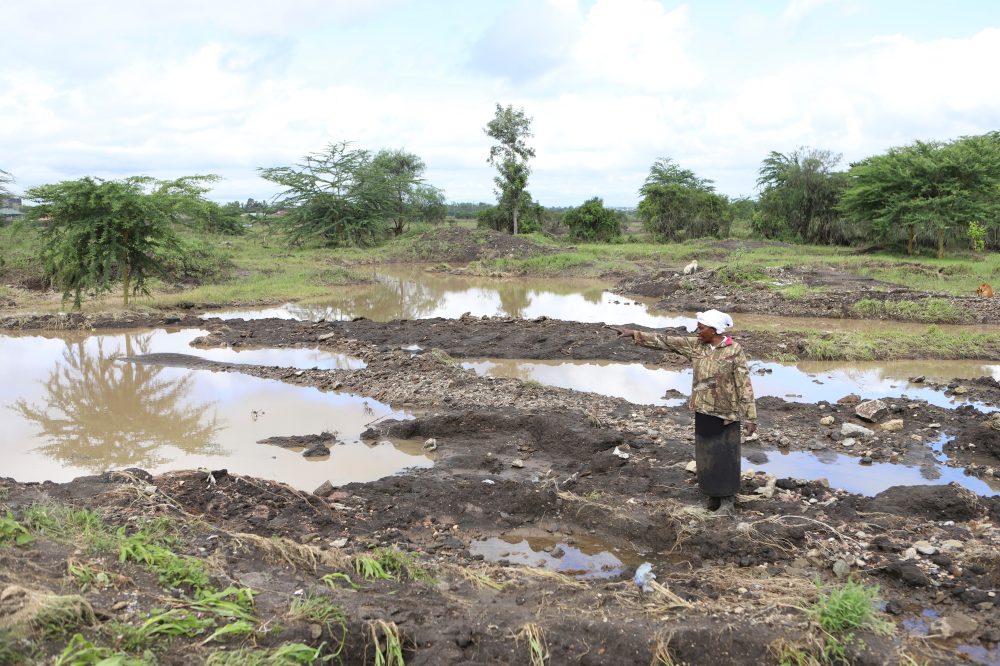
Climate change is also adding mounting pressure to food systems and rural communities worldwide. Lario pointed to increasingly frequent floods, prolonged droughts, and extreme heat as growing threats to agriculture around the globe, saying these conditions have become a routine reality for many communities.
He argued that governments need to prioritize resilience and preparation before disasters occur, rather than depending solely on emergency responses after the fact.
“This is just becoming the new normal,” Lario said. “We are seeing floods in many countries. We’re still seeing droughts that have been expanding for four or five years.”
The fund is stepping up investments in climate adaptation programs designed to help rural communities better withstand floods, droughts, and extreme heat, Lario said, stressing that urgent support is needed for the millions of small farmers who supply much of the world’s food supply.
The report singles out Africa as the world’s most critical food security challenge. For the first time, the continent has surpassed Asia in terms of the total number of hungry people, and nearly 60% of the world’s chronically undernourished population could be living in Africa by 2030.
Lario attributed part of this shift to rapid population growth and slower economic progress compared to parts of Asia, and he called for significantly greater investment in agriculture, infrastructure, and food systems across the continent. African nations currently import close to $100 billion worth of food each year, he noted, highlighting the urgent need to strengthen local production, storage, distribution networks, and regional trade.
Without greater investment in more resilient food systems, Lario warned, conflicts, energy market disruptions, and climate extremes will continue to undermine the progress that has been made against global hunger.