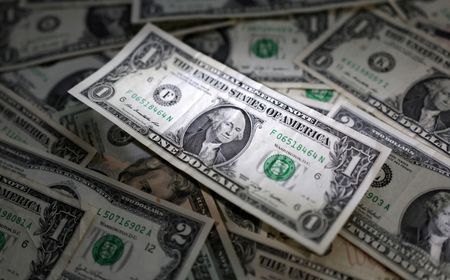

The U.S. dollar maintained its recent strength Wednesday as global markets remained cautious amid ongoing diplomatic efforts and anticipation of Federal Reserve policy signals.
Currency markets showed measured stability as investors kept close watch on geopolitical developments and prepared for the release of minutes from the Fed’s latest policy meeting. The dollar’s performance came as several major diplomatic initiatives showed signs of advancement.
Reports emerged from Geneva indicating meaningful progress in nuclear discussions between the United States and Iran, helping to ease some market tensions. Simultaneously, peace negotiations between Ukraine and Russia continued under U.S. mediation, with President Trump urging swift resolution to the four-year conflict.
“Weaker risk sentiment, because of concerns around renewed geopolitical tensions in the Middle East and volatility in U.S. equity markets, briefly supported the USD,” Commonwealth Bank of Australia currency strategist Samara Hammoud noted. “However, reports that the U.S. and Iran made progress and reached a ‘general agreement’ during nuclear negotiations in Switzerland helped ease those concerns.”
The dollar index, tracking the greenback’s performance against major currencies, showed minimal movement at 97.11 following two days of increases. The euro remained unchanged at $1.1852, while the Japanese yen gained slightly to 153.12 per dollar.
Iranian Foreign Minister Abbas Araqchi confirmed that Iran and the United States had established agreement on fundamental “guiding principles” during their second round of indirect nuclear negotiations, though he cautioned that a comprehensive deal remains distant.
Meanwhile, Ukrainian and Russian representatives wrapped up the initial day of two-day peace discussions in Geneva, with the Trump administration pushing for rapid progress toward ending the prolonged conflict.
Financial markets are now awaiting the Federal Reserve’s meeting minutes from January, scheduled for release Wednesday, along with Friday’s preliminary fourth-quarter GDP figures from the Commerce Department.
In Asia, Japanese economic data painted a positive picture, with exports climbing for the fifth straight month in January. The Reuters Tankan survey also revealed improved confidence among Japanese manufacturers in February, marking the first uptick in three months.
The International Monetary Fund recommended that Japan continue raising interest rates while avoiding additional fiscal stimulus. The Trump administration simultaneously unveiled the first phase of Japanese investments in America, announcing three projects worth $36 billion as part of Tokyo’s broader $550 billion commitment to secure reduced U.S. tariffs.
Other major currencies showed little movement, with the Australian dollar holding steady at $0.7083 and New Zealand’s dollar unchanged at $0.6047. New Zealand’s central bank, led by new chief Anna Breman in her first policy meeting, is expected to maintain current interest rates.
In digital currencies, bitcoin declined marginally by 0.08% to $67,597.50, while ethereum dropped 0.18% to $1,995.63.