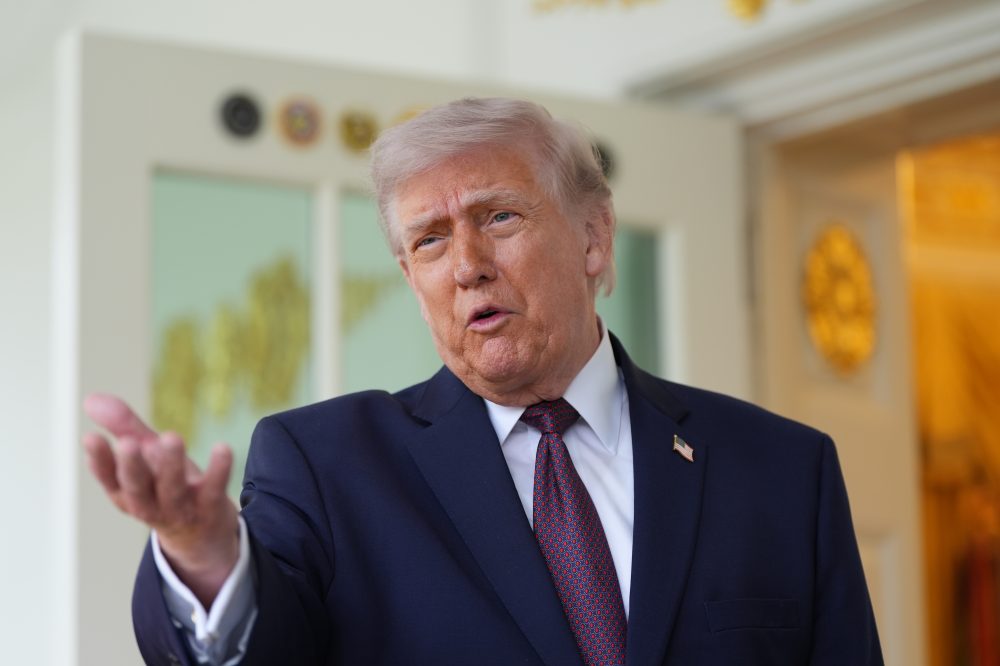

President Trump traveled to Las Vegas Thursday to showcase the benefits of his tax legislation, hoping to emphasize what Republicans view as a key economic accomplishment before the upcoming midterm elections.
While tipped employees and overtime workers are receiving larger tax refunds this season, these financial gains from Trump’s tax overhaul have been diminished by rising fuel costs linked to the ongoing Iran conflict.
This western trip occurs as Trump encounters mounting political pressure to conclude the war and concentrate on messaging that could assist his party in maintaining their congressional control during November’s midterm races.
Trump’s schedule includes a Friday event in Phoenix with conservative organization Turning Point USA. His Las Vegas stop featured a discussion with police officers benefiting from new overtime tax exemptions, alongside a barber and casino pit supervisor who utilized the new tip tax breaks.
According to Treasury Department data released Wednesday, this year’s average tax refund exceeded $3,400, representing an increase of approximately $340 compared to last year.
Trump has stated that his “no tax on tips” concept originated during a Las Vegas visit, recognizing the city’s entertainment-driven economy where many employees rely on visitor gratuities.
However, Las Vegas also serves many commuting workers, including those tipped employees who drive to their casino jobs. Local gasoline prices average $5 per gallon, marking a 28% increase from the previous year, based on AAA data.
Nicholas Delaney, an airline attendant residing in Henderson who didn’t support the president in 2024, described Trump’s handling of living costs as “terrible.” While appreciating the tip tax policy, Delaney expressed concern about grocery and fuel expenses.
“I gotta spend over $100 for a full tank of gas, 13 gallons? Crazy,” Delaney said.
Paula Goodman, a Henderson casino bartender, identified cost of living as her primary worry, noting she spends over $400 weekly on family groceries.
Despite these concerns, Goodman, who supported the president, believes he’s “doing a pretty good damn job” and doesn’t hold him responsible for elevated gas prices, viewing them as normal market fluctuations. As a bartender, she values the tax relief on her tip income.
“Every little penny nowadays is, like, huge,” she said. “You’ve seen diesel, right? $6.11.”
White House officials stated Trump remains committed to tax reductions, deregulation, and expanding domestic energy production to lower costs, characterizing high fuel prices as temporary disruption from the Iran war.
“Tens of millions of Americans are benefiting this tax season from the president’s signature provisions” in the tax law, said White House spokesman Kush Desai, demonstrating “how the administration hasn’t lost focus on delivering on our affordability agenda at home.”
Nevertheless, the conflict has increased living expenses. Bank of America Institute’s Tuesday analysis of deposit and spending patterns determined that “the average increase in tax refunds could cover the average increase in gasoline spending for at least five months.”
Nationwide’s chief economist Kathy Bostjancic noted in recent analysis that “the steep rise in gasoline prices looks likely to completely offset the increased tax funds windfall with households,” suggesting the refunds would likely prevent sharper consumer spending declines.
Trump’s economic messaging emphasizing tax benefits has been overshadowed this week by personal controversies, including public disputes with the pope and posting a since-deleted social media image depicting himself as Jesus, angering some supporters.
GOP strategist Ron Bonjean observed that among Republicans, “the frustration and concern is growing every week about whether or not we will be able to hold onto the House this November.”
Effective messaging about tax legislation requires consistent repetition to reach voters, but Trump’s tendency toward other topics can weaken that focus, Bonjean explained. Trump must acknowledge current economic realities facing Americans to help his party in November, rather than dismissing affordability concerns as “a hoax” and “con job” from Democrats.
“He absolutely has to talk about his plan to bring down high gasoline costs, or else he’s lost his own message. It won’t be credible just to talk about no taxes on tips,” Bonjean said.
While Trump expects the Iran war to conclude soon, no resolution agreement has materialized, with the U.S. and Iran maintaining distant negotiating positions.
During a Sunday Fox News Channel appearance, Trump suggested gas prices “could be the same or maybe a little bit higher” by November’s midterms.
By Wednesday, in another Fox News interview, Trump revised that prediction. “I think they’ll be much lower” before the election, assuming the war concludes.
“When that’s settled, gas prices are going to go down tremendously,” Trump said.
Later at the White House, Treasury Secretary Scott Bessent offered more cautious predictions, forecasting summer price decreases depending on Iran negotiations progress.
“I’m optimistic that sometime between June 20th and September 20th, that we can have $3 gas again,” Bessent told reporters.