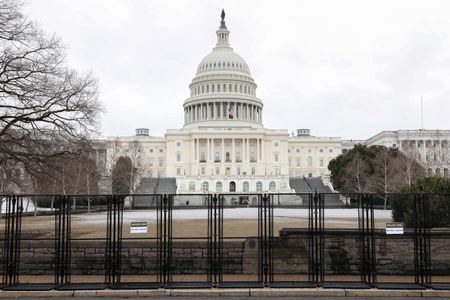

President Donald Trump prepares to deliver his State of the Union speech Tuesday evening following 13 months of controversial policy decisions and significant challenges during his second presidential term.
The address comes as Trump faces mounting criticism over his economic policies, particularly after the Supreme Court recently struck down his emergency authority to impose tariffs on allied nations and other countries.
ECONOMIC CHALLENGES
Throughout his current term, Trump has made tariffs a cornerstone policy, using them against nations that resist his agenda and to address what he views as unfair trade relationships, especially with China. His administration now searches for alternative legal methods to maintain these trade barriers while implementing a temporary 15% levy on all U.S. imports.
The president is expected to highlight his signature legislative achievement, the One Big Beautiful Bill Act, which reduced certain individual income taxes. Questions remain about how much recognition he’ll provide to former ally Elon Musk’s Department of Government Efficiency for reducing federal employee numbers.
Despite Trump’s repeated claims of defeating inflation, Americans continue struggling with elevated living costs, and polling shows declining approval for his economic management. The job market has weakened under his watch, with rising unemployment rates, prompting Trump to pressure the Federal Reserve aggressively for interest rate cuts.
FOREIGN POLICY TENSIONS
The United States stands at the brink of potential military confrontation with Iran regarding its nuclear ambitions as Trump delivers his address.
Trump has increased American military forces throughout the Middle East, warning that “really bad things will happen” without a diplomatic resolution to the nuclear standoff.
His unconventional military deployments have included bombing Iranian nuclear sites last June, attacking suspected drug vessels in Caribbean international waters, arresting Venezuelan leader Nicolas Maduro last month, and threatening to take control of Greenland, creating concerns about NATO’s future.
While positioning himself as a peace-focused leader through efforts like brokering a fragile Gaza ceasefire and establishing a Board of Peace for Palestinian reconstruction, Trump’s claims of resolving eight conflicts for Nobel Prize consideration are widely considered overstated. His attempts to end Russia’s invasion of Ukraine through alternating pressure on Kyiv and largely unenforced threats against Moscow have yet to produce results.
IMMIGRATION CRACKDOWN
Trump may attempt to restore public confidence in his strict immigration approach, as support has weakened following violent confrontations between masked federal agents and American protesters that resulted in two citizen deaths in Minneapolis.
After campaigning on the largest deportation operation in American history, Trump immediately launched extensive immigration sweeps upon returning to office in January 2025. Some deportees have been sent to third-party nations with poor human rights records rather than their home countries. While these measures have significantly reduced border crossings from Mexico, public opinion has shifted negatively.
EXPANDED EXECUTIVE AUTHORITY
The current administration has pursued its objectives primarily through unilateral action, controlling federal agencies, abandoning international organizations, and disregarding traditional governmental norms.
Trump’s team has targeted civil society organizations, activists, local leaders, judges, and media figures viewed as opposition. Most policy achievements have come through executive actions, representing a governing style that previous presidents typically avoided due to its circumvention of Congress.
The president has issued hundreds of pardons, including clemency for everyone charged in connection with the January 6, 2021, Capitol attack.
This year alone, Trump has used executive directives to establish tariffs, promote glyphosate-containing pesticides, increase coal production, discourage private equity purchases of single-family residences, and redirect Venezuelan oil revenues.
Trump has signed 240 executive orders during his 13-month tenure, the highest number since Franklin D. Roosevelt’s wartime presidency.
ENVIRONMENTAL POLICY REVERSALS
The administration has systematically dismantled Biden-era environmental regulations along with clean energy and electric vehicle tax benefits. Officials have weakened the legal framework supporting these policies to complicate future administrations’ ability to implement new environmental rules without congressional approval.
Trump withdrew America from the Paris Climate Agreement and the underlying U.N. Framework Convention on Climate Change last year, leaving the country alongside Iran, Libya, and Yemen as holdouts.
The administration has actively blocked renewable energy projects, including nearly completed wind and solar installations, through stop-work directives and delayed permitting processes. Simultaneously, officials have relaxed clean air and water standards while exempting coal facilities and oil and gas infrastructure from regulatory compliance.
HEALTHCARE DEVELOPMENTS
Sixteen major international pharmaceutical companies have negotiated “most-favored nation” agreements with Trump’s administration, reducing drug costs for Americans in exchange for tariff exemptions. These deals will lower prices for the government’s Medicaid program and cash-paying customers through the government-operated TrumpRx website.
However, millions of Americans face increased healthcare expenses in 2026 after Congress failed to agree on reinstating generous COVID-era tax credits, which Trump did not support extending.