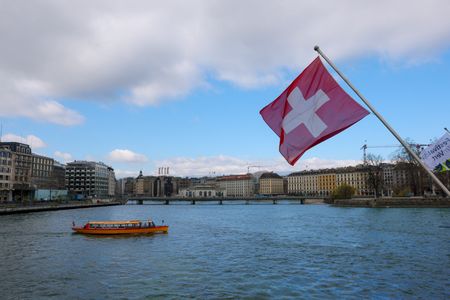

Citizens of Switzerland cast ballots Sunday on a controversial constitutional amendment that would establish a legal ceiling on the nation’s population, in a referendum being compared to Britain’s Brexit decision due to its potential economic and diplomatic ramifications.
The Swiss People’s Party, a right-wing political organization, has championed the constitutional modification that would require the population to stay below 10 million residents by 2050. Government forecasts indicate the country is expected to reach that threshold in the early 2040s, driven by worries over immigration levels, strain on government services, and housing availability.
This novel approach to legally controlling population numbers reflects a broader European trend among conservative political movements seeking stricter immigration policies, fueled by public frustration over living costs, sluggish economic performance, and criminal activity.
“If it goes above 10 million, it will become tight, and immigration should be restricted,” said Helen Gulea, a 58-year-old seamstress and part-time kiosk worker in Zurich, originally from Kenya, who voted by post for the cap.
Vote tallies were anticipated to start arriving around midday local time (1000 GMT).
Approval of this initiative would mean that hitting the 10 million population threshold could force Switzerland to abandon its labor mobility pact with the European Union, which provides a significant portion of workers for the mountainous nation.
With an aging population already surpassing 9 million, polling data indicates public sentiment remains closely divided on the issue.
Recent survey results showed momentum shifting away from the proposal, though an earlier poll had indicated it might succeed.
Patrick Leisibach, a migration expert at think-tank Avenir Suisse, said concern was now widespread that overcrowding was stretching public infrastructure to the limit.
“There’s a traditional anti-immigration vote on the right wing, but these days even many on the left are feeling the pressure,” he said.
Switzerland’s direct democracy framework typically involves citizens voting on national ballot measures four times annually, with passage requiring majority support from both voters and the country’s cantons.
Government officials and parliamentary leaders have encouraged voters to defeat the SVP’s “sustainability initiative,” calling it misguided during a sensitive period for Switzerland’s export-dependent economy.
In the previous year, President Donald Trump imposed Europe’s steepest U.S. tariffs on Swiss products, and the possibility of population restrictions could complicate business planning.
However, SVP lawmaker Thomas Matter argued Swiss gains in prosperity had not kept pace with overall immigration and the country needed to step on the brakes.
Shortly before Trump’s return to office, Switzerland finalized an agreement with Brussels to strengthen economic ties with the EU.
This arrangement, along with other bilateral trade agreements, could face uncertainty if a population cap threatens labor mobility, which serves as a cornerstone of the EU single market.
While Swiss voters have historically rejected measures considered damaging to long-term economic interests, this pattern has become less reliable.
In 2014, voters surprised observers by narrowly approving an SVP-supported initiative to limit EU immigration, though its effects were subsequently weakened during the lawmaking process.
If the current measure passes, certain provisions, including the potential for Switzerland to end labor mobility with the EU, might face separate referendums, according to officials speaking privately.
Some SVP members indicate the proposal aims not to eliminate labor mobility but to sound an alarm.
“I don’t want freedom of movement ended,” said Heinz Taennler, an SVP politician and finance director of the canton of Zug. “Another million people can still immigrate to Switzerland, but the government needs to take action.”