
MEXICO CITY (AP) — Festive preparations for the FIFA World Cup have collided with growing social unrest in Mexico as the nation’s capital gets ready to host the tournament’s opening ceremonies.
The soccer championship, which Mexico is co-hosting alongside the United States and Canada, will begin Thursday with inaugural festivities and an opening game in a high-profile event designed to establish the tournament’s atmosphere.
The international competition arrives during a challenging period for Mexican President Claudia Sheinbaum, who faces a delicate political balancing act amid strained U.S. relations before July trade talks, political controversies, and safety worries following violent incidents in host city Guadalajara during February.
As visitors pour into Mexico City, tensions have escalated, with government officials facing increasing criticism from demonstrators and citizens who claim authorities have put the tournament ahead of urgent social issues affecting the Latin American country.
“Mexico wants to project an image to the world that doesn’t exactly square with reality,” said Carlos Pérez Ricart, a Mexican political analyst at the Mexican Center for Research and Economic Education. “The World Cup is putting the president in a vulnerable situation … The government is under extreme pressure.”
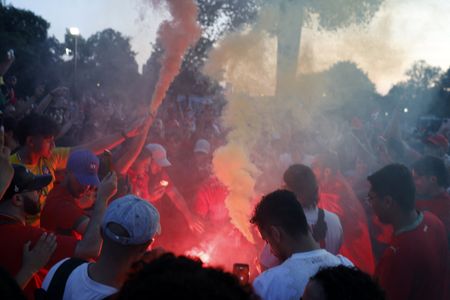
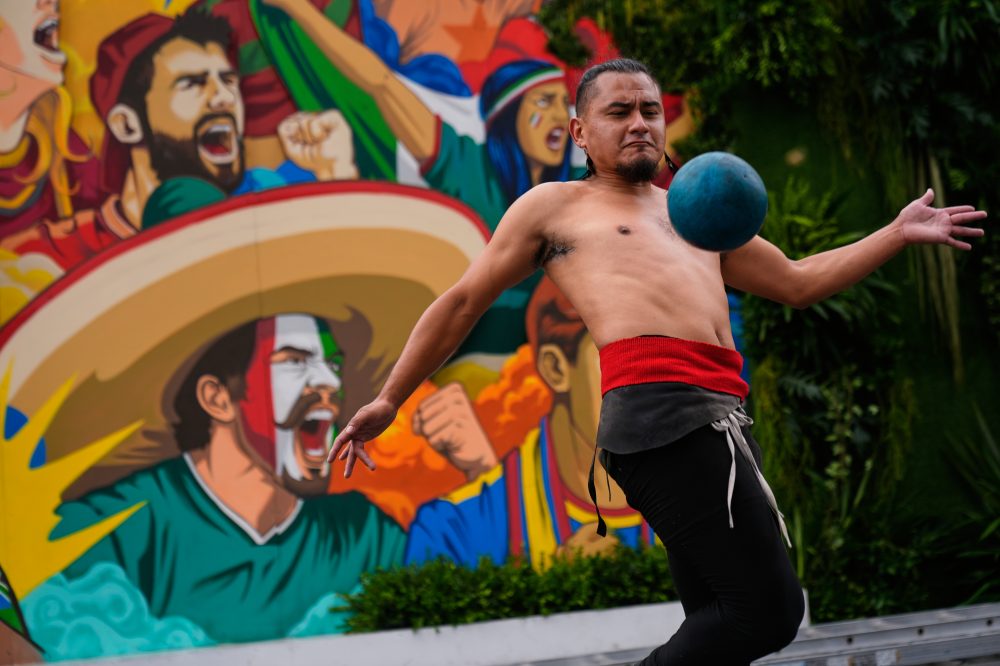
Bright orange Mexican marigold flowers, FIFA branding, oversized soccer balls, and various sporting decorations adorn streets throughout Mexico’s capital and its two additional host locations, Guadalajara and Monterrey. Enthusiastic soccer supporters wandered Mexico City’s thoroughfares with anticipation, taking pictures near iconic landmarks while wearing their favorite teams’ uniforms.
According to the Mexican Soccer Federation, the athletic event is projected to generate $3 billion in revenue for accommodations, dining establishments, and sporting facilities.
Thursday’s inaugural ceremony and opening game, featuring Mexico against South Africa, are anticipated to attract larger audiences than many other tournament matches, with Colombian music icon Shakira and additional performers set to take the stage.
Should everything proceed smoothly, it would represent a significant achievement for Sheinbaum, Pérez Ricart noted, demonstrating to the global community that Mexico is “modern and capable of organizing high impact events.”
Mexican officials have strengthened security measures for months to address concerns following multiple days of unrest that disrupted World Cup host city Guadalajara in February.
Over 100,000 military personnel, naval forces, National Guard troops, and law enforcement officers are planned for deployment throughout the three tournament cities, though escalating social discord that has intensified over recent weeks presents the biggest challenge, especially in Mexico City.
Mexican opposition voices have argued that the administration has allocated excessive resources and attention to accommodating international guests while neglecting local residents.
The nation’s teachers’ union has spent more than a week blocking roadways and destroying World Cup monuments as part of their yearly campaign for improved employment conditions. Relatives of Mexico’s over 130,000 disappeared individuals have posted notices about their missing family members and stated that officials should concentrate efforts on addressing humanitarian emergencies affecting other regions of Mexico.
“We’re not against the ball game,” said Luis Antonio Rosales Narváez, a protest organizer. But “they should be investing in education … not giving the city a makeover.”
During Tuesday’s proceedings, Sheinbaum dismissed the criticism and rejected claims of social disorder preceding the championship.
The political opposition “wants to give the impression that there is chaos, that there are problems, right in the middle of an international event we’ve been preparing for a long time,” Sheinbaum said in her morning press briefing on Tuesday.
Law enforcement has primarily prevented major demonstrations from occupying central squares and stadium surroundings, though uncertainty remains about potential developments when games commence and throughout the following month of competition.
Transportation hubs throughout the Americas filled with supporters who had spent considerable money to support their teams. Panama City’s airport — serving as a primary connection point between North and South America — displayed a colorful array of jerseys from Argentina, Brazil, Colombia, Spain, Germany, and other nations.
“This year we’re defending the title, and we’ll follow Argentina to the ends of the earth,” shouted Emilio Sosa, a 29-year-old from Buenos Aires on his way to Los Angeles.
David Botero, a 43-year-old Colombian, organized his holiday around the World Cup and was heading to Mexico City with his family to attend Colombia’s opening match on June 17 against Uzbekistan after modifying their original plans to avoid elevated costs in Miami.
“What matters is that we’ll get to see our team up close,” Botero said.
Meanwhile, individuals like 66-year-old Dr. Jose Luis Muñoz expressed more doubtful sentiments as he read and smoked near a downtown Mexico City park that previously bustled with street merchants, who were recently relocated by authorities attempting to improve the area’s appearance.
Muñoz recalled that some of his most cherished experiences involved bringing his 8-, 12- and 14-year-old children to matches during Mexico’s 1986 World Cup and cheering for their national team during its successful run.
“I was so excited, and that joy I passed on to my children,” he said.
However, this time around, he cannot afford to attend games where admission costs hundreds of dollars.
“The prices are sky-high. Many people aren’t going to be able to go unless they’re foreigners with a lot of money,” Muñoz said. “It feels very discriminatory.”
Nevertheless, he mentioned he would support Mexico’s national team from his residence alongside his children and grandchildren.