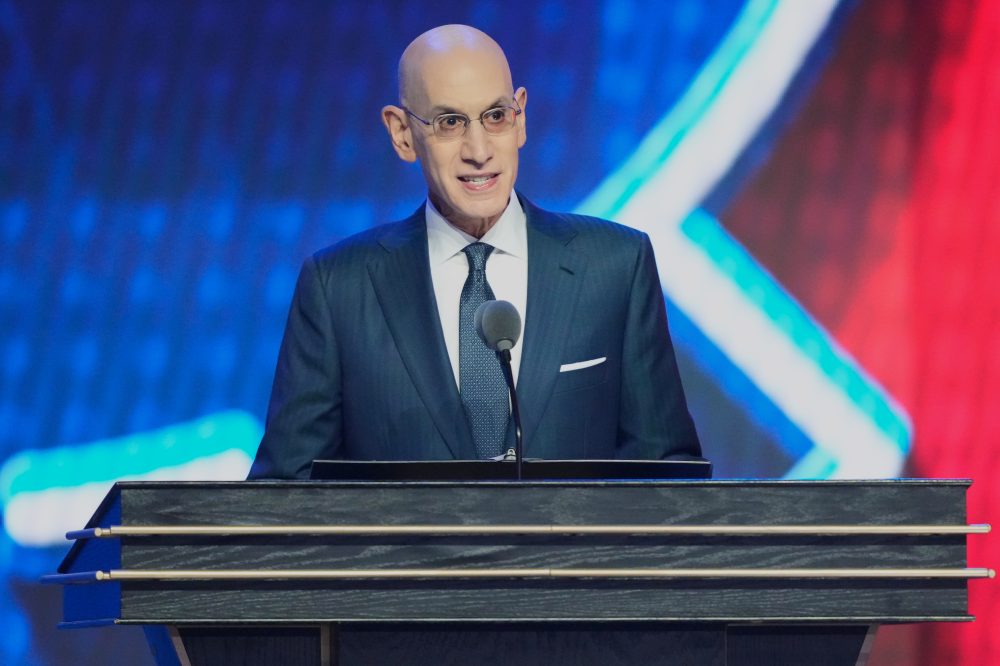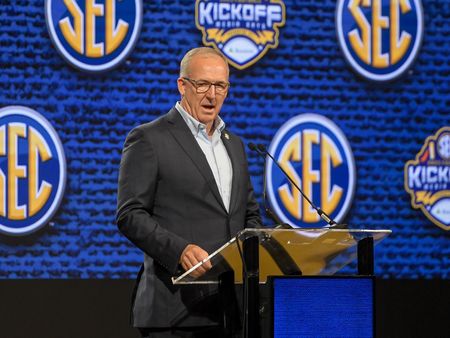

The SEC’s top official tried to manage expectations Monday, making clear his conference won’t be making any decisions about College Football Playoff expansion during this week’s spring meetings taking place in Destin, Florida.
SEC commissioner Greg Sankey supports growing the current 12-team format to 16 teams, while the Big Ten, ACC and Big 12 are all backing a larger 24-team structure.
Just last week, Big Ten Commissioner Tony Petitti indicated his conference’s schools are prepared to support the 24-team proposal and would be willing to hold off if the SEC doesn’t agree.
Both commissioners face a December 1 deadline to reach consensus if any playoff growth is to take effect for the 2027-28 season.
Speaking to the media, Sankey acknowledged his conference wouldn’t “have a unanimous vote right now on a number.”
Rather than rushing to a decision, Sankey explained his league plans to examine every element of the 24-team proposal during this week’s meetings, including potential drawbacks.
“Four to 12 was monumental, I think it was justifiable, and you want to be careful about how far you go,” he stated.
Moving to 24 teams would likely mean the end of conference championship games, which Sankey strongly opposes. He pointed to existing SEC television deals as a barrier to such expansion, along with the significant financial hit from losing the SEC championship game.
Georgia president Jere Morehead publicly opposed the 24-team format last week.
“I was OK with going to 16,” he told The Athletic. “I thought that was a good number. But 24 scares me, particularly jumping from 12 to 24. If we went to 16 and tried that for a few years, see how it goes, and then we can evaluate whether we should go to 24. And from my standpoint, I would just stay at 12 then, if we can’t get an agreement on 16.”
Still, he left the final call to Sankey, and their shared perspective became clear Monday.
SEC presidents, athletics directors and coaches will also discuss their concerns this week about the lack of progress from the College Sports Commission in Washington, D.C. regarding NIL enforcement and oversight.