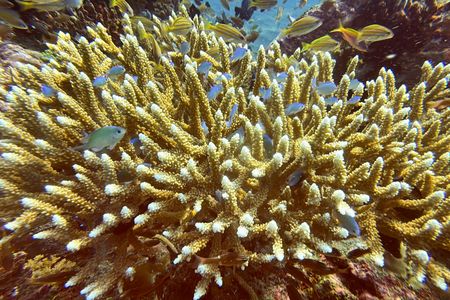

Scientists have discovered that nearly 166,000 square kilometers — roughly 64,000 square miles — of the world’s coral reefs have the ability to withstand and recover from the effects of climate change, according to research released Tuesday. That figure is three times larger than what earlier studies had suggested.
Coral reefs play a vital role in ocean ecosystems, supporting about a quarter of all marine life on Earth. In recent years, they have faced mounting threats from powerful tropical storms, water pollution, and widespread “bleaching” events triggered by rapidly rising ocean temperatures. Some researchers have warned that the damage could become permanent.
The new findings come from an analysis of 45,000 coral surveys combined with decades’ worth of climate and ocean data. The study pinpointed climate-resilient reefs in 71 countries and 100 territories, including areas of the Caribbean, Pacific, and Atlantic oceans that had not previously been identified as having strong recovery potential.
Emily Darling, director of coral conservation at the Wildlife Conservation Society and one of the study’s authors, said the results challenge the idea that coral reefs are a lost cause. “Coral reefs are often framed as ecosystems beyond saving,” she said. “This research shows otherwise: we know where the hope is and what we need now is political will.”
The research comes as countries around the world are developing plans to place 30% of their land and ocean environments under formal protection by 2030 — a global goal referred to as “30 by 30.” The new data could help governments factor coral reef locations into those conservation strategies.
Darling noted that action is particularly pressing right now. “Only 28% of the reefs currently fall within protected and conserved areas, so the opportunity is clear, and so is the urgency, especially as we face an upcoming super El Nino event,” she said.
Stacy Jupiter, co-author and executive director of the Wildlife Conservation Society’s Global Marine Program, said the data gives policymakers a clearer picture of where limited conservation funding should be directed. “In certain cases, where reefs are below certain benchmarks for ecosystem function, it may be a case of triage, where we may need to leave those places,” she said.