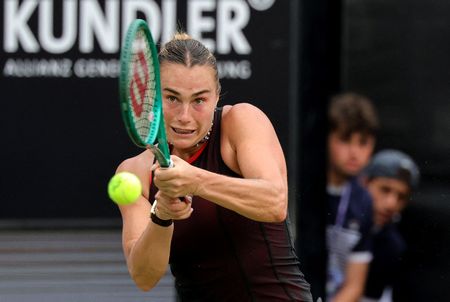

World number one Aryna Sabalenka heads into Wimbledon carrying the weight of another Grand Slam breakdown, with all eyes on whether the top-ranked player can keep her composure when tournament pressure reaches its peak.
The 28-year-old from Belarus came agonizingly close to reaching the French Open semi-finals this month — just two points away — before suffering a stunning loss to Russian underdog Diana Shnaider. Afterward, Sabalenka admitted she had fallen into a “deep, dark hole” mentally.
The collapse followed a runner-up finish at Roland Garros the previous year, where she had the title within reach before letting it slip. Both setbacks have renewed questions about her 2022 choice to stop working with a psychologist — a decision she has since reversed.
Speaking to tennis website Bounces during her run to the Berlin semi-finals this month, Sabalenka opened up about reaching back out for help. “I called my psychologist … it felt like I needed to talk through everything I’ve been going through in the last, I don’t know how many years,” she said.
“It was really helpful. I changed a lot of things and I’m trying a lot of new things now. I feel like I need to figure out what’s happening, sometimes, in those matches to (be able to) move on and to avoid these situations happening.”
Wimbledon now offers a fresh challenge on grass courts, where Sabalenka’s powerful playing style remains a significant advantage. However, the fast surface means pressure situations arrive even more quickly, putting her mental fortitude in the spotlight once again.
Gustavo Granitto, a coach with the International Tennis Federation, noted that Sabalenka’s fierce competitive drive can sometimes cloud her judgment during critical moments. “Aryna is, first and foremost, a human being like any of us, yet also a competitive machine,” said Granitto, who is certified in the Gazing Red2Blue mindset framework used by some athletes.
“Perhaps her immense ambition to win, which is largely what makes her number one, combined with the intensity with which she ‘lives’ the match on court, can slightly distract her focus and judgment when making decisions,” he added.
Former player and sports psychologist Jeff Greenwald described Sabalenka as someone who operates at just one emotional speed — full throttle. “This can become a slippery slope at the highest level as pressure increases, because if errors start mounting, it’s hard to put the horse back in the barn,” Greenwald said.
He added that while some players struggle with a “monkey on the back” syndrome when they go long stretches without a major title, that is not Sabalenka’s situation. “She has had a great deal of success in the past few years to build on. Her turnaround was remarkable but again, when she focuses all of that intensity in a certain direction, she’s likely to succeed.”
A troubling pattern has emerged in Sabalenka’s recent losses. Both her Roland Garros and Berlin defeats ended with 6-0 final sets, suggesting a sudden and dramatic drop in level once things start going wrong.
ESPN commentator and former world number four Mary Joe Fernandez said she has growing concerns. “I’m a little concerned about Sabalenka,” Fernandez said. “Her game translates to all surfaces. It should translate to grass with how powerful she hits the ball. She’s got a weapon in the serve, weapon in the returns.”
“What happened in Paris, she fell apart. The conditions got to her again … she still struggles with it. Let’s see how she bounces back,” Fernandez continued. “To me she’s still the favourite to win Wimbledon, but not as clear of a favourite as a month ago.”