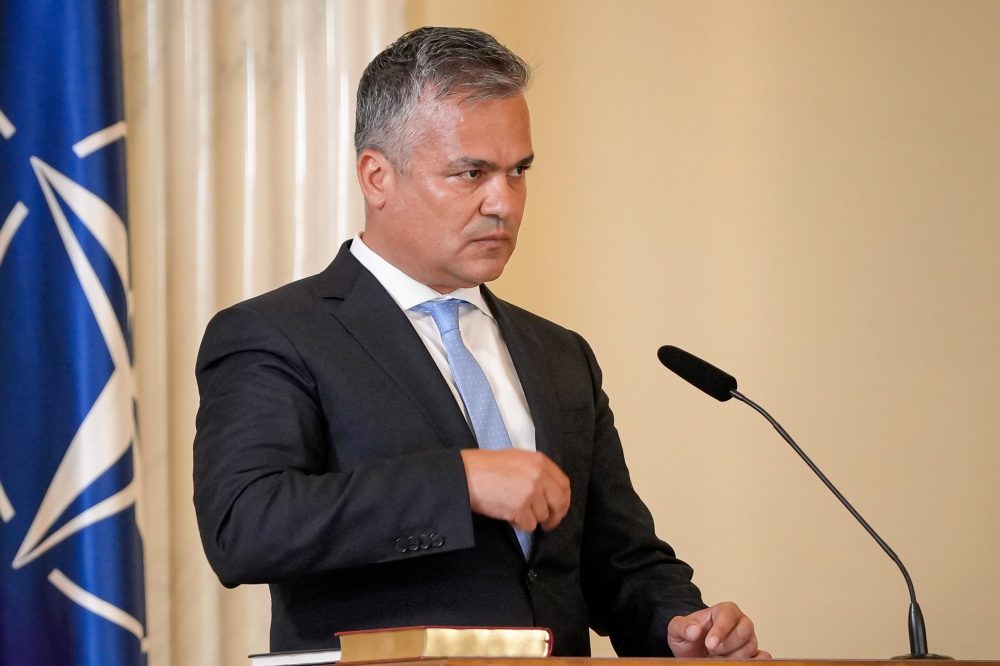

BUCHAREST, Romania — Romania’s president moved Sunday to break a growing political deadlock, naming a former mayor as his new candidate for prime minister after his earlier choice failed to build enough support to move forward.
President Nicusor Dan put forward Adrian Vestea, a 53-year-old career politician from central Brasov County and a longtime member of the National Liberal Party, to attempt to form a new government. Vestea marks Dan’s second prime ministerial pick this month. His previous nominee, Eugen Tomac, was unable to present a cabinet to Parliament within the required 10-day window.
Speaking at the presidential Cotroceni Palace in Bucharest, Dan announced the change directly. “Eugen Tomac withdrew his mandate this morning and … I nominate Adrian Vestea as prime minister,” he said. The nomination still requires approval from lawmakers before it can take effect.
Dan defended his choice by pointing to Vestea’s extensive background in public administration. He noted that Vestea had “gone through all the administrative stages” over the course of his career, having served as mayor of a small town and as county council president of Brasov, where he successfully brought in European funding.
“He was a successful mayor, he was a successful county council president, he was a successful minister,” Dan said. “He is a categorically pro-Western person … a person who has worked for a long time with budgets. So I am convinced that he will successfully fulfill this task.”
Vestea, who held the role of development minister from 2023 to 2024, addressed reporters at the palace and outlined his vision. He said he hopes to lead a “political government that will undertake real reforms and keep Romania on a pro-Western path.”
“We are the sixth largest country in Europe, and we need to put a major emphasis on development,” Vestea added. “Which I will do from day one.”
The back-to-back nominations this month follow a no-confidence vote in May that brought down Prime Minister Ilie Bolojan. With the next general election not set until 2028, the country faces an extended period of political uncertainty.
Romania is currently dealing with one of the highest budget deficits among European Union member nations, along with widespread inflation and a technical recession. When the governing coalition took power in June 2025, reducing the budget deficit was listed as a top priority. Bolojan had been sworn in with the goal of resolving what was described as one of Romania’s most severe political crises since the end of communist rule, but he remained in office for less than a year.