
Consumers who have already been feeling financial strain since the start of the Iran war are likely to face even more pressure in the weeks ahead. Oil prices surged past $100 a barrel Thursday as renewed fighting and military strikes left global oil supplies stranded in the Middle East.
The price jump marks a reversal from a brief period of relief when tensions between the U.S. and Iran eased in June. Brent crude, the international benchmark for oil pricing, had last hit the $100 mark back in May.
Businesses that produce and sell fresh food, school supplies, and goods that rely on fuel for shipping have already reported cost increases following an earlier energy price spike after the U.S. and Israel struck Iran. Many of those companies are expected to continue passing those added costs along to shoppers.
Miguel Gomez, director of Cornell University’s Food Industry Management Program, explained the dynamic this way: “In general, once you have an increase in costs, businesses are fast in increasing the price.” However, he added, “it takes more time to lower prices when the costs go down.”
Here is a look at where consumers may feel the biggest impact from elevated oil prices.
Instability along the Strait of Hormuz and throughout the broader region has driven up the price of crude oil, the primary component of gasoline. Motor club AAA says this could make driving more expensive throughout the second half of the summer.
According to AAA, the national average price for regular gasoline hit $4.09 per gallon Thursday — a 15-cent increase from just a week earlier — with drivers in the majority of states now paying $4 or more at the pump.
Pavel Molchanov, an investment strategy analyst at Raymond James, said, “Given the typical lag along the oil industry’s supply chain, prices at the pump are poised to keep rising at least into next week.” He did note, however, that futures prices for oil to be delivered later this year and into next year are lower, which could signal a drop in prices once military action winds down.
Despite the higher prices, Americans have largely kept driving. Gasoline demand increased 1% to 8.9 million barrels per day last week, according to the U.S. Energy Information Administration.
Fuel price pressure could linger because refinery capacity has been reduced. Facilities in the Middle East have sustained damage from the conflict, and Russian refineries have been hit by Ukrainian attacks.
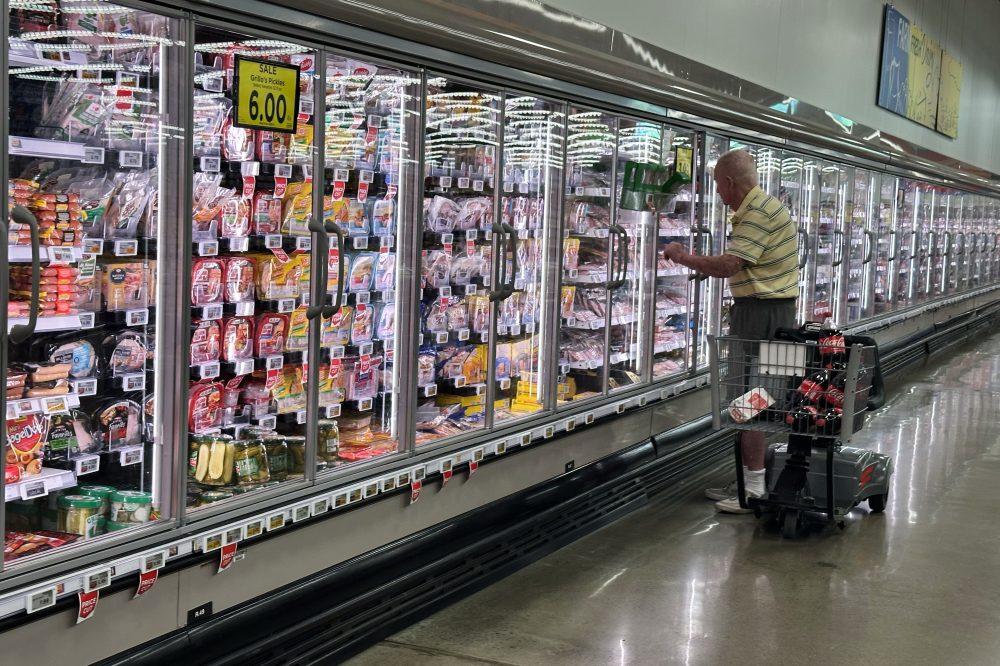
Grocery prices tend to rise alongside oil prices because farmers rely on diesel to run equipment, and most food products travel to stores by truck. Gomez said, “Oil at $100 doesn’t make food prices jump right away, but it does put upward pressure across the food supply chains, especially for categories that depend heavily on trucking, cold storage and packaging.” He noted that fresh produce and dairy products are particularly vulnerable since they require refrigerated transport.
Imported goods are also at risk. Gomez said, “Things like olive oil that we produce very little here and are coming from mostly from Europe are going to be up.”
Grocery chain Albertsons on Thursday lowered its fiscal 2026 outlook, pointing to pressure on its core grocery business and reduced consumer spending.
Higher fuel costs for ships, trucks, and air carriers can work their way down to everyday consumers and businesses that depend on shipping. Companies like UPS and FedEx have introduced fuel surcharges and additional fees in response to rising fuel prices.
An AFS Logistics and TD Cowen Freight Index released July 14 showed truckload pricing has reached a four-year high, driven by climbing fuel costs and limited capacity.
Andy Dyer, CEO of AFS Logistics, said diesel prices in the second quarter were roughly 51% higher than in January and February, while jet fuel prices rose 90% compared to the same time last year.
“Beyond the direct impact of higher freight bills paid by shippers, these price movements also have second-order effects that squeeze rates higher,” Dyer said. “Smaller truckload carriers working on tight margins may park trucks and wait for fuel prices to revert to more palatable levels before returning to operation.”
Rural lifestyle retailer Tractor Supply Co. also cut its annual sales forecast Thursday, partly blaming higher fuel prices during the spring selling season for weighing on customer spending.
“Our customers often drive longer distances to shop frequently in pickup trucks, many of which are diesel-powered, making them especially sensitive to higher fuel costs,” said CEO Hal Lawton.
Lawton said shoppers are still spending on pets, animals, farms, and properties, but that their approach has become “more deliberate.” Customers are combining shopping trips, focusing on necessities, and being more cautious about discretionary purchases.
The Footwear Distributors and Retailers of America trade group issued a warning Wednesday that rising freight and material costs, combined with increasing tariff expenses, are creating major challenges for the footwear industry as companies gear up for back-to-school shopping season.
Matt Priest, the trade group’s CEO and president, said some member companies have reported 25% price increases for petroleum-based materials used in making shoes due to the Middle East conflict. He said those higher costs could eventually lead to roughly a 5% increase in the price consumers pay for finished footwear.
Footwear companies have also been stocking up on inventory and speeding up imports ahead of new tariffs on foreign goods set to be imposed by President Donald Trump, adding further strain on shipping rates, Priest said.
“Container rates are spiking right now,” Priest said.
Since the war began, airlines have responded to surging fuel costs by hiking fares and fees while cutting flights or routes that are no longer financially viable. Those steps help protect airline profit margins but leave travelers with fewer choices and higher prices, especially in smaller or less competitive markets.
American Airlines reported Thursday that its second-quarter net income dropped sharply, despite recording record revenue and strong spring travel demand — another sign that the conflict is driving up costs for the travel industry. The airline said higher fares helped offset nearly half of its increased fuel expenses, but not enough to prevent it from lowering its full-year financial outlook.
Even so, jet fuel demand over the past four weeks climbed 9% compared to the same period last year, according to the Energy Information Administration.