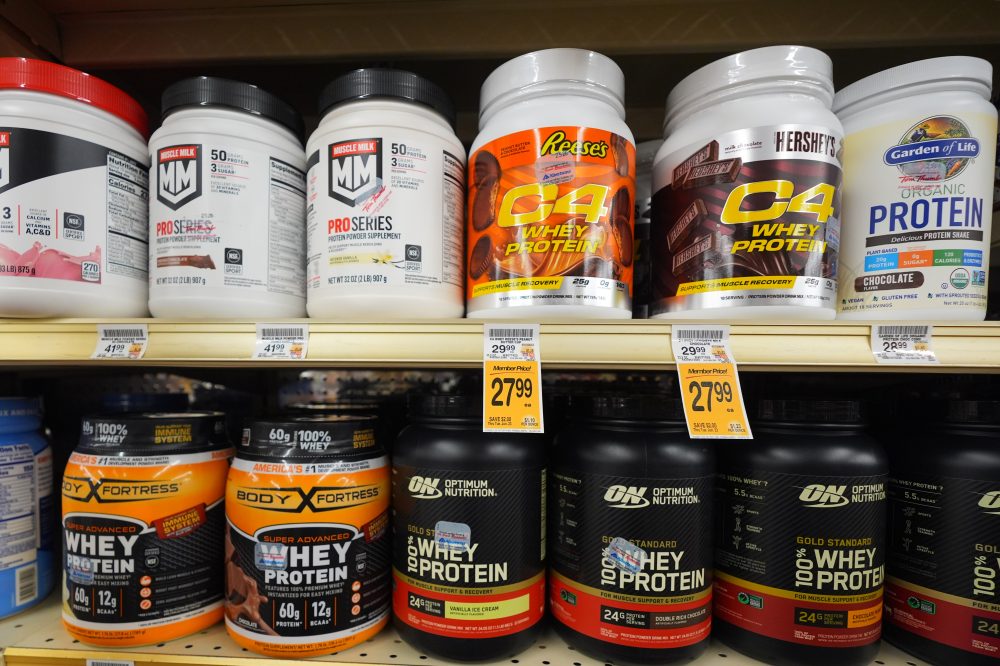

People around the world can’t seem to get enough protein in their diets — but the dairy industry is having a hard time keeping up with that demand.
For years, athletes and older adults have relied on whey protein concentrate — a powdered substance left over from the cheese-making process — to help build and preserve muscle through smoothies and shakes. Now, food manufacturers are adding it to a wide range of everyday products, including breakfast cereals, Pop-Tarts, potato chips, bagels, tortillas, and even certain Starbucks beverages, all in an effort to satisfy shoppers who are paying close attention to what goes into their food.
According to market research firm NielsenIQ, the average American supermarket now carries 38,708 products that promote their protein content. But that rush to capitalize on the protein trend is straining the supply of food-grade whey protein and driving prices to historic highs.
“Demand is very firm and seemingly outpacing supply for right now,” said Kathleen Wolfley, vice president of Ever.Ag Insights, a data and consulting firm serving the agriculture sector.
Wolfley noted that wholesale whey protein prices started climbing in 2024, with the increases picking up speed last year and continuing into this year. Whey protein concentrate with 80% protein content — commonly used by food producers and supplement makers — is now trading on the dairy commodities market at more than $13 per pound in the United States, a jump of 250% compared to a year ago, according to Ever.Ag. A more refined version called whey protein isolate, which contains at least 90% protein, is selling for 150% more than it did a year ago.
Those wholesale increases are working their way to store shelves. U.S. retail prices for whey protein concentrate powder have climbed roughly 15% over the past year, while the pricier whey isolate powder has seen even steeper increases, according to price-tracking company Datasembly.
The situation in Europe is similar. In late May, 80% whey protein concentrate reached a new record average price of 26,450 euros — about $30,518 — per metric ton, more than double the price from less than a year earlier, according to DCA Market Intelligence, a commodity pricing firm based in the Netherlands.
To understand why supplies are so tight, it helps to know how whey is made. Milk naturally contains two proteins: casein and whey. When cheese is produced, the casein forms solid curds and is separated from the liquid whey, which is then dried into a powder. According to the U.S. Department of Agriculture, every pound of cheese produced generates nine pounds of whey.
While Americans have been drinking less milk for decades, their love of cheese has stayed strong, Wolfley said. That cheese consumption produced large amounts of whey protein, and in the past, a significant portion of the surplus was shipped overseas — particularly to China. But now, growing domestic appetite for high-protein snacks and meals is keeping more of that whey at home, either as a food additive or a nutritional supplement. U.S. exports of 80% whey protein concentrate and whey protein isolate to China dropped 47% from January through April compared to the same stretch a year earlier, according to Vesper, an Amsterdam-based commodity tracking company.
“There simply isn’t enough product for the U.S. customer, and exports have therefore been paused as much as possible,” said Jasper Endlich, a dairy analyst at Vesper.
Endlich added that China is now turning to Europe to fill its whey protein needs — but Europe is also experiencing shortages, partly because of the reduction in American exports.
One major driver of the surge in demand is the growing use of GLP-1 weight-loss medications, Wolfley said. Drugs such as Wegovy and Zepbound work by suppressing appetite, meaning the people who take them need to make every bite count nutritionally. Experts advise GLP-1 users to eat enough protein to stay full longer and to protect muscle mass during weight loss.
According to an estimate from investment bank Morgan Stanley, roughly 6% of obese and diabetic patients in the U.S. and 2% of such patients worldwide were using GLP-1 drugs last year. Some estimates place overall GLP-1 use as high as 12% of the U.S. adult population, since many users are not obese or diabetic.
Food and nutrition companies are racing to develop protein-enriched products to appeal to GLP-1 users as well as people who turn to protein shakes as a meal replacement for weight management.
The squeeze on supplies has forced some manufacturers to raise their prices. Now Foods, an Illinois-based maker of health foods and nutritional supplements, said whey protein powder tubs are consistently its top-selling sports nutrition item. After two years of rising raw ingredient costs, the company increased its whey protein product prices earlier this year.
Bryan Morin, the sports brand manager at Now Foods, said the company does not expect to raise whey protein powder prices again this year and is instead trying to absorb some of the added costs by scaling back on discounts. The company is also exploring whether to add products made with milk protein concentrate — a powder that contains less whey and costs less — to its lineup.
“From our perspective, broader market dynamics continue to indicate a tight and evolving protein landscape,” Morin said.
Wolfley said manufacturers are putting money into expanding whey protein production, which should eventually ease the shortage — but not right away. Glanbia, an Irish nutrition company, announced in November that it plans to boost whey protein isolate production at its New Mexico facility, though that added capacity won’t come online until 2027. In February, Canadian dairy company Agropur said it intends to ramp up whey protein manufacturing at plants located in Quebec, Nova Scotia, South Dakota, and Wisconsin.
In the meantime, Wolfley said, higher prices may push some consumers to stop buying whey protein products altogether — especially as grocery costs rise across the board. If retail demand softens, that could help ease the shortage at the wholesale level.
“The supply-demand dynamics could start to improve, but I don’t know if that’s a tomorrow dynamic or within a year. Some of these things are going to take time,” Wolfley said.