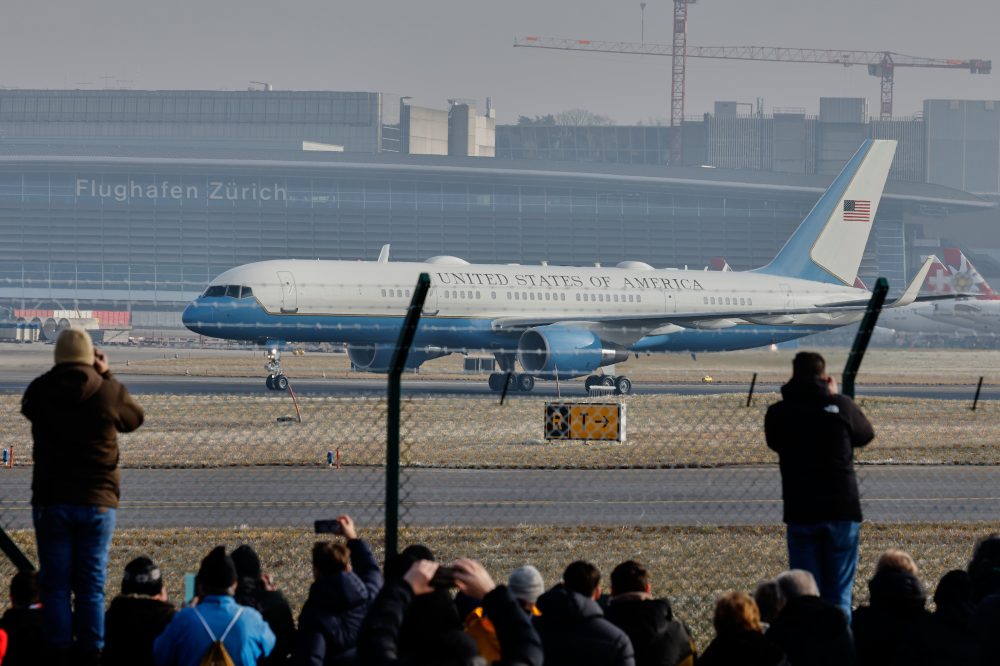

WASHINGTON — The U.S. military confirmed Thursday that future presidential aircraft will sport a patriotic red, white, gold and dark blue paint design, fulfilling President Donald Trump’s vision for a new look.
Air Force officials announced the updated color scheme will be applied to the new aircraft being prepared to serve as Air Force One, along with smaller jets used to transport senior government officials.
Military officials unveiled a design rendering that mirrors an aircraft model previously displayed in the Oval Office during meetings with international dignitaries.
Boeing is currently working to modify two 747-800 aircraft intended to replace the current pair of older Boeing 747-200 planes that transport the president and carry the Air Force One designation when he’s on board.
Back in 2018, Trump had ordered the replacement of the famous Kennedy-era blue and white livery with a different white and navy design. His original plan called for a white upper section and dark blue lower portion, including the aircraft’s belly, with a dark red stripe extending from nose to tail. The proposed design closely resembled Trump’s private aircraft.
However, Air Force analysts determined the darker paint colors would drive up expenses and push back delivery schedules for the new presidential jets. President Joe Biden subsequently canceled the redesign in March 2023.
Speaking to media last month, Trump expressed his preference, saying “we want power blue, not baby blue,” in reference to the current aircraft’s appearance.
“Everything has its time and place. We’ll be changing the colors,” Trump stated.
The Air Force announcement indicates a third Boeing 747-8i aircraft will receive the same patriotic paint treatment.
Last May, Defense Secretary Pete Hegseth officially received a luxury Boeing 747 from Qatar for presidential use, though the acceptance of this costly gift from a foreign government raised ethical and legal concerns.
Air Force Secretary Troy Meink informed Congress in June that security upgrades for the aircraft would cost under $400 million, though he didn’t provide specific details about the modifications.