
PITTSBURGH — For aspiring NFL players, the journey to draft day can seem never-ending. After years of dedication and weeks of intense evaluations, these young athletes face nerve-wracking days of uncertainty as they await the moment their names are announced.
That wait concludes this weekend as the 2026 draft arrives in Pittsburgh, a city that perfectly symbolizes the NFL’s premier offseason showcase.
Most visitors entering the Steel City navigate through western Pennsylvania’s rolling hills and suburban landscapes before descending into the Fort Pitt tunnel — 3,614 feet of darkness that reveals nothing about what awaits beyond. The journey typically involves heavy traffic regardless of the hour, puzzling even longtime residents.
Getting to downtown Pittsburgh, much like reaching the NFL, requires persistence. However, once you arrive, the payoff can be spectacular as the city unfolds before you, filled with potential — just like each draft candidate’s future.
Notre Dame running back Jeremiyah Love, who hopes to join the exclusive group of running backs selected in the top 10 over recent years, was impressed during his visit this week.
“Nice views, nice views,” Love commented on Wednesday, just over a day before Thursday evening’s opening round. “When you came out of that little tunnel or whatever, I don’t know what the tunnel’s called, but you kind of just saw the whole city. So that view was really nice.”
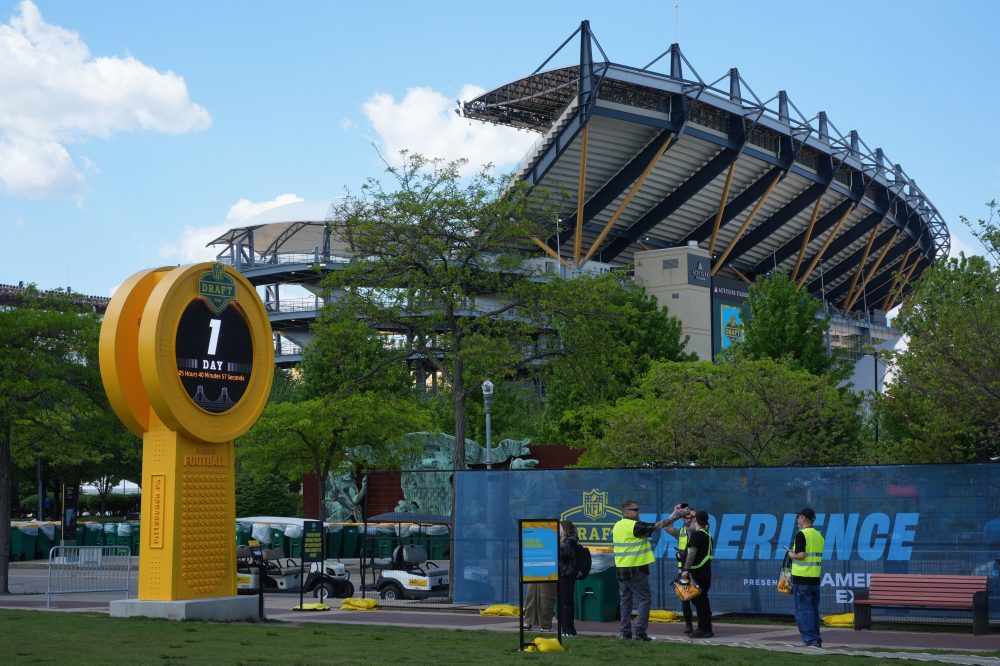
Love and 16 other potential first-round selections will experience an even more meaningful sight: walking the red carpet at Point State Park before taking a brief ferry trip across the Allegheny River to Acrisure Stadium, home of the Pittsburgh Steelers. Their ultimate destination will be the draft stage for that career-defining embrace with NFL Commissioner Roger Goodell.
“I’m ready to go somewhere where I can work, whether that’s the worst team, the best team, maybe a team in the middle,” Love stated. “Really doesn’t matter to me.”
Love’s destination remains uncertain. However, Heisman Trophy winner Fernando Mendoza’s path appears clear.
Everything suggests the Las Vegas Raiders will rush to select the Indiana quarterback with the top pick, though Mendoza won’t meet Goodell in Pittsburgh. The standout signal-caller chose to watch from home rather than participate in the draft’s grand spectacle.
The remainder of the first round remains unpredictable, though defensive players are expected to dominate, with edge rushers Arnell Reese from Ohio State and David Bailey from Texas Tech — both present in Pittsburgh — likely to turn professional as evening falls over Mount Washington.
When asked if his competitive nature drives him to want the first handshake with Goodell, Bailey revealed the blend of instinct and football intelligence that elevated his draft status.
“When you talk about competitiveness in that context, it’s like really nothing you can do,” Bailey explained. “Like I can’t go out there and do any special tricks or say anything that’s going to boost my draft stock. … I feel like it’s time to just sit back and enjoy.”
This marks the end of countless speculation cycles and mock drafts, allowing everyone to return to actual football. The process can be overwhelming.
Arizona State wide receiver Jordyn Tyson understands the situation.
While posing in underwear for scouts and performing various physical tests at the NFL combine might seem odd, Tyson accepts the process.
“(Teams) invest a lot of money, so they got to do the research,” Tyson observed. “They got to take every little thing into account. So I don’t blame them for it, to be honest.”
Host cities also must prepare extensively for draft weekend. For locations like Pittsburgh, hosting the draft serves as a prestigious alternative to Super Bowl hosting duties.
The NFL anticipates hundreds of thousands of fans will flood a city not known for abundant open spaces. Pittsburgh’s public schools switched to remote learning Thursday and Friday to reduce bus traffic, while many employers encouraged remote work instead of office attendance.
The draft has transformed dramatically since Pittsburgh last hosted in December 1947 at the Fort Pitt Hotel, then the Steelers’ headquarters. That 32-round event saw quarterback Harry Gilmer selected first overall by Washington, but no ceremonial jersey awaited him.
The 1947 draft received no television coverage and minimal attention. The landscape surrounding the draft has shifted enormously over eight decades.
Pittsburgh sees the draft as an opportunity to highlight the region’s rich football heritage. Nearly two dozen Hall of Famers originated from Western Pennsylvania. The Steelers pass six Lombardi Trophies daily on their way to work, and football at every level remains deeply embedded in local culture.
Wednesday morning featured Love and fellow prospects conducting a youth clinic after a ribbon-cutting ceremony for a new turf field at Hazelwood Green Park, approximately one mile down the Monongahela River from the Steelers’ current training facility.
Steelers President Art Rooney II spent years looking out his window at the empty lot, wondering when development would come to an area being transformed by technology and education sectors.
Once the city secured draft hosting rights, progress accelerated rapidly. This reflects Pittsburgh’s broader evolution from the 20th century’s Steel City into today’s innovation center.
The draft will fulfill one dream while launching another for the 257 players selected by Saturday evening’s conclusion.
For the “City of Bridges,” the event provides a platform to demonstrate that while Pittsburgh’s football heritage runs deep, the city connects to much more than first downs and touchdowns.
“I think if you were going to pick a perfect time,” Mayor Corey O’Connor said, “this is the perfect time.”