
A groundbreaking journalist whose legal fight against workplace discrimination transformed hiring practices in newsrooms nationwide has died at age 89.
Marlene Louise Johnson passed away on May 9 at an elder care facility in Inglewood, California, after battling dementia, her daughter Morenike Joela Evans confirmed.
Johnson’s discrimination lawsuit against the Associated Press in the 1970s ultimately resulted in sweeping affirmative action policies that created opportunities for women, Black and Hispanic reporters across the journalism industry.
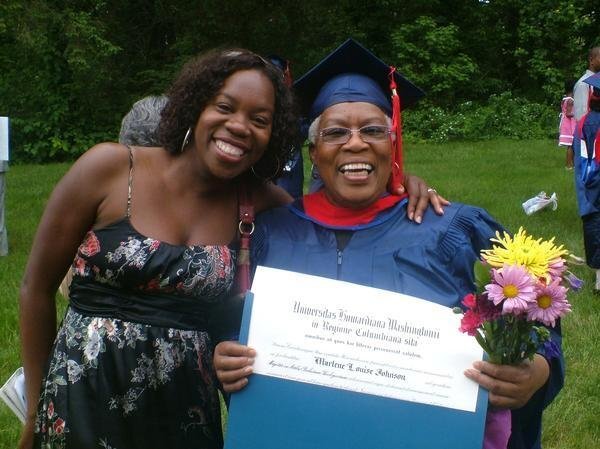
A Rochester, New York native, Johnson completed her associate’s degree at the University of Buffalo and earned her bachelor’s at Wayne State University in Detroit. Remarkably, at 75 years old, she obtained a master’s degree in religious studies from Howard University’s School of Divinity.
During her employment at the late-Congressman John Conyers’ Detroit office in the early 1970s, Johnson developed a friendship with civil rights legend Rosa Parks. Parks gained national prominence in 1955 after her arrest for refusing to surrender her bus seat to a white passenger sparked the Montgomery, Alabama bus boycott, eventually leading to integrated public transportation. Parks passed away in 2005.
The Associated Press brought Johnson aboard in 1972 as a general assignment reporter at their Detroit bureau. Her reporting covered Black entrepreneurship, court-mandated school busing in Detroit, conflicts between the predominantly white police force and Black community members, breast cancer awareness, and women’s advancement in business and culture.
Johnson, who was Black, filed her discrimination lawsuit against the international news organization just one year after joining their staff. Despite being recruited through a minority hiring initiative designed to diversify the AP’s workforce, Johnson alleged she received inadequate training after several months on the job. She also contended that she faced different performance expectations than her white male colleagues.
“What the suit was about originally was racism,” Johnson explained during a 2013 interview with History Makers, a nonprofit organization that maintains digital oral histories of prominent and lesser-known Black Americans.
“I was filing a copy, and there was nothing wrong with the copy,” Johnson recalled. “And so, like nine months in, the boss decides that he’s going to retire, and he’s going to dump me. And I said ‘oh, my gosh.’ And so, I was very upset.”
Johnson received assistance from the Newspaper Guild in filing her lawsuit, which eventually expanded into a class-action case involving multiple female minority journalists. She took a leave of absence in June 1975, according to AP documentation. Newspaper records indicate her AP byline appeared on a Detroit-based story in 1975.
“It was a scary thing for her to do,” Evans said regarding her mother’s discrimination complaint against the AP. Years later, “she ended up getting like $700. I remember her being very upset over that — it kind of got taken away from her getting justice.”
The Newspaper Guild’s class-action discrimination lawsuit against the AP reached a settlement approximately ten years later in 1983 for over $1 million. Johnson’s name was not included among the listed plaintiffs. The agreement, which involved the U.S. Equal Employment Opportunity Commission, mandated that the AP implement affirmative action programs for female journalists and Black and Hispanic reporters.
“The suit turned from all Black and one white (plaintiff), to all white and one Black (plaintiff),” Johnson remembered in her History Makers interview. “And the one Black — the one that went to the civil suit — they took my name off and put another woman’s name on it. A Black woman who I had never heard of before.”
According to a 2019 NewsGuild International report, the seven women named as plaintiffs divided $83,120. The settlement also included provisions for training programs and bonuses for the AP’s minority and female journalists.
“I wasn’t in it for the money,” Johnson stated, while also mentioning that she struggled to secure journalism positions for an extended period following her lawsuit.
“We should be grateful that someone like Marlene, a Black woman in the 1970s at a major news organization who had the courage,” said veteran journalist Vincent McCraw, who is also Black and worked alongside Johnson later at the Washington Times. “Whether she, willingly or not, knew there would be a sacrifice, she took it.”
Johnson subsequently relocated to Washington where she held positions with the Newspaper Guild, the National Urban League and the National 4-H Council. She also contributed to the White House Council On Aging and served in the press office for President Jimmy Carter’s inauguration committee, her obituary noted.
McCraw, currently a regional manager for Report for America, said Evans informed him of Johnson’s death. He first encountered Johnson in the early 1990s in Washington while she worked in communications and he covered municipal government for the Washington Times.
“We struck up a conversation and I learned she’d been in journalism,” McCraw recalled. “What I did not know then was the suit she had against AP. After a year or so she mentioned how she wanted to get back into journalism.”
Through McCraw’s connection, Johnson joined the Washington Times in 1994 as an assistant features editor. She retired from that position in 2004.
Johnson maintained memberships with the National Association of Black Journalists, the Capital Press Club and the Public Relations Society of America.
During her final decade, Johnson resided in the Los Angeles area under Evans’ care.
“She loved being a reporter, a journalist,” her daughter shared. “She was really an advocate for people and telling the truth.”
In her History Makers interview, Johnson expressed her desire to be remembered “as a friend, as somebody you could count on, as a good Christian woman, as a strong woman, as a loving person, as a good mom, as a wonderful grandmom.”
Johnson leaves behind two grandchildren, a son-in-law, and two siblings.