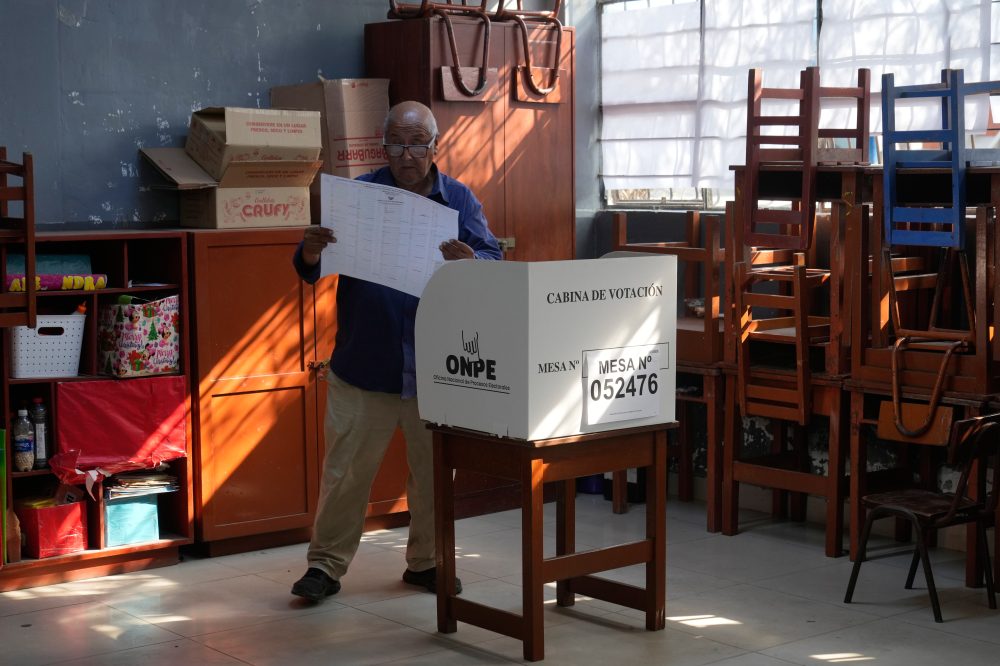

LIMA, Peru (AP) — Election results from Peru’s presidential race have been postponed until at least Monday following widespread operational problems that prevented thousands of citizens from casting their votes on Sunday.
Electoral officials announced they would grant an additional voting day to more than 52,000 residents in Lima, Peru’s capital city. The one-day extension, declared after ballot counting had already commenced Sunday night, will also apply to Peruvian citizens registered in Orlando, Florida, and Paterson, New Jersey.
Officials first stated that 63,300 people would be eligible to vote Monday, but subsequently lowered that number.
Peruvian law requires all citizens between 18 and 70 years old to participate in elections. Those who fail to vote face penalties of up to $32.
The crowded field includes 35 candidates — among them a former government minister, a comedian, and a political heiress — all competing to become Peru’s ninth president in the span of just one decade.
The electoral contest takes place against a backdrop of rising violent crime and corruption scandals that have generated significant voter frustration. Citizens largely perceive the candidates as corrupt and ill-equipped for the presidency. Many contenders have addressed public safety concerns with sweeping policy proposals, including constructing large-scale prisons, reducing prisoner meal provisions, and bringing back capital punishment for severe offenses.
Nurse Heidy Justiniano remained undecided about her vote choice even while standing in line at a Lima public school polling location.
“There’s so much crime, so many robberies on every corner; a bus driver was killed. What matters most to us right now is safety, the lives of every person,” Justiniano, 33, said. “Politicians don’t always keep their promises. This time, we have to choose our president wisely so that he can improve Peru.”
Over 27 million citizens are eligible to participate in the election. Approximately 1.2 million of those voters cast ballots from overseas locations, primarily in the United States and Argentina.
To win the presidency outright, a candidate must secure more than 50% of all votes. Given the fractured electorate and the historically large candidate pool, a runoff election in June appears almost certain.
Citizens are also selecting members of a two-chamber Congress for the first time in over three decades, following recent legislative changes that grant substantial authority to the newly created upper house.