
DEIR AL-BALAH, Gaza Strip — The total number of Palestinians killed since the start of the Israel-Hamas war has climbed past 73,000, Gaza’s Health Ministry announced Sunday, even as a fragile ceasefire agreement remains in place but largely deadlocked.
Israel has not halted military strikes within the territory despite the deal that was reached in October, stating that its operations target Hamas fighters and other armed groups that pose a threat, as well as responding to what it describes as ceasefire violations. Five Israeli soldiers have died since the truce went into effect.
The updated death toll was confirmed by two Health Ministry officials: Zaher al-Waheidi, who heads the ministry’s records department, and Hamza Salem from the ministry’s public relations office.
The total death count since the war began now stands at 73,001. On Sunday alone, five deaths were recorded — two in the southern city of Khan Younis, one in central Gaza, and two individuals who succumbed to wounds sustained in earlier incidents.
More than 173,200 people have been injured since the conflict began. The war was triggered by the Hamas-led attack on Israel on October 7, 2023, which killed approximately 1,200 people and resulted in 251 others being taken hostage.
Gaza’s Health Ministry operates under the Hamas-led government but is staffed by medical professionals who maintain detailed casualty records. United Nations agencies and independent experts generally regard the ministry’s data as credible. The ministry does not separate civilian deaths from militant deaths in its figures, though it notes that women and children account for roughly half of all fatalities.
Israel maintains that it works to minimize civilian casualties and attributes civilian deaths to Hamas, arguing that the militant group conducts operations in heavily populated residential areas.
The ceasefire agreement, brokered by the United States and reached in October, brought an end to full-scale military operations and facilitated the release of all remaining hostages held in Gaza.
However, other key components of the deal have stalled. Hamas has refused to disarm, and Israeli forces have moved further into Gaza rather than pulling back. Both parties accuse each other of breaching the agreement while maintaining that it remains technically in force.
Nickolay Mladenov, the top U.S.-appointed diplomat overseeing the ceasefire, has stated that progress on all remaining issues — including reconstruction efforts, the withdrawal of Israeli troops, and the formation of a new Palestinian governing authority — is being blocked by the impasse over Hamas disarmament.
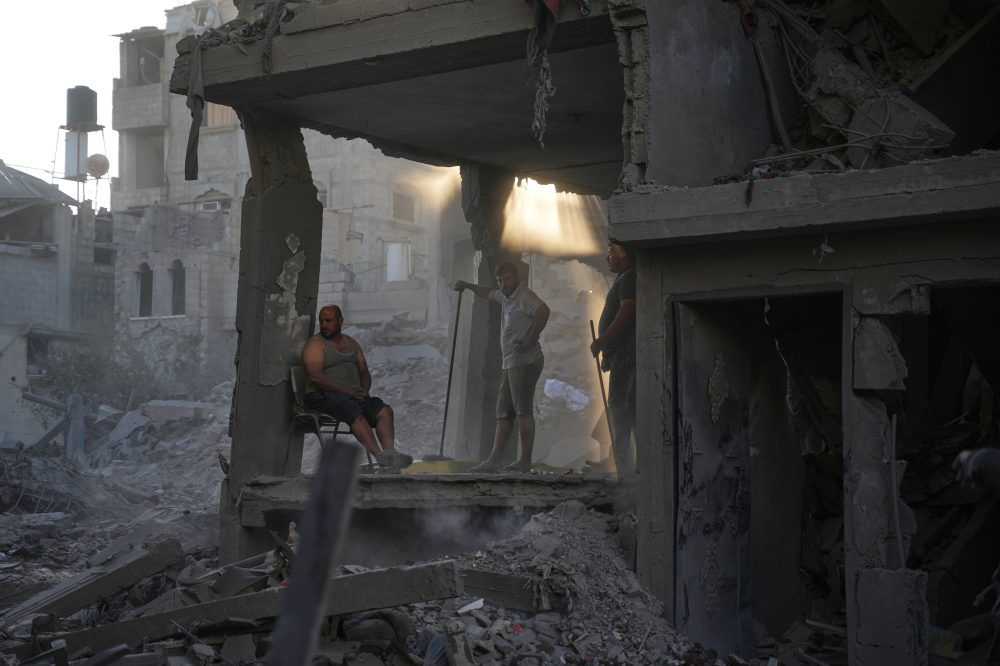
The war has displaced the vast majority of Gaza’s more than 2 million residents, reduced large sections of the territory to rubble, and caused severe shortages of food, medicine, and essential supplies. Nearly all border crossings into Gaza, most of which are under Israeli control, have been closed throughout the conflict.