
Pakistan finds itself walking a diplomatic tightrope as violent demonstrations following the death of Iran’s Supreme Leader Ayatollah Ali Khamenei threaten the country’s delicate relationships with both Washington and Tehran.
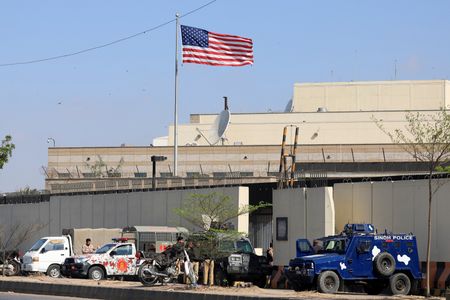
The crisis intensified last week when angry protesters breached the U.S. consulate compound in Karachi and demonstrations spread to other cities across Pakistan. The unrest has created a significant challenge for Islamabad as it attempts to maintain strong connections with President Donald Trump’s administration while managing outrage within its substantial Shi’ite Muslim population.
The situation is further complicated by Pakistan’s ongoing conflicts with Afghanistan and its strategic partnerships with both the United States and Saudi Arabia. Pakistan recently joined Trump’s Board of Peace initiative and signed a mutual defense agreement with the Saudis.
“Pakistan is trying to maintain domestic peace by expressing solidarity with Iran, while it also risks being pulled into the orbit of the war by the U.S. and Saudis,” explained Arsalan Khan, an assistant professor at the University of Tennessee, Knoxville.
“If the war progresses, then it may find itself making trade-offs between domestic peace and its geopolitical commitments,” Khan added.
A senior Pakistani security official acknowledged the gravity of the situation, telling Reuters: “Balancing relationships and blowback is the most pressing issue for Pakistan.”
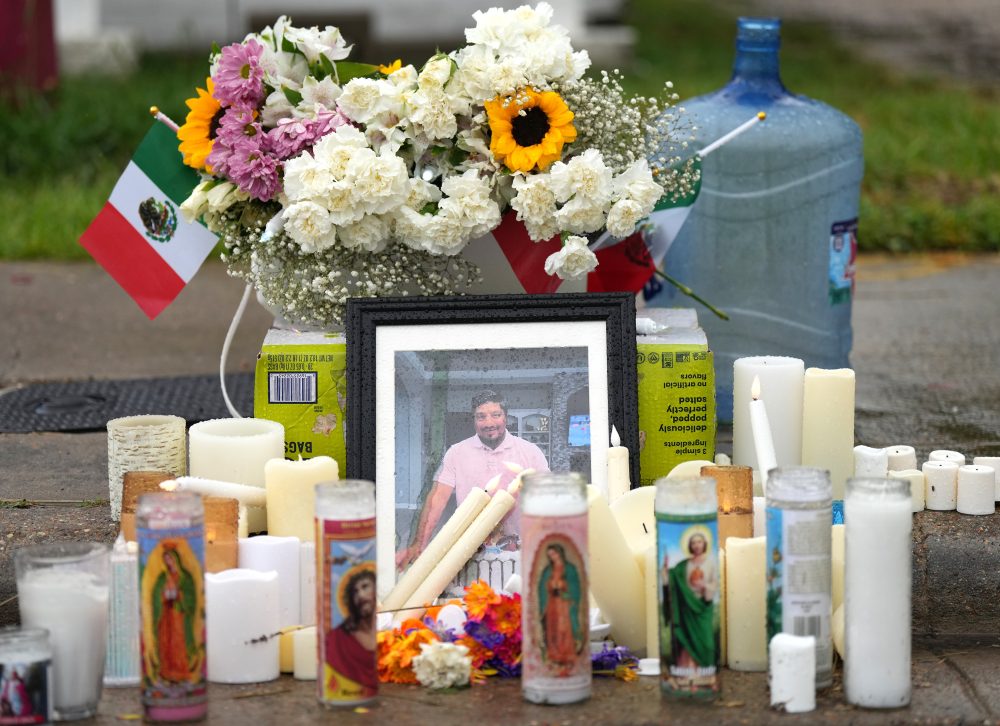
The violence claimed at least 26 lives as demonstrators clashed with law enforcement after news broke of Khamenei’s death on Sunday. During the consulate breach in Karachi, U.S. Marines opened fire on protesters who had scaled the facility’s walls, according to two American officials. Video evidence revealed that some demonstrators were armed and shot into the diplomatic compound.
Leading Shi’ite religious authorities throughout Pakistan have declared periods of mourning and issued warnings that additional demonstrations are planned, raising concerns about continued instability in major urban centers.
“Death has not weakened the Shi’ites but united them with a new spirit of revolution and independence from the slavery of the U.S. and its allies,” declared Shi’ite cleric Sajid Ali Naqvi.
Pakistan’s Shi’ite community represents approximately one-fifth of the nation’s 240 million citizens, making it the world’s second-largest Shi’ite population after Iran. The majority of Pakistanis follow Sunni Islam.
This minority group has frequently faced sectarian violence from organizations including Islamic State and the Sunni militant organization Tehreek-e-Taliban Pakistan.
The religious divide between Sunni and Shi’ite Muslims originated after Prophet Muhammad’s death in 632, when his followers disagreed over succession. These theological differences continue to fuel tensions in modern times and have brought some nations to the edge of civil conflict.
Pakistan’s political development and Khamenei’s respected position among Shi’ites have influenced the community’s reaction to the Iranian leader’s killing, according to Madiha Tahir, an assistant professor at Yale University.
During the 1980s, General Zia ul Haq promoted a form of Sunni Islamic governance in Pakistan, while the 1979 Iranian revolution provided new support and religious connections for Pakistani Shi’ites.
“Pakistani Shias found themselves marginalized in an increasingly sectarian state and vulnerable to violence,” Tahir noted.
“At the same time, the Iranian Revolution meant that they could draw on Iran for aid. It had a profound effect on Shia communities and politics in Pakistan,” she continued.
For Pakistan’s Shi’ite population, Iran’s Ayatollah became a protector of their religious identity, said Kamran Bokhari, senior director at the New Lines Institute in Washington.
“Add in anti-Americanism and anti-Israeli sentiment and you can see how this becomes a powerful potion,” Bokhari observed.
Shi’ite organizations connected to the Millat-e-Jafaria network and other groups have organized protests and called for investigations into the deaths of demonstrators. They have also demanded criminal charges against the U.S. consul general.
“He was our representative. He was like our pope,” said Syed Hussain Ali, who operates the digital platform Hussaini Khayal and organized a memorial service for Khamenei.
Pakistan’s Prime Minister Shehbaz Sharif officially denounced Khamenei’s killing, describing it as a “violation of international law.” However, he avoided specifically naming the United States and also stated that “Pakistan stands in full solidarity with Saudi Arabia and our brotherly Gulf countries in this perilous time.”
Experts suggest that while the Shi’ite protests may eventually subside, the deaths of demonstrators could maintain ongoing tensions, particularly as funeral services for the victims continue to draw large crowds.
“Each one of those deaths is a reminder of the embattled place of Shias within Pakistan,” Tahir explained. “There is definite potential for this to continue.”