
DENVER — Professional hockey players who represented their countries at the Milan Cortina Olympics reached their performance peak much sooner than they typically would during a regular season. Olympic gold required nothing less than their absolute best.
Now, with minimal recovery time behind them, these athletes must find that peak performance level once more as the pursuit of hockey’s most coveted prize, the Stanley Cup, approaches.
NHL franchises with Olympic participants are implementing strategic rest protocols as playoff season nears. This approach includes eliminating morning skating sessions, reducing practice participation, decreasing ice time during games, and in some instances, benching players entirely. Teams like the gold medal-winning United States, silver medalist Canada, bronze winner Finland, and fourth-place Slovakia essentially played the equivalent of an entire playoff series during Olympic competition.
“It’s a lot of hockey in a short amount of time,” said New York Islanders center Bo Horvat, who represented Canada in six contests over 10 days.
Some athletes gained valuable insight into recovery methods after participating in last year’s 4 Nations Face-Off tournament.
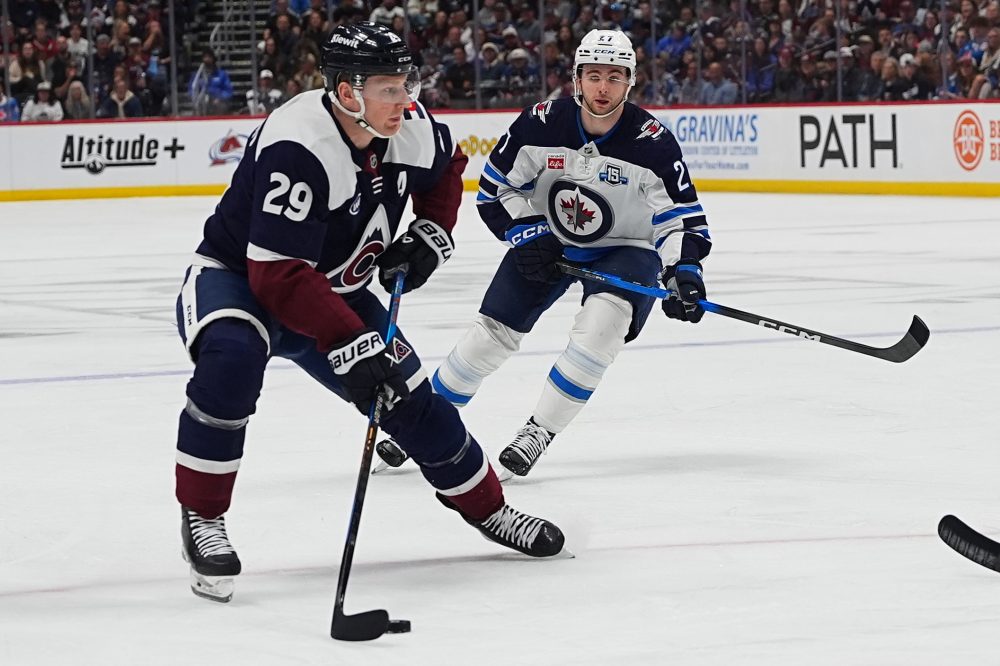
“Take the rest whenever you can find it, for sure,” commented Avalanche forward Brock Nelson, who contributed to America’s first Olympic men’s hockey gold since 1980. “The (NHL) schedule is just so compact for everybody now. Just trying to ride the energy.”
League play was suspended for 19 days between February 6-24 to accommodate Olympic participation. Combined with the holiday pause, each franchise must complete 82 games across 170 days — averaging one contest every 2.07 days, which is more compressed than the previous season’s 2.15-day average with the 4 Nations tournament. During the 2023-24 campaign, teams played every 2.26 days with breaks only for holidays and All-Star events.
Ottawa Senators player Brady Tkachuk found returning to regular season play challenging after captaining Team USA alongside his brother Matthew.
“It was definitely an adjustment coming back, not going to lie, playing in probably the biggest game that has been played in a while and then the emotions of winning,” Tkachuk explained. “It took a little bit to get readjusted.”
The 26-year-old Senators captain has returned to his typical performance level. Veteran teammate Lars Eller, who competed for Denmark in his inaugural Olympics at age 36, views this situation as preferable to mid-season struggles.
“We’re kind of past that Olympic fatigue now, if there was any,” stated Eller, whose squad is actively pursuing a wild-card playoff position in the Eastern Conference. “Now your energy level is actually increasing here towards the end as you’re fighting for a playoff spot and you’re eyeing the end of the season.”
Tim Stützle of Ottawa celebrated his 24th birthday in January, beginning his preparation to represent Germany at the Olympics and help his team reach the playoffs during last summer’s training.
“I was prepared to go for a long season, and yeah that’s where the foundation kind of builds,” said Stützle, who finished tied for second in Olympic goal scoring with four. “Obviously right after the Olympics, I was pretty exhausted with the time change and everything. But now I feel great.”
Avalanche head coach Jared Bednar emphasized that pushing through the fatigue remains the only viable option.
“You’re limited in your options,” Bednar stated. “It’s very little practice, lots of recovery days, whether they’re at the rink or away from the rink, trying to make sure we’re getting rest on the road and the travel schedule is appropriate. What do you do besides rest them?”
Colorado cannot afford extensive player rest periods. The Avalanche currently lead the Presidents’ Trophy race for the league’s best record, with Dallas trailing closely.
“So we’re not in a position, in my opinion, to be resting guys,” Bednar noted. “So you play through.”
Dallas management reduces strain on their Olympic athletes by decreasing playing time whenever feasible.
“You can’t just, say, give two days off and it’s gone,” explained Stars coach Glen Gulutzan. “You just do (the rest) over a period of time and get their bodies built back up.”
Stars defenseman Thomas Harley, who logged 118 minutes for Canada in Milan, maintains he hasn’t experienced significant fatigue. Dallas goaltender Jake Oettinger joked, “I mean, I didn’t play a single second at the Olympics so I’m fresh as a daisy.”
Oettinger, who served as Connor Hellebuyck’s backup, expects the Olympic experience will prove valuable during playoff competition.
“I learned a lot about what it takes to win,” Oettinger reflected. “I think a lot of those guys in that room had won Stanley Cups, and just the messages the guys were saying and how loose and light they were, even in the biggest pressure game of all time, was really impressive to watch.”
Avalanche forward Martin Necas has already recovered his energy after pacing Czechia with eight points across five Olympic games. The 27-year-old athlete appears refreshed.
“It was great to play on a different stage for a little bit,” Necas said. “Now it’s exciting to come back.”
Colorado sent eight NHL players to Olympic competition, including Cale Makar, Nathan MacKinnon and Devon Toews representing Canada. Minnesota, Tampa Bay, and Vegas also contributed eight players each, with four Minnesotans playing for Sweden. Dallas and Boston each provided seven participants.
Four Finnish Stars players — Miro Heiskanen, Roope Hintz, Esa Lindell and Mikko Rantanen — joined Colorado’s Artturi Lehkonen to capture bronze medals. Two-time defending Stanley Cup champion Florida led all teams with 10 Olympic participants but currently faces playoff elimination after consecutive seasons extending into June.
The most recent occurrence of NHL players winning Olympic gold and the Stanley Cup in the same year was 2014, when Jeff Carter and Drew Doughty helped Canada defeat Sweden in Sochi before Los Angeles conquered the Rangers in the championship series.
“Individually, guys have different things that they do (to get ready),” Nelson concluded. “But down the stretch here and playing these games, the energy is going to be high no matter what.”