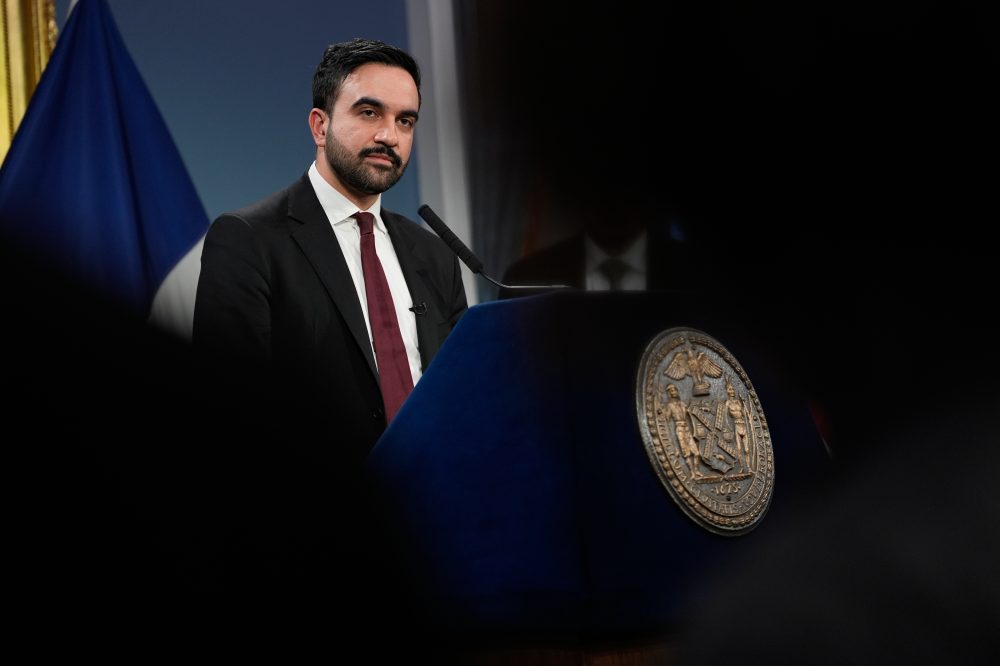

NEW YORK (AP) — Following a series of cold weather deaths, New York City Mayor Zohran Mamdani announced Wednesday that the city will restart operations to clear homeless encampments, but with a significantly different strategy than his predecessor used.
The Democratic mayor had halted the encampment clearing program shortly after taking office in January, criticizing the previous administration’s methods as inadequate for connecting people with permanent housing solutions.
However, Mamdani now says his revised strategy — which puts the city’s homeless services department in charge instead of police and includes extensive outreach efforts — will produce better outcomes.
“We will meet them looking to connect them with shelter, looking to them with services, looking to connect them with a city that wants them to be sheltered and indoors and warm and safe. And that is something that I believe will yield far better results,” he said at an unrelated news conference.
The announcement follows the deaths of at least 19 individuals outdoors during recent severe cold weather, sparking concerns about the city’s homeless response efforts. City officials report no evidence that any of the deceased were residents of encampments, despite the administration’s intensive efforts to encourage homeless individuals to use new shelters, heated buses and warming facilities.
The outdoor fatalities have created an early challenge for Mamdani’s administration, generating questions about whether more could have been done and renewed criticism regarding the new mayor’s limited administrative background.
Former Mayor Eric Adams had made encampment sweeps a signature element of his public safety agenda. Those operations, conducted by police and sanitation teams, faced strong opposition from homeless advocacy organizations and produced limited success — while most cleared sites remained empty, only a small percentage of those encountered during sweeps agreed to enter temporary housing.
The updated protocol calls for posting advance notice before clearing any encampment, followed by daily visits from homeless services outreach staff for one week to connect individuals with available resources and support services.
On the eighth day, sanitation crews would remove the encampment structures, with officials hoping residents would have relocated voluntarily. Police would only observe the process, according to a city spokesperson.
Coalition for the Homeless Executive Director David Giffen expressed surprise at the announcement, calling it “blindsided” by the decision and describing it as a “political response” that won’t benefit homeless New Yorkers.
He warned that such actions could damage relationships between city outreach staff and unsheltered individuals, potentially leading to more fatalities during future extreme weather events.
“When a city worker shows up and throws out all your belongings, you’re not going to trust that person the next time they show up offering you a place to sleep inside,” Giffen said.
New York City Council Speaker Julie Menin, also a Democrat, praised Mamdani’s decision as “an important step forward.”
“Allowing New Yorkers to stay on the street during extreme weather is inhumane,” Menin said in a statement, adding that after oversight hearings at the Council, “it was clear that the City needed to take a closer look at how this policy was being implemented. Protecting lives must remain our top priority.”