
ABUJA, Nigeria (AP) — Nigerian military forces have once again caused massive civilian casualties in an airstrike intended to target militant fighters, marking another deadly error in a troubling pattern that has emerged over recent years and calls into question the effectiveness of a key U.S. security ally.
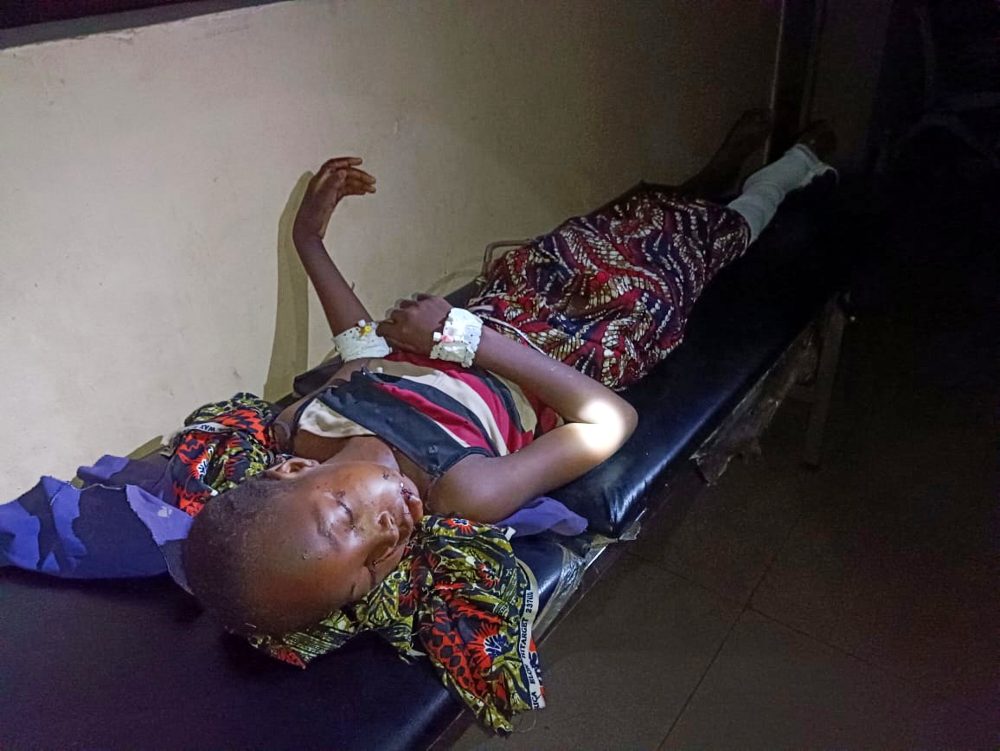
Sunday’s devastating attack claimed the lives of at least 100 innocent people, including young children, according to Amnesty International’s Nigerian branch. The strike hit a marketplace in Tumfa, located in the northwestern region of Zamfara state. A local Red Cross representative verified the aerial bombardment to The Associated Press, confirming that “multiple civilians” lost their lives.
Nigerian military leadership, however, disputes claims of civilian deaths. Major General Michael Onoja acknowledged that forces did conduct an airstrike on the market area but insisted there was “no verifiable evidence of civilian casualties.” He stated that military operations in the region are ongoing.
These types of deadly incidents have become routine across Nigeria’s violence-plagued northern territories, where armed forces depend extensively on air attacks to strike at bases used by numerous militant organizations. Armed fighters typically travel in large motorcycle convoys through isolated forest areas and remote settlements that ground forces cannot easily access.
Research conducted by SBM Intelligence, a Lagos-based analytical organization that compiled reports and information from impacted communities, shows that military airstrikes have resulted in more than 500 civilian deaths since 2017.
The Trump administration has recently deployed military personnel and drone aircraft to provide intelligence gathering and logistical assistance to Nigerian forces. Whether American-supplied intelligence played a role in Sunday’s strike remains unclear.
On several previous occasions, Nigerian officials have acknowledged responsibility for civilian deaths from airstrikes, characterizing these incidents as unintentional. However, residents and security experts report that such occurrences are happening with increasing frequency.
Defense Minister Christopher Musa has stated that the military is working to enhance its human rights practices and ensure accountability among its personnel.
Numerous armed organizations operate throughout Nigeria beyond Boko Haram, the most notorious extremist faction that began its violent campaign in 2009 seeking to impose its radical Islamic ideology across the northeastern region.
Many of today’s fighters were previously cattle herders who became involved in disputes with agricultural communities over land and water resources. These groups have evolved from carrying traditional weapons to conducting assaults with firearms smuggled across borders, leading to thousands of annual fatalities.
Certain militant factions conduct large-scale killings and abduct victims for ransom money in northwestern and central areas. According to analysts, they also demand “tax” payments from local populations to fund their activities, supplementing income from kidnapping operations.
Assaults can continue for multiple days in villages that lack sufficient security protection. Fighters typically avoid staying in any single area for extended periods, constantly moving locations and mixing with civilian populations to avoid capture.
Nigerian government officials explain that preventing civilian casualties during airstrikes proves difficult because armed groups frequently use innocent people as protective shields.
“Bandits and terrorists, unlike professional soldiers, don’t respect the rules of engagement. They don’t care about killing their hostages if they come under attack,” former President Muhammadu Buhari previously stated.
According to Senator Iroegbu, a security expert based in Abuja, the repeated military errors that result in civilian fatalities can also be traced to gaps in intelligence collection and inadequate communication between ground units, aircraft crews, and other key participants.
Nigerian government and military leaders routinely pledge to examine airstrikes to prevent future mistakes. Security analysts note, however, that such reviews typically fail to produce meaningful changes.
In 2024, military authorities took the unusual step of pursuing legal action against two service members following an airstrike that killed more than 80 civilians in Kaduna state. Officials also committed to publishing their investigation findings but have yet to do so.
Oluwole Ojewale from the Institute for Security Studies, which focuses on African issues, emphasized that Nigeria requires better investment in pilot education and training programs, along with modernized aircraft and targeting technology.
He added that military forces must also work to establish trust and gain cooperation from local communities, whose knowledge of militant group movements is essential for accurate targeting and successful operations against these organizations.