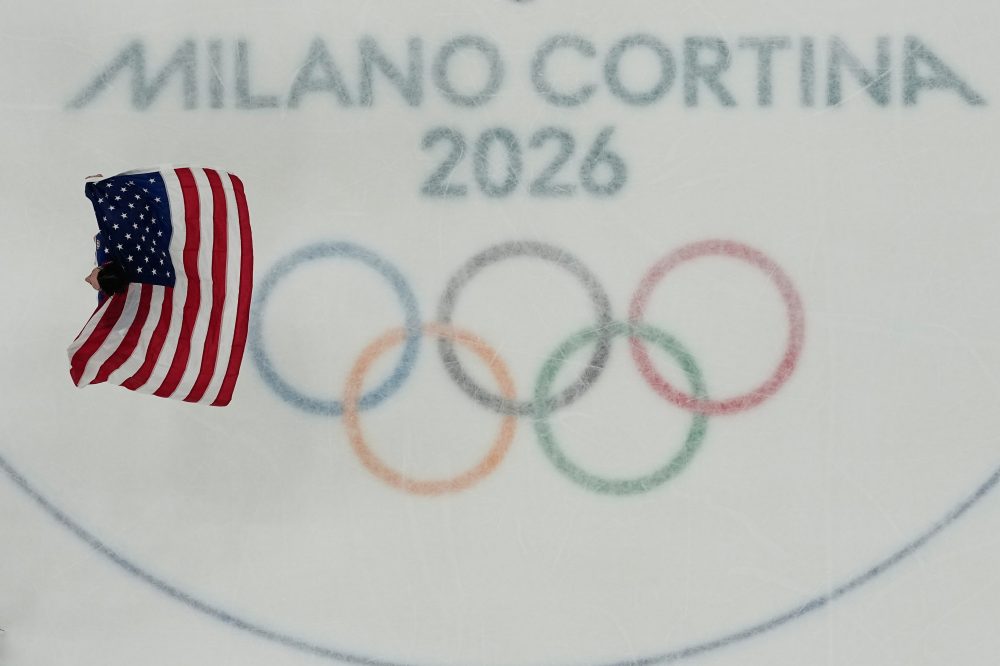

A decade ago, critics questioned whether NBC made a costly mistake when the network committed $7.75 billion in 2014 to broadcast the Olympics in America through 2032.
Those doubts are fading as NBC celebrates its highest Winter Olympics viewership in more than a decade.
Data from Nielsen and Adobe Analytics shows NBC drew an average of 24 million viewers during its afternoon block from 2-5 p.m. and evening coverage from 8-11 p.m. through Friday’s Milan Games coverage. This represents a dramatic 94% jump compared to the 2022 Beijing Olympics.
The Milan success continues a positive trend that began with the 2024 Paris Summer Olympics, which saw an 82% increase over the Tokyo Games in 2021.
Final viewership statistics covering all 17 days of competition, including Team USA’s thrilling 2-1 overtime hockey victory against Canada on Sunday, will be announced Monday.
“I think that the Paris Games deserve a lot of the credit for rejuvenating that interest and enthusiasm, and some of that momentum continued through to Milan,” NBC Sports President Rick Cordella said from Milan.
NBC’s Olympics president and executive producer Molly Solomon and her production team earned recognition for overhauling the network’s broadcasting strategy following Beijing’s disappointing ratings.
Rather than saving marquee events for evening broadcasts, NBC began streaming competitions live across multiple platforms while transforming primetime programming into a highlight show featuring athlete interviews and expert commentary for audiences who watched events earlier.
“How do we best make sure that we are continuing to tell the story (of athletes) after they leave the venues? I do think that one of the improvements we made from our Paris coverage was to follow the athletes to their after-parties and reunions with their friends and families,” said Solomon, who is overseeing coverage from NBC Sports’ headquarters in Stamford, Connecticut.
“When Alex Ferreira won (the gold medal in men’s halfpipe), we went to the bar where he was celebrating. There was a Team USA celebration for Mikaela Shiffrin, where we were there for the toast, and she talked about not being able to help Breezy Johnson get on the platform.”
“These athletes trusted us to have our cameras there, and I do think it made for even richer storytelling and taking the audience there.”
NBC embraced broadcasting methods long used internationally while responding to American viewers calling for changes. Although the network had offered online streaming for all Olympic events since London 2012, the launch of Peacock in 2020 marked a significant expansion.
By Friday, Americans had streamed 14.8 billion minutes of Milan Olympics content, more than twice the combined total of all previous Winter Games at 6.9 billion minutes.
Increased viewership also reflects improved American athletic performance after disappointing showings in Tokyo and Beijing, both held in isolated, largely empty venues during the COVID-19 pandemic.
Thursday’s overtime victory by the U.S. women’s hockey team over Canada, combined with Alysa Liu’s figure skating gold medal, drew 26.7 million viewers across NBC, USA Network, Peacock and other NBCUniversal digital properties.
The women’s hockey championship game alone attracted 5.3 million viewers on USA Network and Peacock, setting a new record for women’s hockey television audience. Viewership peaked at 7.7 million during overtime when Megan Keller scored the winning goal.
“It was truly a golden hour. We popped between control rooms, and you just never know what’s going to happen,” Solomon said. “The energy in our control rooms on site, we couldn’t believe the confluence of drama and excitement, but that really is what the Olympics is about. It’s unpredictable, thrilling, and it just coincided in the golden 64 minutes.”
NBC expects to maintain this positive trajectory for upcoming Games. The 2028 Los Angeles Summer Olympics will feature comprehensive live coverage throughout each day, while the 2030 Winter Olympics in France’s Alps will use the successful formula developed for Paris and Milan.
The 2032 Brisbane Summer Games present scheduling challenges since most events will occur overnight for American audiences, but the 2034 Salt Lake City Winter Olympics will again provide live coverage in favorable time zones.
NBC secured Olympic broadcasting rights through 2036 after agreeing to a $3 billion deal last year for the 2034 and 2036 Games.
“Paris begets Milan, and Milan will beget LA. I think the Olympics are just unique in many respects,” Cordella said. “The U.S.-Swiss curling match, there are hundreds of thousands of people online streaming. They’re seeking it out and watching these matchups of these athletes; they probably didn’t know about them before the Olympics began. It’s compelling TV, and that’s kind of what the Olympics does.”