
When skydiving planes go down, investigators frequently find that poor maintenance played a role — and federal safety officials have long warned that weak oversight of the skydiving industry allows dangerous problems to go undetected.
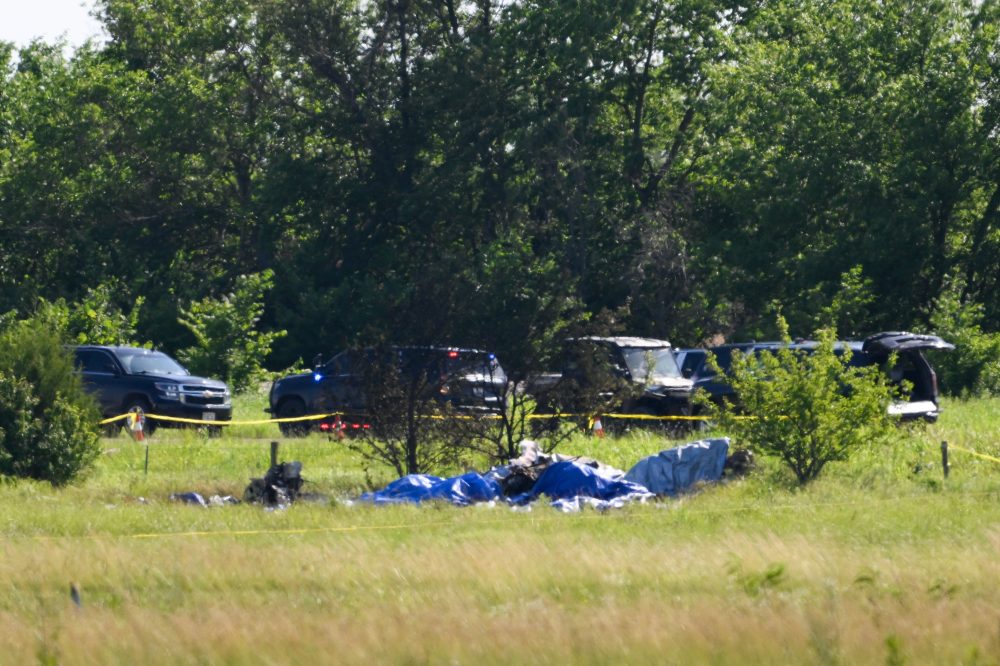
It remains far too early to determine the cause of Sunday’s deadly crash, which occurred shortly after a plane departed from a small airport roughly an hour south of Kansas City, Missouri. All 12 people aboard were killed, and some of their family members witnessed the tragedy from the ground at Butler Memorial Airport. The National Transportation Safety Board will spend the next year or more investigating before releasing its final findings, though preliminary details are expected within the coming month.
Remarkably, just two years ago, another skydiving aircraft went down near that same airport. In that earlier incident, however, all those on board managed to parachute to safety before the crash. The NTSB determined that a handle used to deploy an emergency parachute became snagged on something, sending the skydiver into the plane’s horizontal stabilizer as he jumped — ultimately causing the aircraft to go down.
Aviation safety expert Jeff Guzzetti says skydiving crash investigations too frequently expose a pattern of poor maintenance and a weak culture of safety. He pointed to Federal Aviation Administration regulations that can allow such problems to grow because skydiving operations are not held to the same safety standards as charter flight companies or commercial airlines.
“These skydiving operations don’t have the best maintenance to make sure they’ve got airworthy airframes and engines because they don’t undergo the normal scrutiny that an air charter service does,” said Guzzetti, who previously worked as a crash investigator for both the NTSB and the FAA.
Following a 2019 crash in Hawaii that claimed 11 lives, the NTSB concluded that the FAA’s regulatory framework was not strong enough to guarantee the safety of skydiving flights. In that case, investigators discovered that the plane’s wing had been damaged and twisted during a prior incident years earlier and was never fixed. FAA inspections conducted before the fatal crash had failed to identify the compromised left wing.
In an earlier review of 32 skydiving accidents spanning from 1980 to 2008, the NTSB identified repeated failures in aircraft maintenance and inspections, as well as inadequate pilot training programs. Despite those findings, the FAA never acted on the recommended steps to tighten safety standards for skydiving operators.
The skydiving industry points to its overall safety record with pride. According to the United States Parachute Association, only 16 civilians died while skydiving last year out of 3.47 million total jumps completed across the country, with most of those fatalities resulting from simple human error. That amounts to a rate of 0.46 deaths per 100,000 jumps. The annual death toll from skydiving reached its peak in the late 1970s and has been on a gradual decline ever since.
The plane involved in Sunday’s crash was a single-engine turboprop Pacific Aerospace 750XL, a model commonly used in skydiving because the nine rear seats can be quickly removed to make room for jumpers. The aircraft’s New Zealand-based manufacturer, NZAero, states that the 750XL can take off and land within 800 feet (244 meters) and carry a payload exceeding 4,000 pounds (1,814 kilograms) even in hot weather conditions, which typically make it harder for planes to become airborne. The model can also be legally flown by a single pilot. FAA records show the specific plane that crashed was built in 2010.
The aircraft was operated by Skydive Kansas City, which is part of an organization called Bucketlist Experience. The group’s website promotes its mission of “Helping Make Safe Skydivers” by guiding newcomers through the fundamentals of safety and technique so they can experience what it describes as “the exhilarating freedom of flying through the sky.”