
Mississippi’s public safety agency made a startling discovery while preparing to move offices – a collection of Ku Klux Klan materials hidden in a suitcase, providing rare insight into the secretive white supremacist organization’s operations and connections to law enforcement.
The Mississippi Department of Public Safety found the items during their headquarters relocation and has transferred everything to the state’s Department of Archives and History. Processing the complete collection is expected to take several months, officials said.
Civil rights leaders view these materials as important reminders of the Klan’s violent past in Mississippi and emphasize the need to preserve such history to prevent its repetition.
“I’m glad these stories are coming out because it was a real pain,” said Charles Taylor, executive director of the Mississippi State Conference of the NAACP.
The discovered cache contained a White Knights of the Ku Klux Klan manual, organizational charters, ceremonial robes, recruitment documents, anti-Martin Luther King propaganda, minutes from meetings, financial records, and membership rosters showing who had paid their dues.
Archive officials are embracing the responsibility of preserving these materials rather than avoiding the uncomfortable discovery.
DPS Commissioner Sean Tindell stated, “Mississippi Highway Patrol Troopers and agents with the Mississippi Department of Public Safety have worked for decades with our federal law enforcement partners to shed light on the darkness in which groups like the Ku Klux Klan chose to operate. By preserving these artifacts and shedding light on such organizations, we help ensure that future generations are never led astray by such hate.”
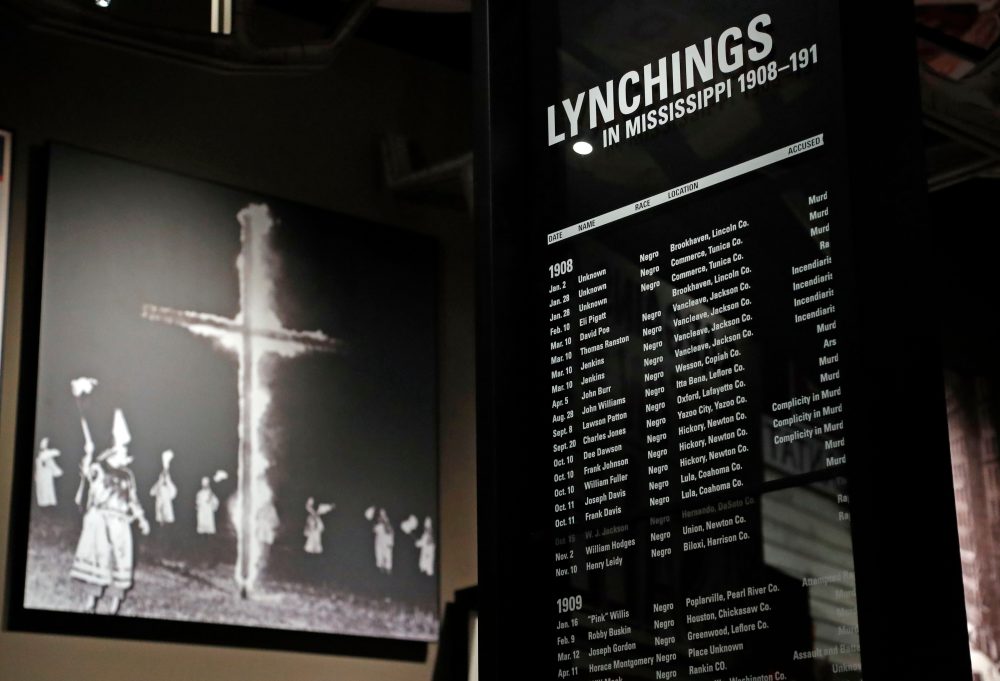
The Klan emerged shortly after the Civil War ended, created by six former Confederate military leaders. Initially resembling a fraternal organization with ceremonial garments and unusual leadership titles, it quickly evolved into a terrorist group targeting newly freed Black Americans. While Congress banned the organization in 1871, it reemerged during World War I and expanded significantly under Jim Crow segregation laws. By the 1960s, the group was responsible for lynchings, church bombings, and numerous other violent acts, Taylor explained.
The organization’s most notorious Mississippi crime occurred in 1964 when members murdered three civil rights activists in what became known as the “Mississippi Burning killings.” Three years later, Klan members bombed the state’s sole synagogue, which was targeted by arson again this past January.
Taylor emphasized that these newly uncovered materials serve as a stark reminder of recent history and highlight the critical need to ensure current law enforcement personnel don’t harbor similar ideologies.
“It’s one thing to be able to say very clearly this was here but it was at their place,” Taylor said. “Folks were studying (propaganda) as they were supposed to be providing safety for all Mississippians.”
Barry White, Commissioner of the Department of Archives and History, noted the significance of finding administrative documents and official charters, given the Klan’s notorious secrecy.
“MDAH is grateful to Commissioner Tindell for recognizing the historical significance of this material and transferring it to the archives,” White said. “These records will give researchers broader access to documentation that deepens our understanding of Ku Klux Klan activities in Mississippi during the 1960s.”
Stephanie Johnson-Toliver, who leads the Black Heritage Society of Washington State and specializes in preserving Black history, stressed the importance of maintaining such records despite their disturbing nature.
Making these materials available to the public will enable people to “look at the history that definitely harmed and was traumatic and remains to be harmful and traumatic here in the United States,” Johnson-Toliver explained.