
A dispute has erupted between a United States mining corporation with backing from billionaires Jeff Bezos and Bill Gates and Belgium’s AfricaMuseum regarding who should have the right to digitize historical maps from the colonial period of what is today the Democratic Republic of Congo.
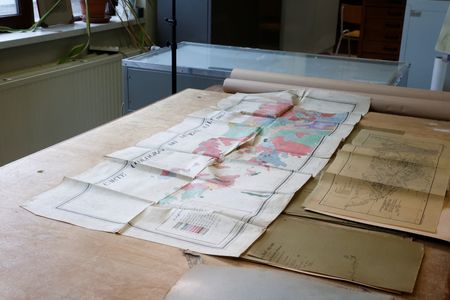
The mining startup KoBold Metals stated it had proposed assisting the DRC with digitizing the colonial-period collection, which sits on museum shelves extending approximately 500 meters and holds millions of records documenting how Congo’s mineral resources were charted and extracted.
“We scan, we digitise the documents, and make them accessible to the public immediately,” Benjamin Katabuka, Director General for KoBold Metals in DRC, told Reuters.
“This country needs more investment in exploration, and we need the data to be available to the public to make that happen,” he added.
The Belgian institution, with support from Belgian officials, has declined the offer, stating it already maintains a separate initiative with the DRC to digitize the information, funded by the European Union.
“We cannot delegate the management of collections to private companies; it would go against all scientific and institutional ethics,” museum director Bart Ouvry told Reuters.
KoBold obtained authorization last year to explore for lithium and additional minerals in DRC and established agreements with Kinshasa to digitize information, including materials housed in Belgium, according to the company.
Katabuka explained that the DRC government made the request for archive access. “KoBold is coming to support the project, technically and financially,” he stated.
KoBold referenced a 2022 Belgian statute that established a system for returning colonial-period collections to African nations. Archives, however, are not included in this framework.
Ouvry explained the museum is collaborating with Congo’s National Geological Service to digitize and distribute the geological archives through a project anticipated to require up to five years. Information would be accessible in both nations “in accordance with Belgian and European law,” he noted.
Congo’s ministry of mines did not respond to requests for comment.
The museum’s comprehensive archive, situated just outside Brussels in Tervuren, contains materials that are handwritten, delicate and still not completely cataloged, according to the head of the museum’s earth sciences department.
Belgium’s King Leopold II claimed Congo in 1885 for his personal profit – the territory was ransacked and the population endured severe violence. The King controlled it as his personal domain until 1908, when it transitioned to a Belgian colony.
Ouvry stated the archives remain accessible, duplicates can be furnished upon request, and private corporations must provide a support letter from the DRC government to examine geological maps.
A Belgian government representative for foreign affairs described the geological archives as a public resource. “Belgium cannot, under any circumstances, grant exclusive access to a foreign company or private entity with which it does not have a contractual relationship,” spokesperson Florinda Baleci stated.
International rivalry for essential minerals is intensifying and DRC contains abundant deposits of lithium, copper, cobalt and coltan. The nation’s ministry of mines calculates that 90% of potential resources remain undeveloped.
KoBold represents one of multiple U.S. corporations expanding operations in Congo as Washington strengthens a strategic alliance with Kinshasa to secure supplies and decrease dependence on China for materials required for batteries, electronics and defense systems.