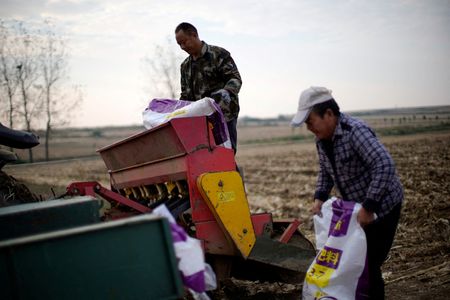

Agricultural producers worldwide are confronting steep increases in fertilizer and fuel costs as Middle East warfare intensifies, creating supply challenges just as spring planting season begins.
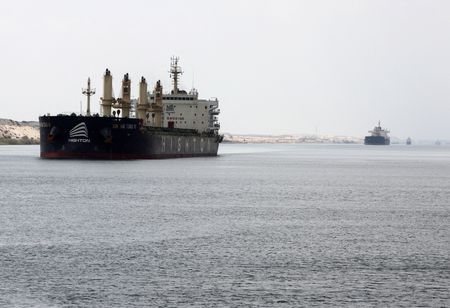
The conflict has resulted in the closure of the Strait of Hormuz, forcing fertilizer manufacturing facilities in the area to halt operations and severely impacting shipping lanes. This disruption threatens to limit supplies reaching major importing nations precisely when Northern Hemisphere farmers need to begin seeding their fields.
“It’s a mess because it’s spring,” stated Cedric Benoist, who cultivates wheat, barley and additional crops south of Paris, commenting on worldwide fertilizer costs that have increased by tens of euros per metric ton. “This situation can’t continue.”
Agricultural producers spanning from Srinagar in Kashmir to Saskatchewan in Canada depend on fertilizer and diesel transported through the strait, which handles approximately one-third of international fertilizer commerce and 20% of global fuel exports.
Due to an oversupply of grains worldwide, numerous farmers were already anticipating financial losses on this year’s harvest. The prospects appear particularly dire for producers who must still purchase spring fertilizer, including Jeff Harrison from Quinte West in Ontario. “We’re in a real bad situation now,” Harrison stated.
Costs in the United States, which imports a substantial portion of its fertilizer requirements despite having significant domestic production, increased when the conflict began. Fertilizer prices surged from $516 per metric ton on Friday to as high as $683 at New Orleans’ import center by Thursday. Prices may climb even higher if the Persian Gulf blockade continues and shipments cannot arrive in time for spring planting, according to industry analysts.
“Literally, this could not happen at a worse time of the year,” commented StoneX analyst Josh Linville.
Seth Meyer, former chief economist for the U.S. Department of Agriculture and currently with the Food and Agricultural Policy Institute, indicated that producers might modify their crop selections and fertilizer usage due to the price increases.
Agricultural operations require fertilizers for nearly all their crops to achieve optimal yields, though each crop type and soil condition has varying requirements.
Producers might reduce corn acreage, which demands substantial nitrogen fertilizer applications, or significantly decrease fertilizer usage rates, Meyer explained.
Deliveries from the Middle East will likely decline not only because passage through the Strait of Hormuz has essentially ceased, but also due to production reductions.
Qatar Energy has been forced to halt operations at the world’s largest single-location urea facility after losing its natural gas supply when the company stopped gas production following attacks on its LNG infrastructure.
Simultaneously, sulfur production has been reduced in other Middle Eastern regions.
“We have lost a significant chunk of the global supply because of this situation,” Linville from StoneX noted.
India purchases over 40% of its urea and phosphatic fertilizers from the Middle East. While imports face potential disruption, domestic production within India has already been impacted.
Three Indian facilities have been compelled to decrease urea production as LNG deliveries from Qatar have dropped significantly, according to a senior industry official based in New Delhi. Consequently, supplies are anticipated to be limited for urea and diammonium phosphate in the near term, the source indicated.
The international fertilizer market was already constrained before the conflict began, with China limiting exports this year to guarantee domestic supply, while European manufacturers have reduced production due to the loss of affordable Russian gas, analysts reported.
Urea prices had increased by approximately $80 per ton from the roughly $470 per ton quoted before the Iranian conflict started, they noted.
China will likely expand fertilizer export restrictions because of the conflict, two agricultural analysts predicted, though the limitations may not be officially announced and instead communicated to major producers and customs authorities.
While China obtains more than 50% of its sulfur imports from the Middle East, Indonesia depends on the region for nearly 70% of its supplies, according to traders. Sulfur serves as a crucial component for phosphate fertilizers such as diammonium phosphate and monoammonium phosphate.
“It is really hard to find readily available spot cargoes now. There are no spot cargoes anywhere,” one Chinese sulfur trader reported.
Australia relies on imports to satisfy most of its fertilizer requirements, industry analysts indicate.
Agricultural economist Corne Louw of GrainSA, representing South African farmers, explained to reporters that fertilizer can comprise as much as 50% of their production expenses.
“Any increases in the current situation where farmers are already struggling with record low grain prices will just be another nail in the coffin,” he stated.
Markets may not have completely factored in the potential for an extended conflict, according to Morningstar analyst Seth Goldstein, who projects that nitrogen prices could approximately double and phosphate prices increase 50% from present levels.
“If the supply shock lasts more than a few weeks, I wouldn’t be surprised to see prices go back to the highs of 2022, when the Russia-Ukraine conflict began,” Goldstein predicted.